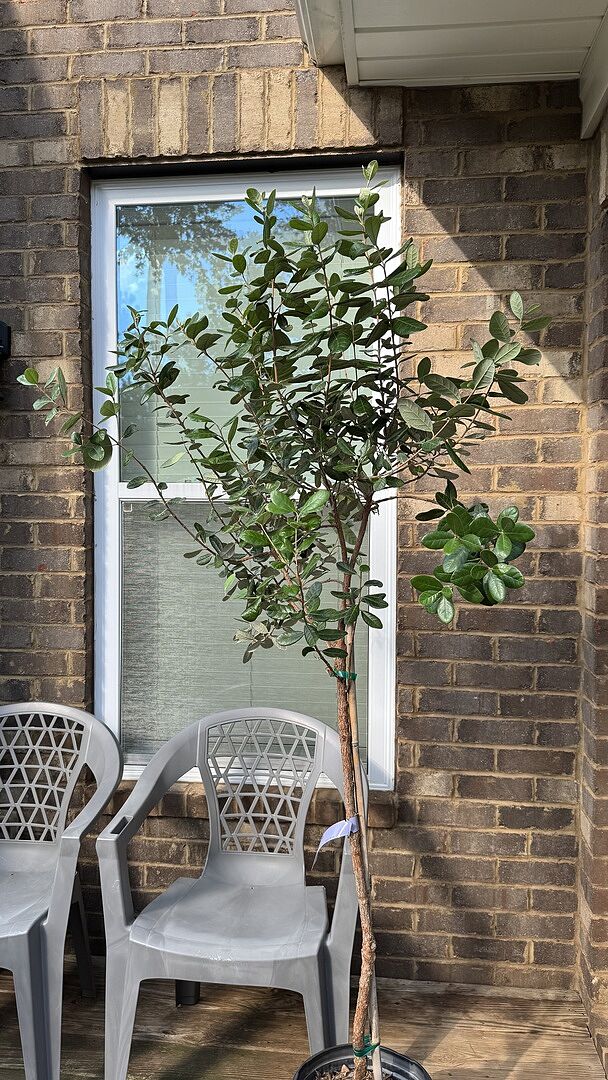
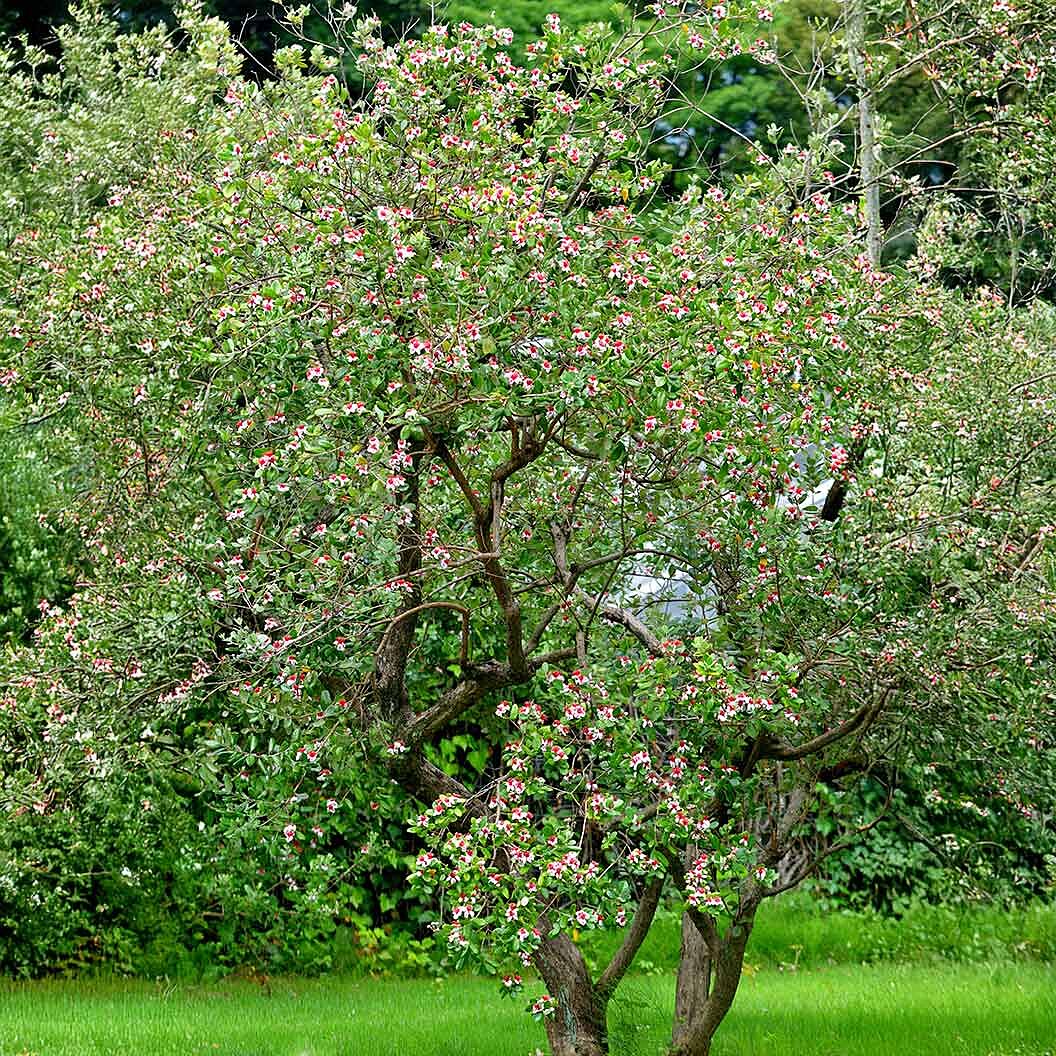
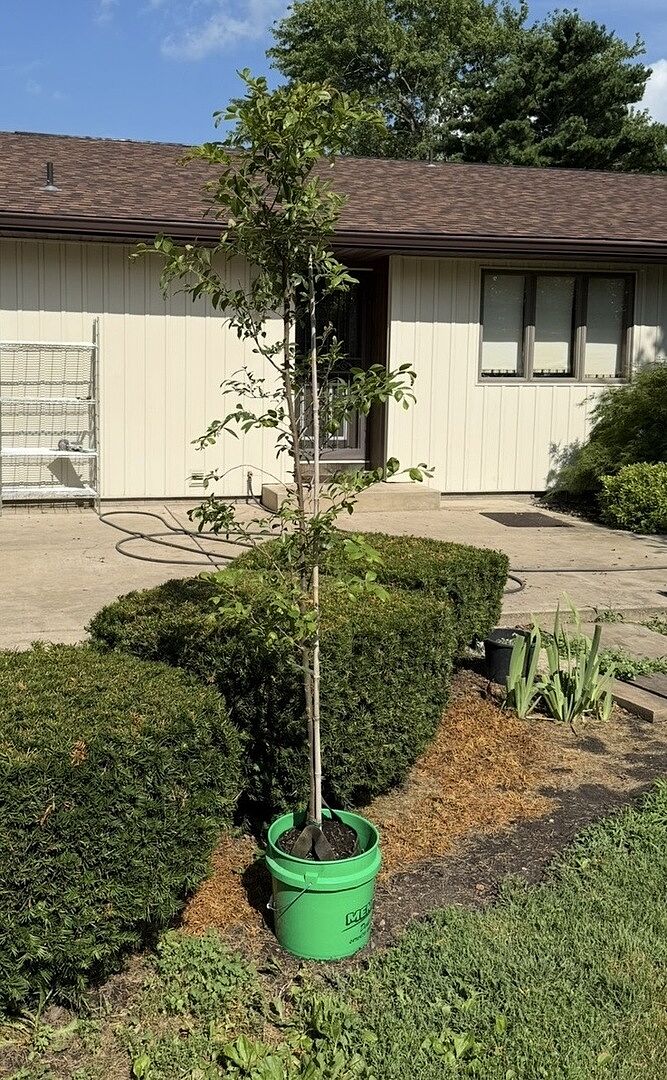
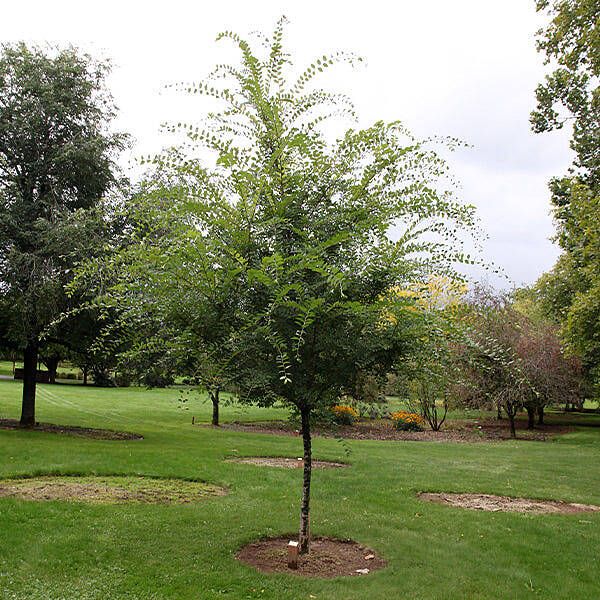
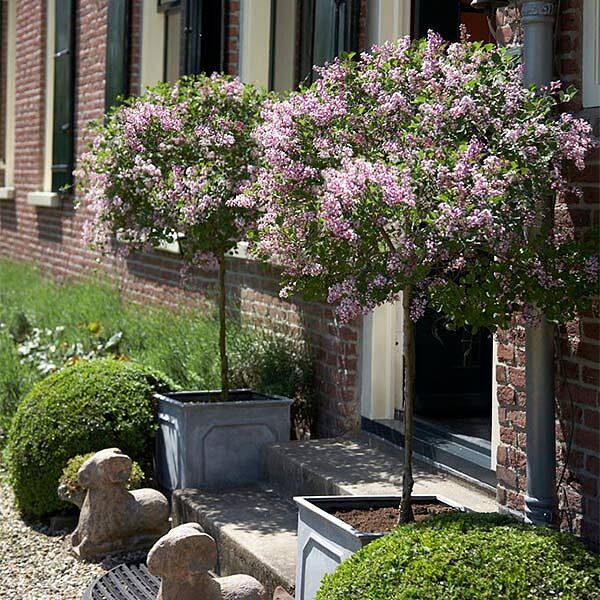
14 Best Drought Tolerant Trees to Grow

If you’re looking for a tree that can handle hot dry weather without constant watering, you have more options than you might think. From fast-growing shade trees to narrow evergreens, flowering trees, and even fruit trees, there are drought-tolerant varieties for a wide range of climates and water-wise landscapes.
What makes a tree drought tolerant?
Drought tolerance describes how well a tree withstands periods of limited water once it’s established. It doesn’t mean no water, and it’s always important to provide enough water in the first three years to build the root system it needs to handle dry conditions. Three things contribute to a tree’s drought tolerant rating:
- Deep or wide root systems. Deep taproots can reach moisture below the dry surface layer, while wide-spreading roots tap into much larger volume of soil.
- Smaller or waxy leaves. Less surface area and a waxier coating mean less moisture lost to the air.
- Dormancy responses. Some trees can conserve water during a dry spell by dropping their leaves early or slowing their growth. These built-in responses help the tree weather drought and recover when moisture returns.
Again, these adaptations take time to develop, even in the most arid climates. During establishment, consistent watering is needed.
How We Chose These Trees
We selected these 14 trees from our drought-tolerant trees collection based on their drought tolerance, growing range, size, and what they can add to a landscape. The list spans zones 3 through 11 and includes options for shade, privacy, flowers, and fruit.
Best drought-tolerant shade trees
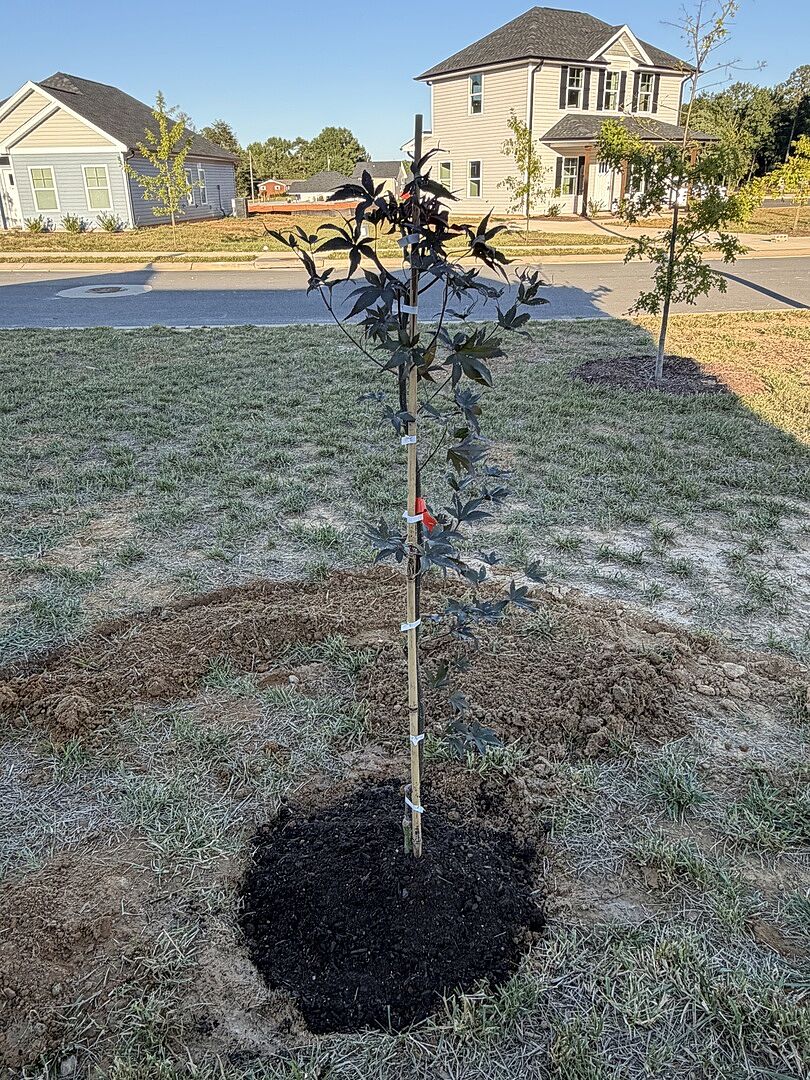
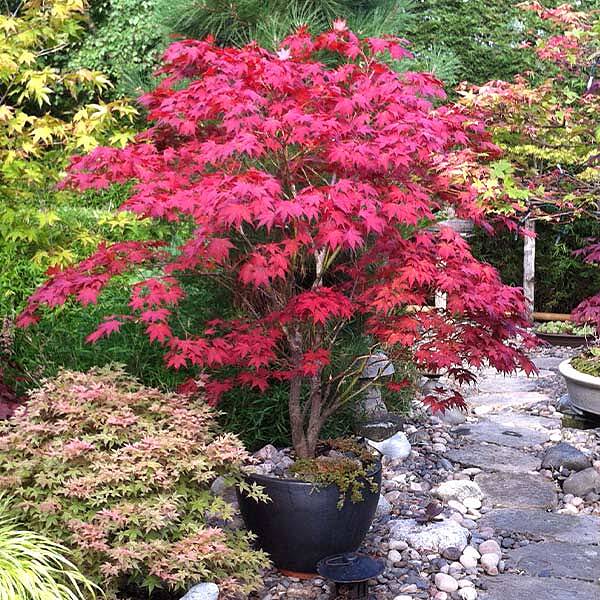
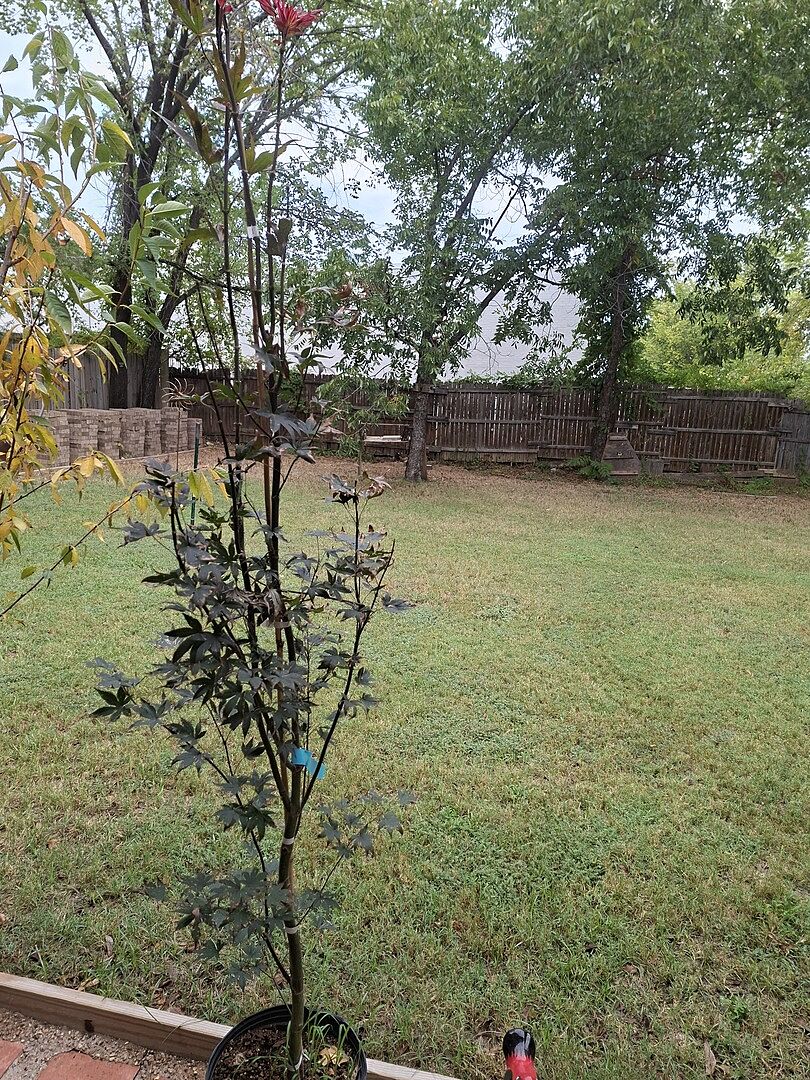
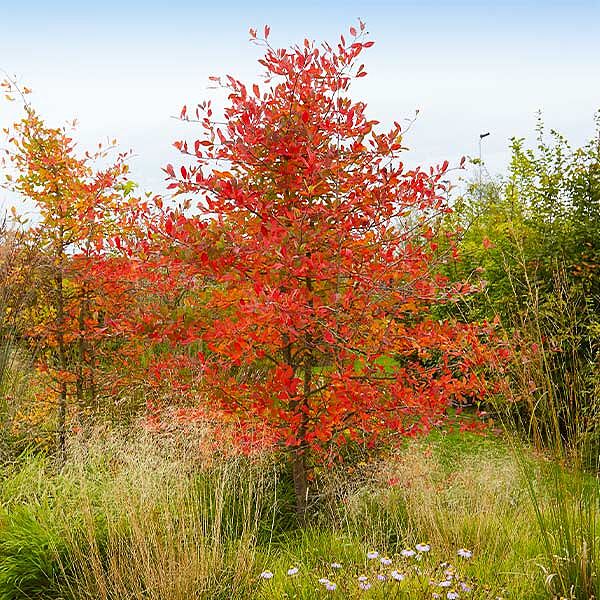
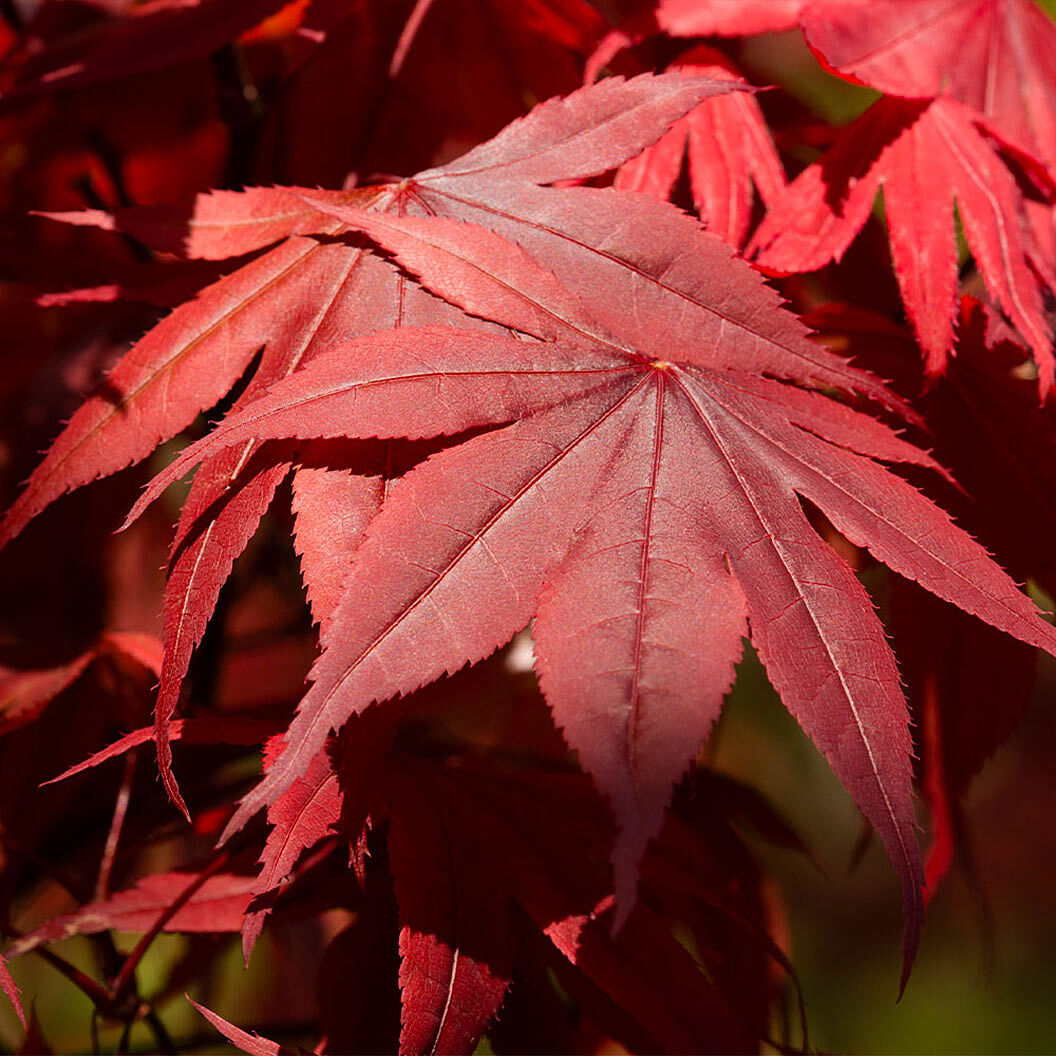
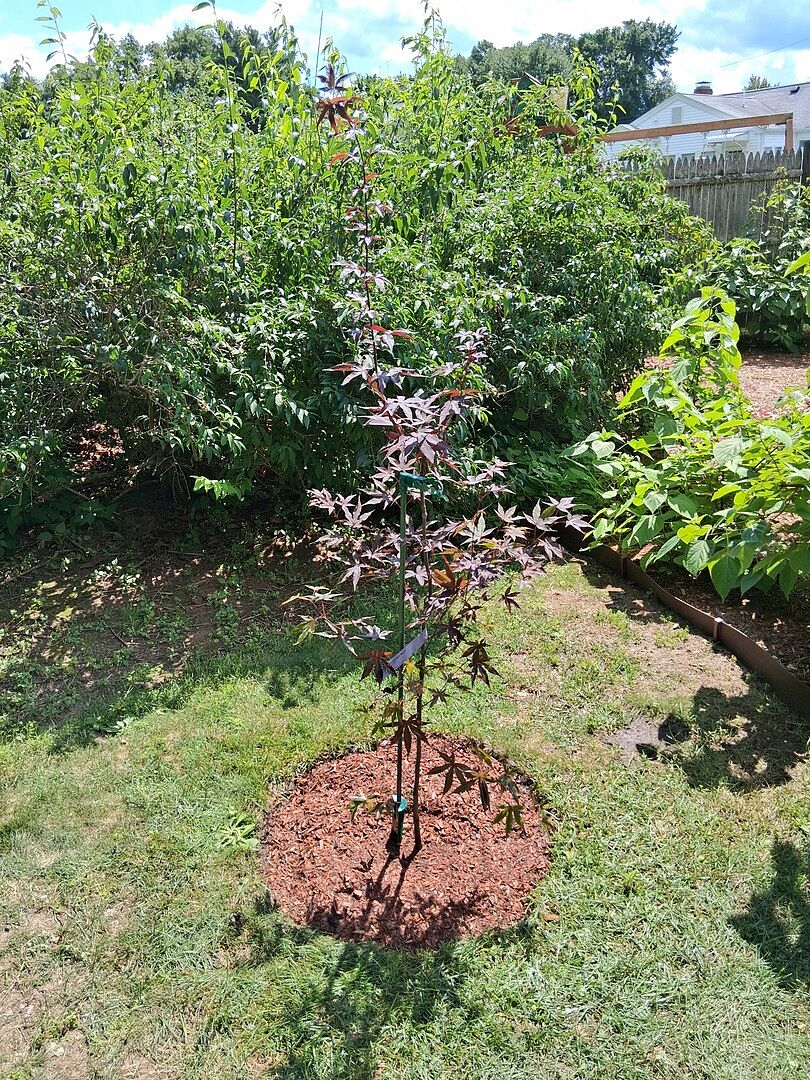
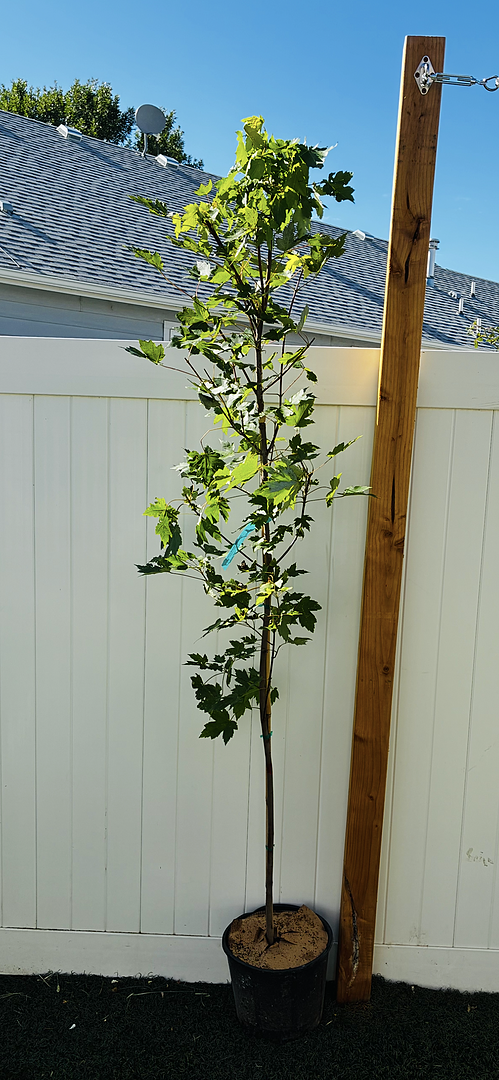
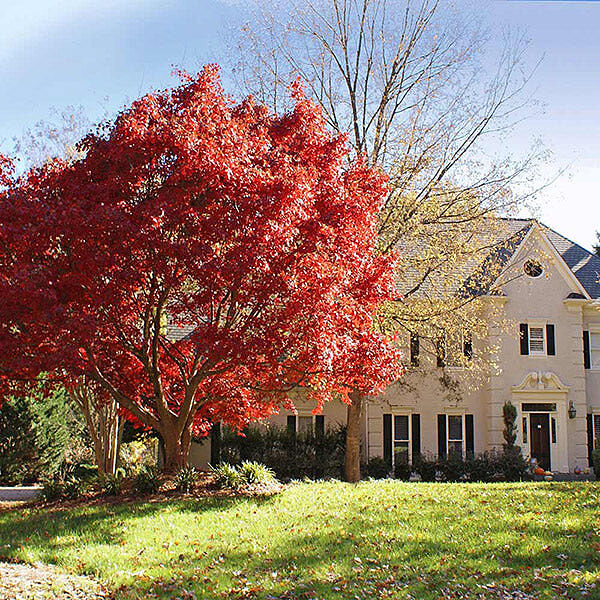
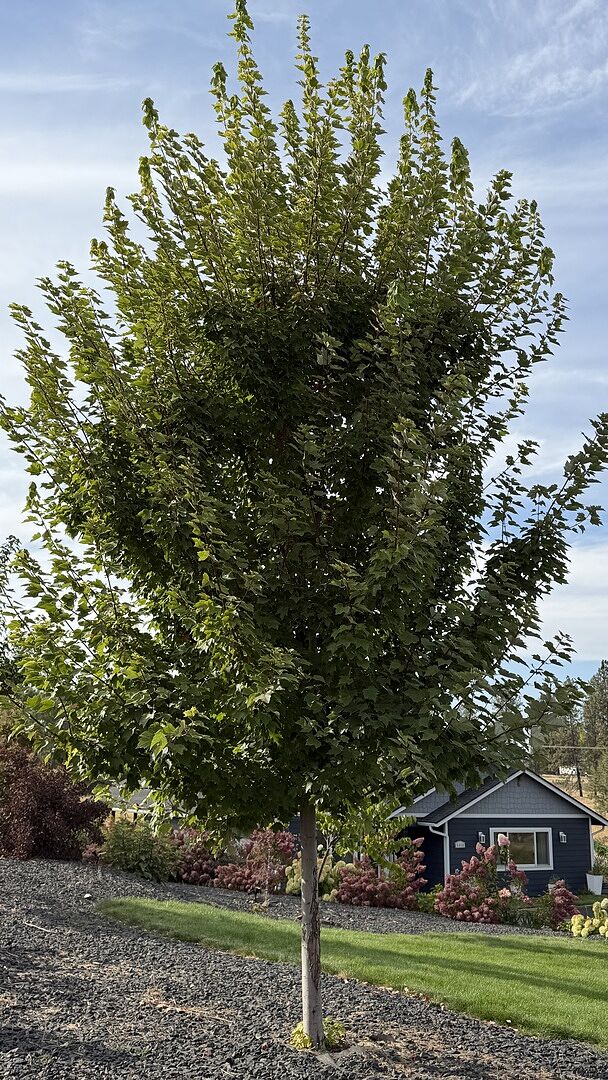
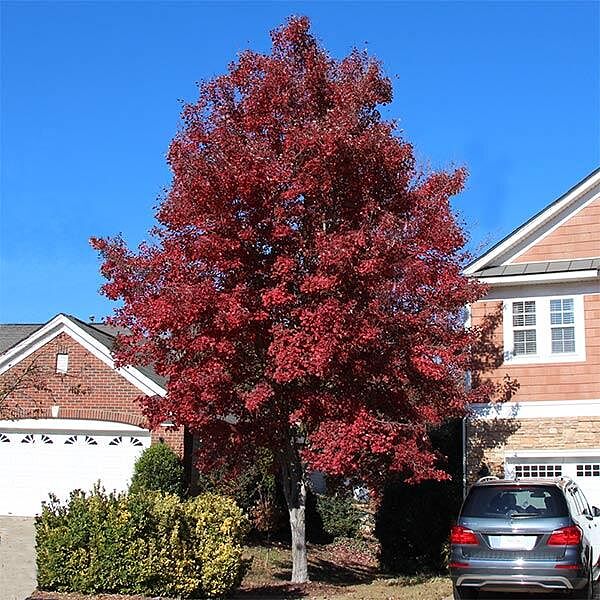
1. Autumn Blaze Red Maple

The fastest-growing shade tree on this list, Autumn Blaze Red Maple is also tied for the most cold hardy, so it's the pick for a bare yard in a cold climate.
- Mature size: 40–50 ft. tall, 30–40 ft. wide
- Zones: 3–8, hardy to -30℉
- Sunlight: full sun
Brilliant red fall color and minimal seed litter round it out. One tradeoff comes with that fast growth: the wood can be softer, so early structural pruning on a young tree pays for itself in storm resistance later.
2. Red Sunset Maple

Acer rubrum 'Franksred' carries a Drought Tolerance rating of moderate in its specifications.
- Mature size: 40–50 ft. tall, 30–35 ft. wide
- Zones: 4–9, hardy to -20℉
- Sunlight: full sun to partial shade
The Red Sunset Maple’s color arrives up to a month earlier than comparable maples and lasts longer. It also reaches a full zone further south than Autumn Blaze, which makes it the better hot-climate shade tree. For more, check out our blog comparing Red Sunset Maple vs. Autumn Blaze.
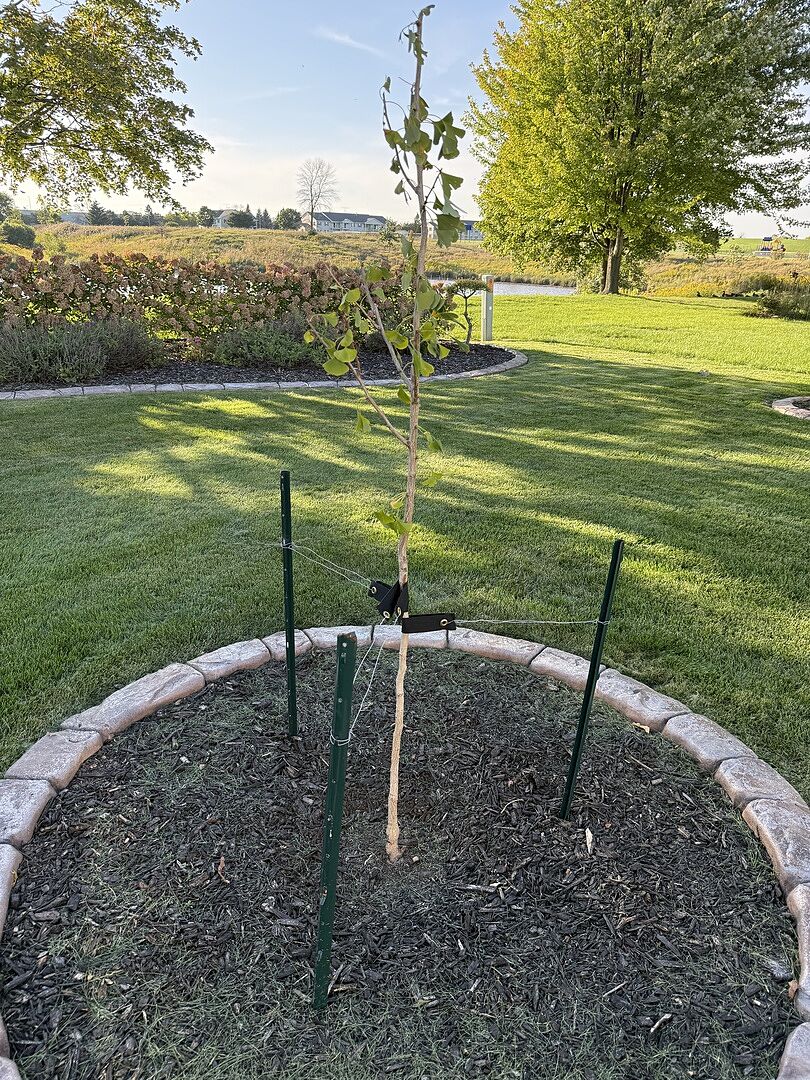
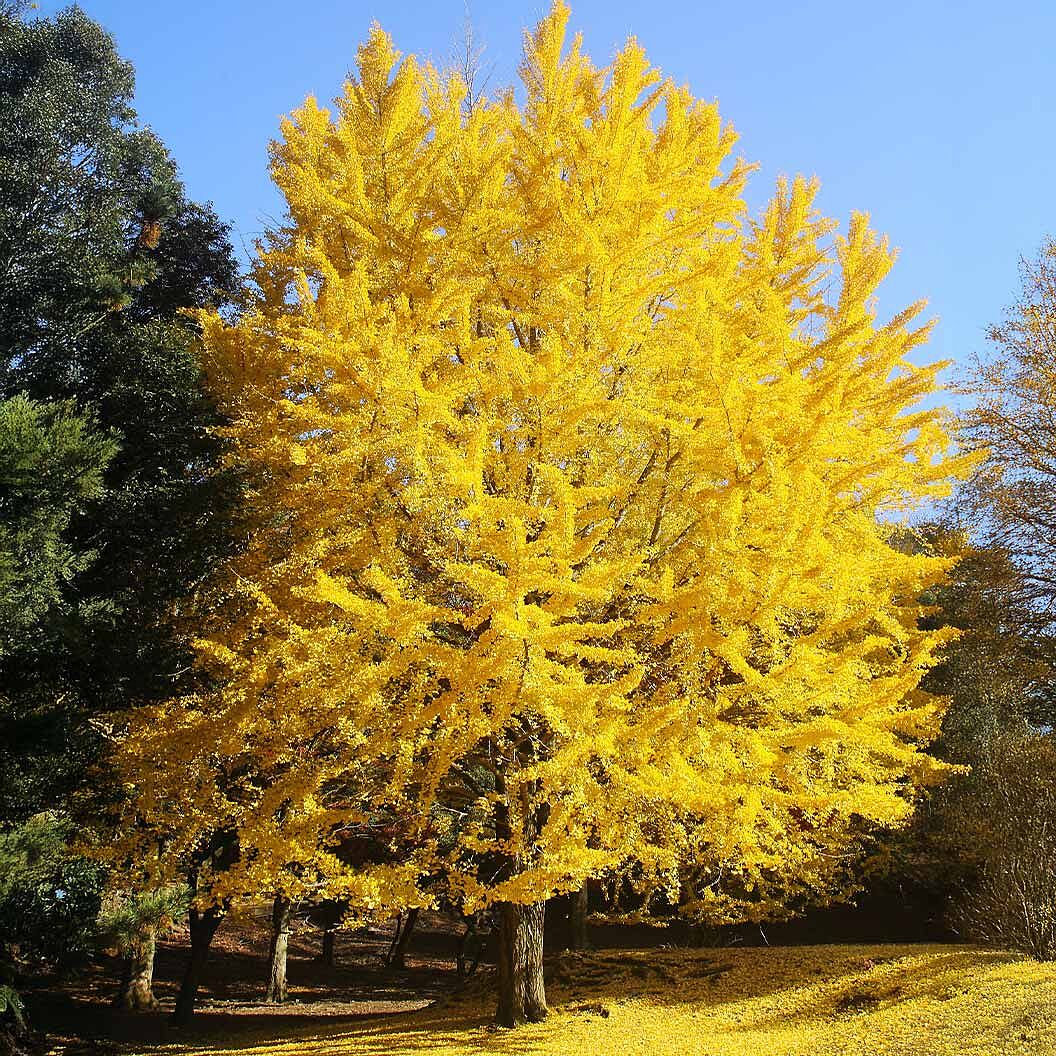
3. Ginkgo Tree

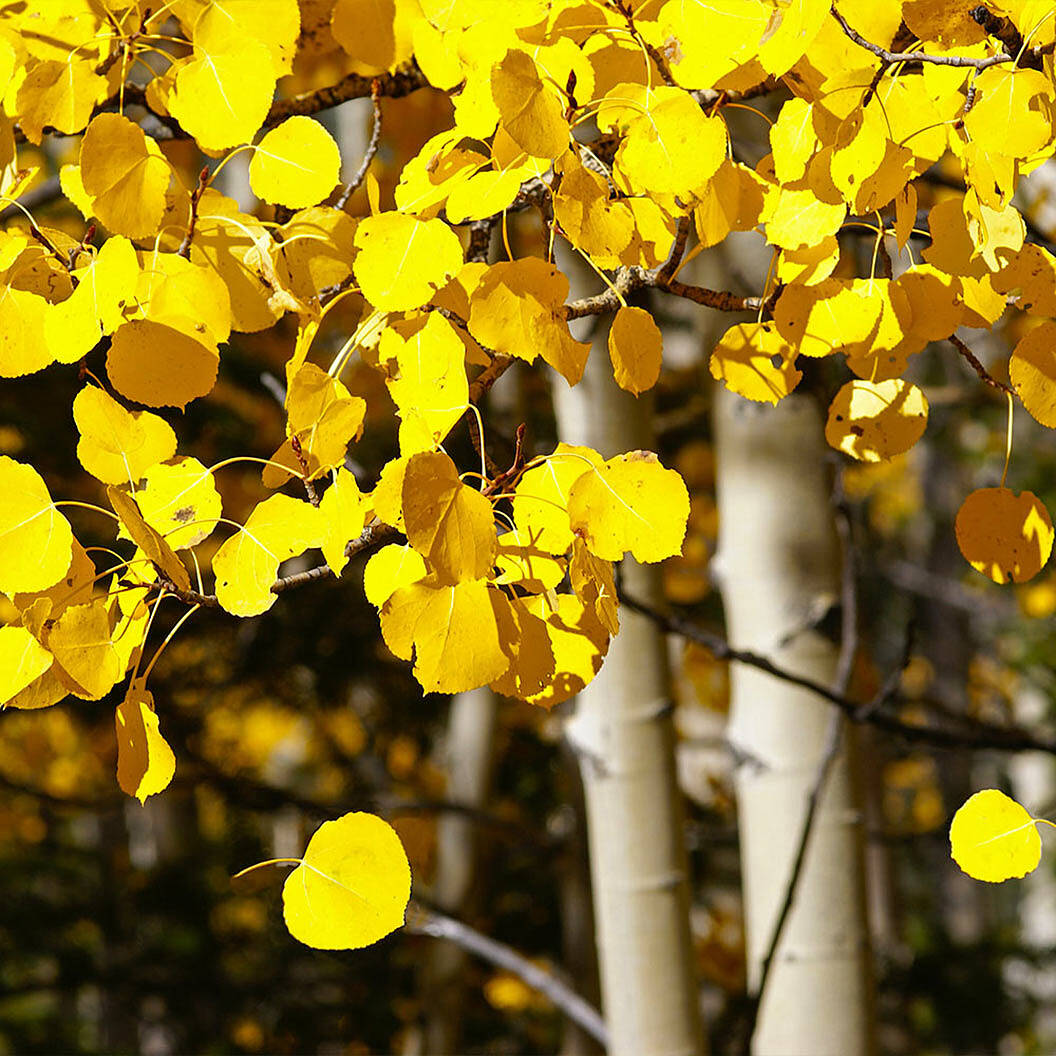
Few trees can handle tough urban conditions as well as Ginkgo biloba, or the Ginkgo Tree. Once established, it tolerates air pollution, compacted soil, and drought, which makes it a dependable urban tree and street tree choice. It's also deer resistant and drought tolerant.
- Mature size: 40–70 ft. tall, 30–40 ft. wide
- Zones: 3–9, hardy to -30℉
- Sunlight: full sun to partial shade
Fan-shaped leaves turn golden yellow in the fall. One thing to know before you buy: choose a male cultivar, because female ginkgos produce a notoriously foul-smelling fruit.
4. Chinese Pistache

Pistachia Chinensis gives you four seasons of interest on a mid-size frame: spring flowers, summer berries, red-orange fall color, and peeling winter bark.
- Mature size: 25–35 ft. tall, 25–35 ft. wide
- Zones: 6–10, hardy to 0℉
- Sunlight: full sun
It tolerates pollution and is adaptable to poor, sandy, or rocky soil types. One caveat: Chinese Pistache is flagged as invasive in Texas by Texas Invasives. If you're gardening there, the Eastern Redbud below is native across much of the state and handles heat and drought well.
Best drought tolerant evergreen and privacy trees
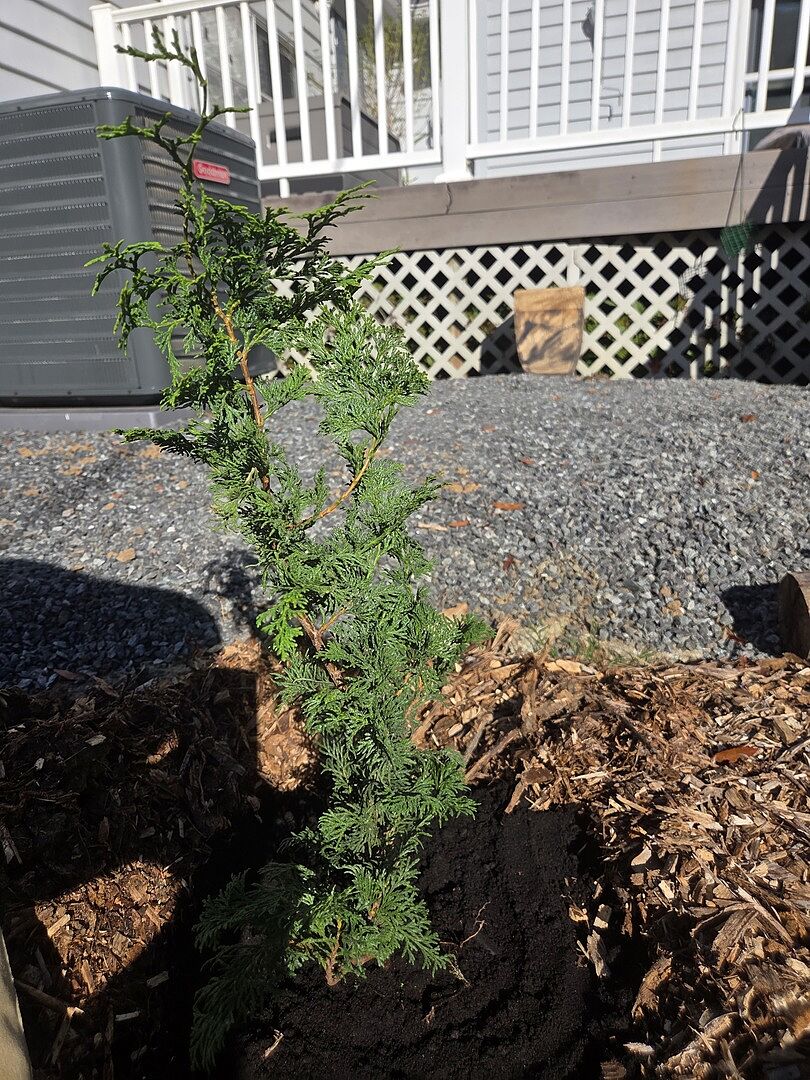
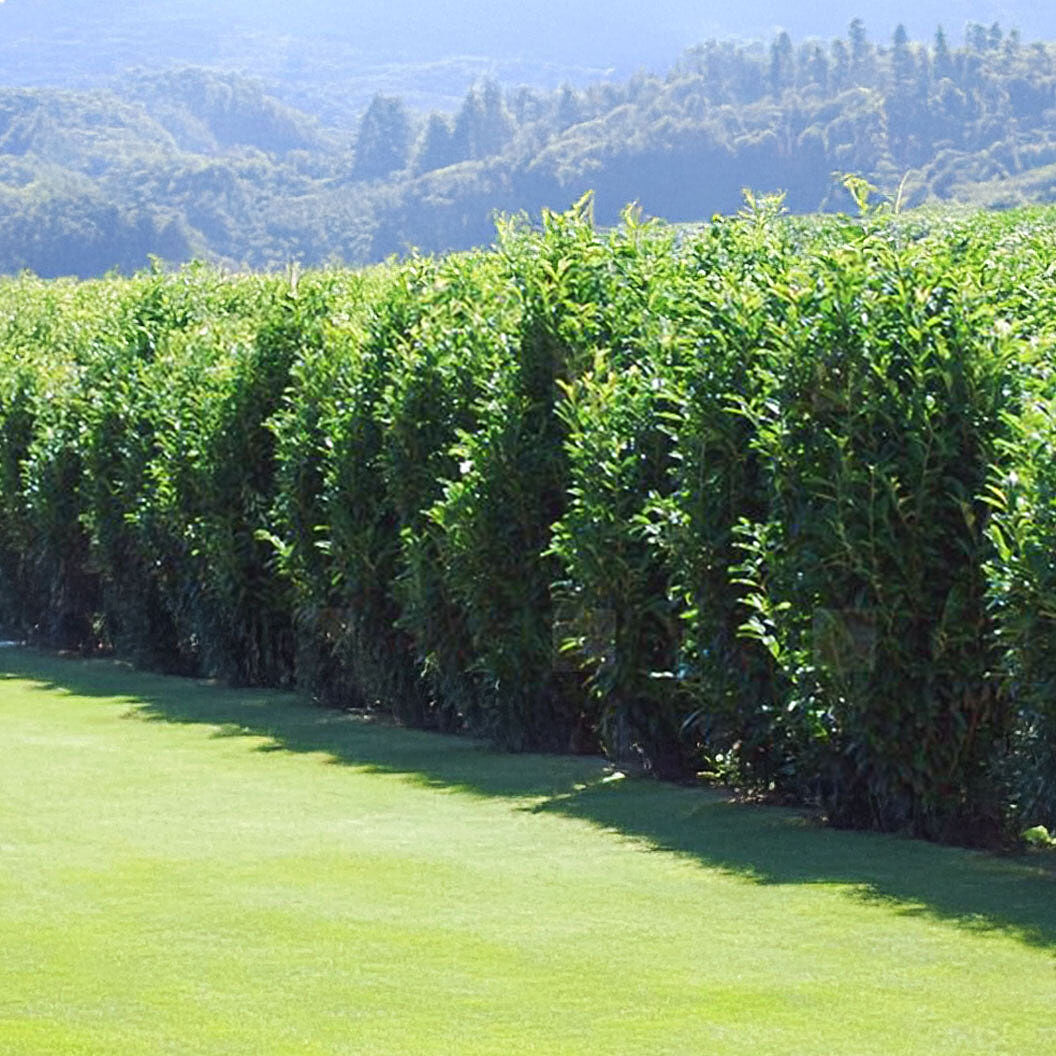
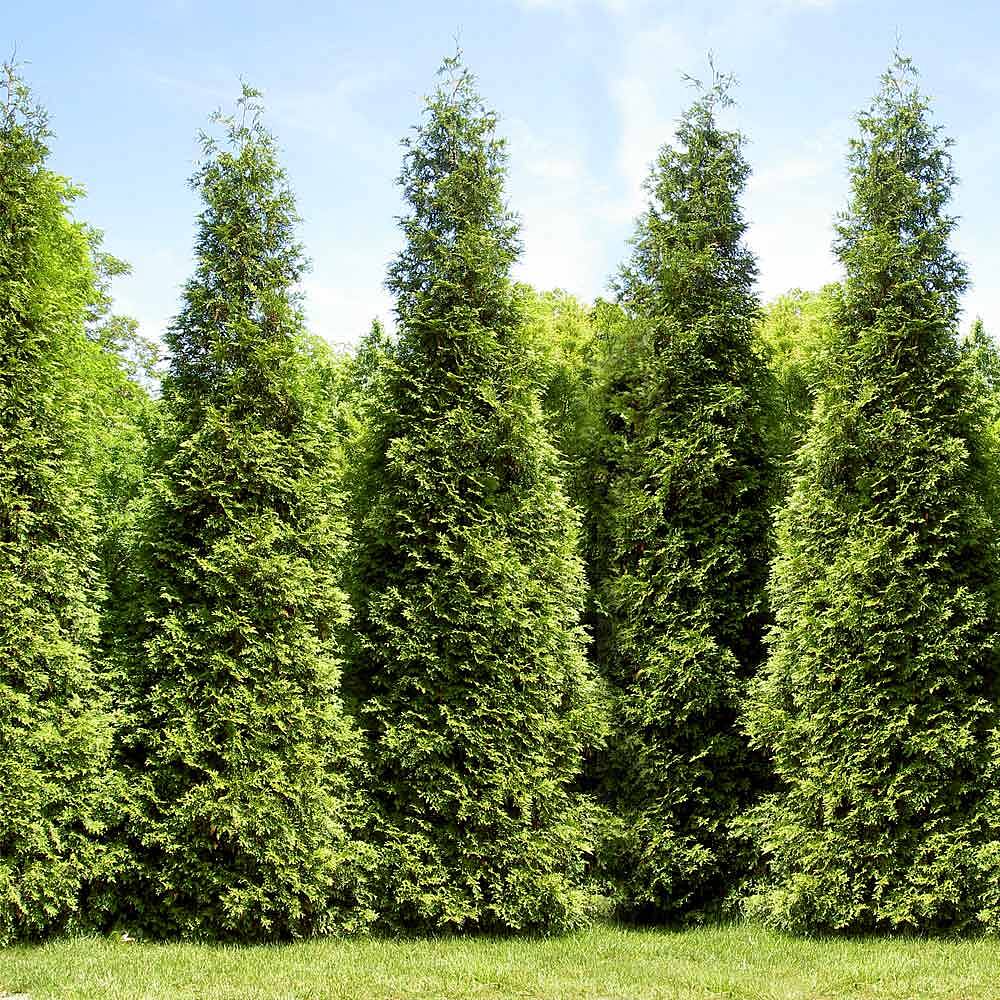
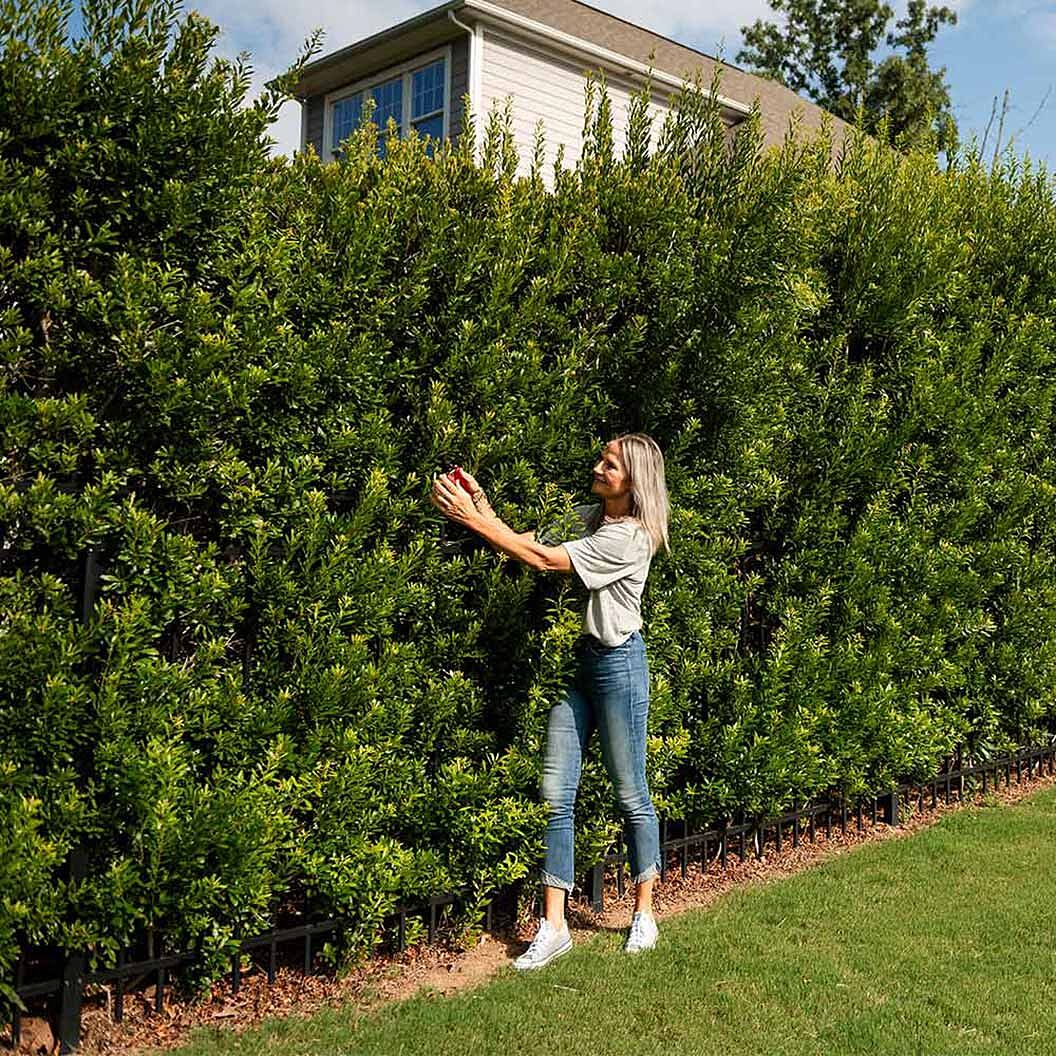
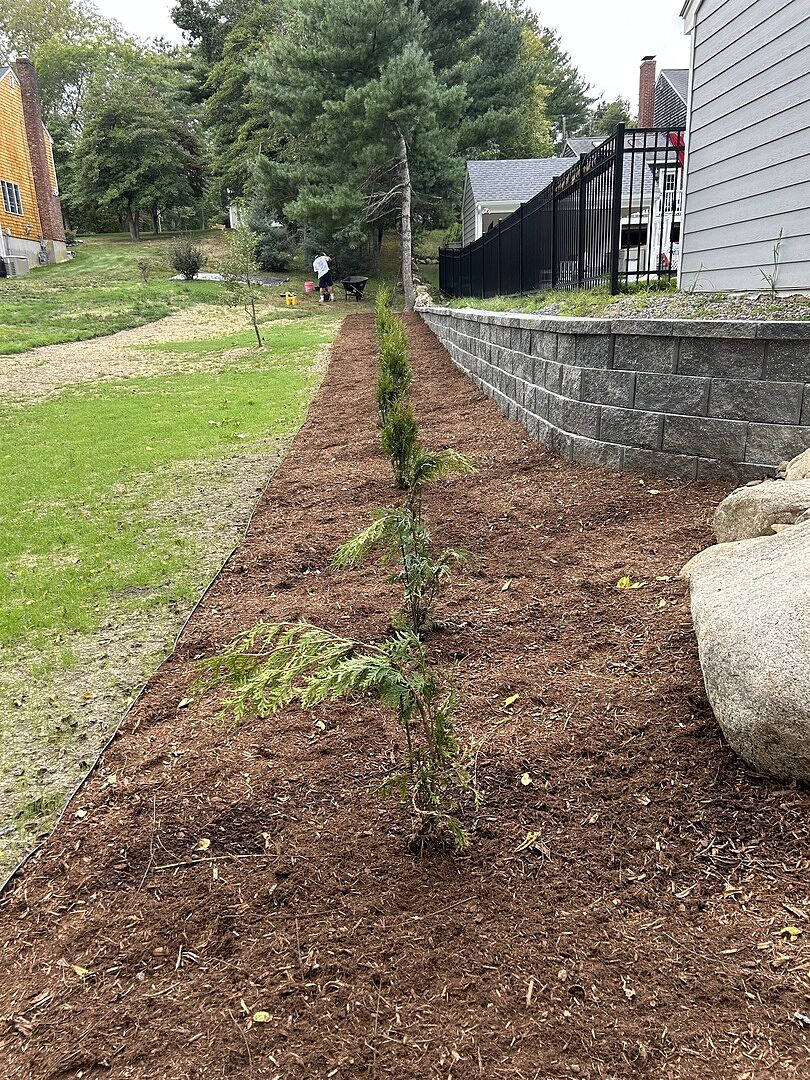
5. Thuja Green Giant Arborvitae

Tagged Deer Resistant, Drought Tolerant, and Fast Growing, Thuja Green Giant is the default fast privacy screen wherever there's room to spread.
- Mature size: 30–50 ft. tall, 12–15 ft. wide
- Zones: 5–8, hardy to -10℉
- Sunlight: full sun to partial shade
At 3 to 5 feet of growth per year, it closes a screen faster than almost anything else. Just give it that 12 to 15 feet wide.
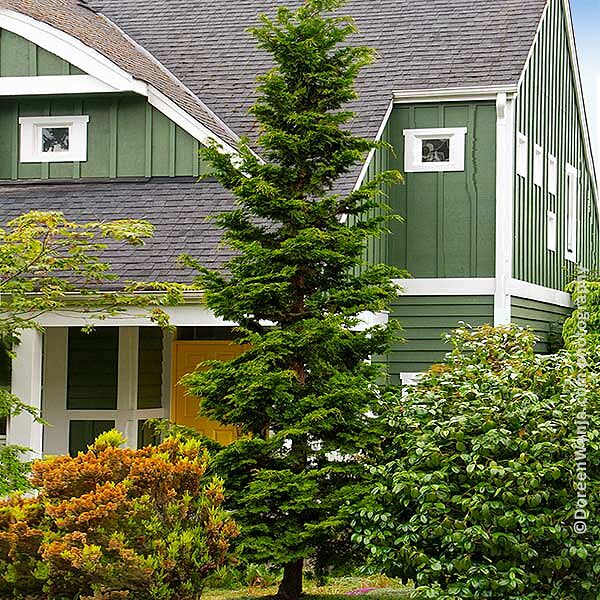
6. Leyland Cypress

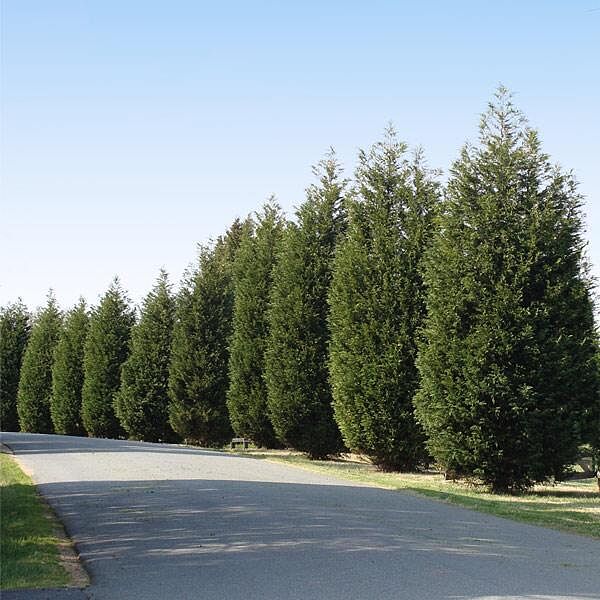
If you need a very fast screen on a large property, Cupressus × leylandii, or the Leyland Cypress, can grow 3 to 5 feet per year. It's also drought tolerant and fast growing.
- Mature size: 40–60 ft. tall, 20–25 ft. wide
- Zones: 6–10, hardy to 0℉
- Sunlight: full sun to partial shade
This is a tree for acreage, windbreaks, and large properties—not tight suburban lots. It needs substantial room and can be vulnerable to bagworms and canker, particularly when stressed or crowded.
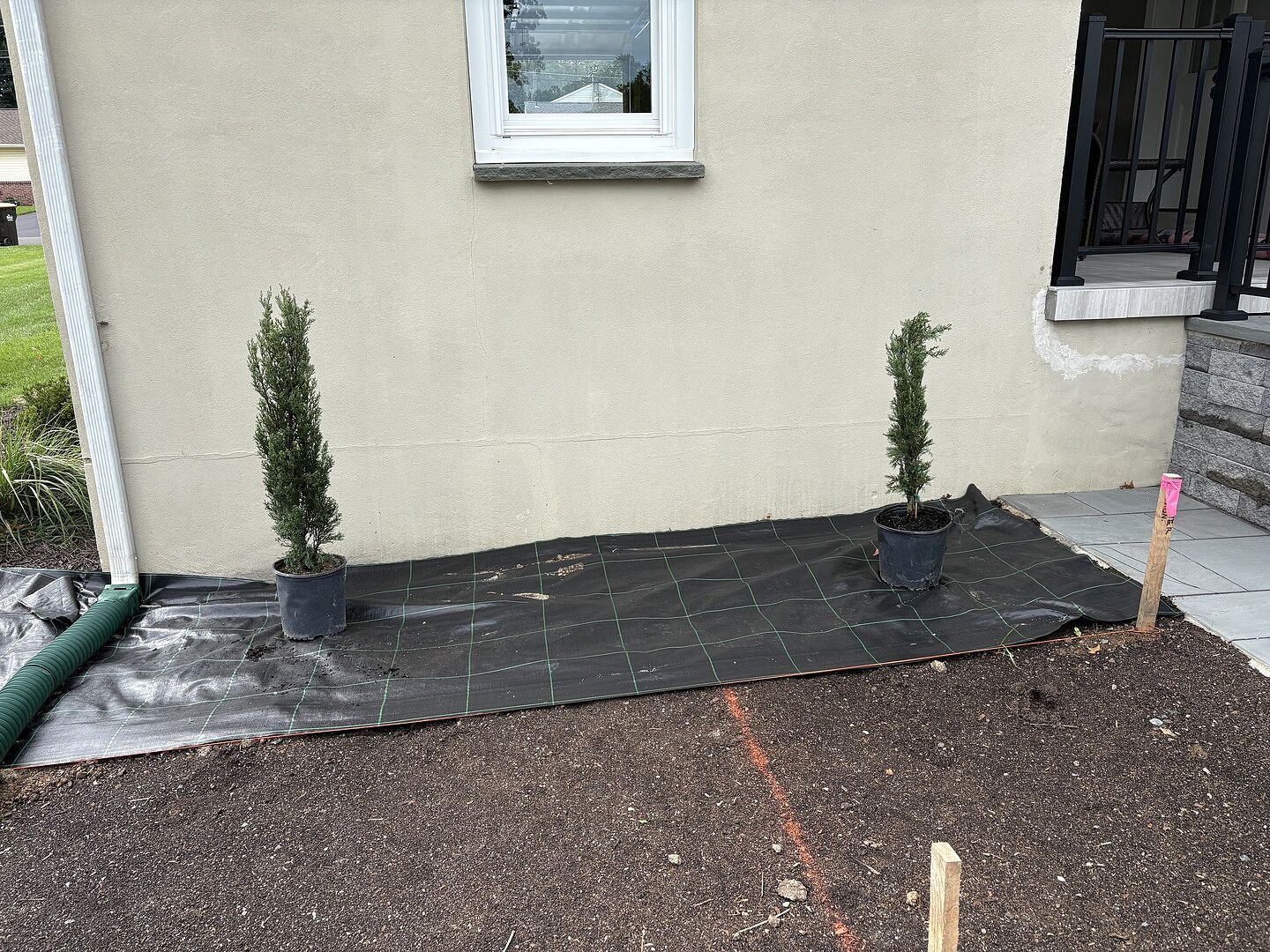
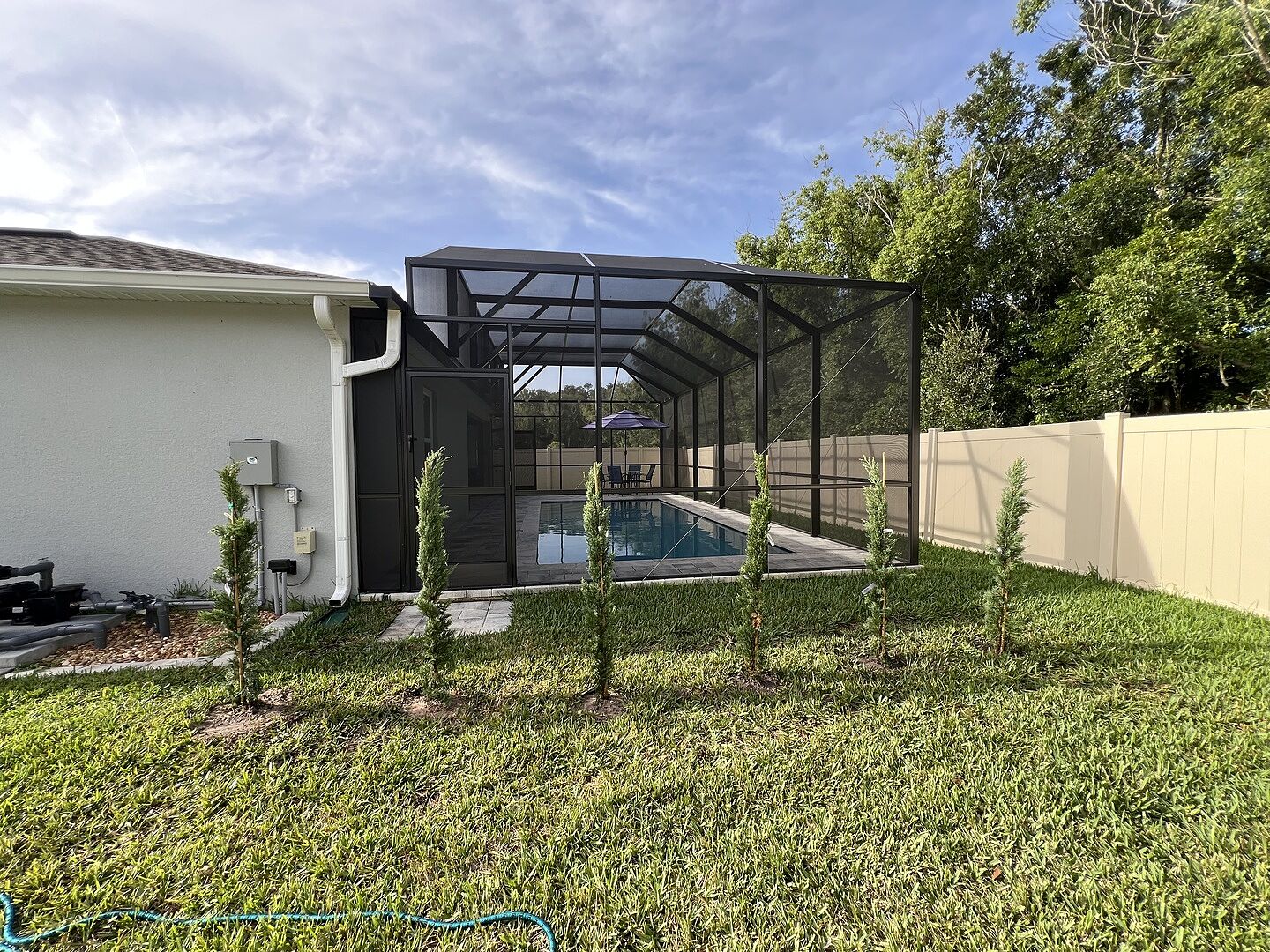
7. Italian Cypress

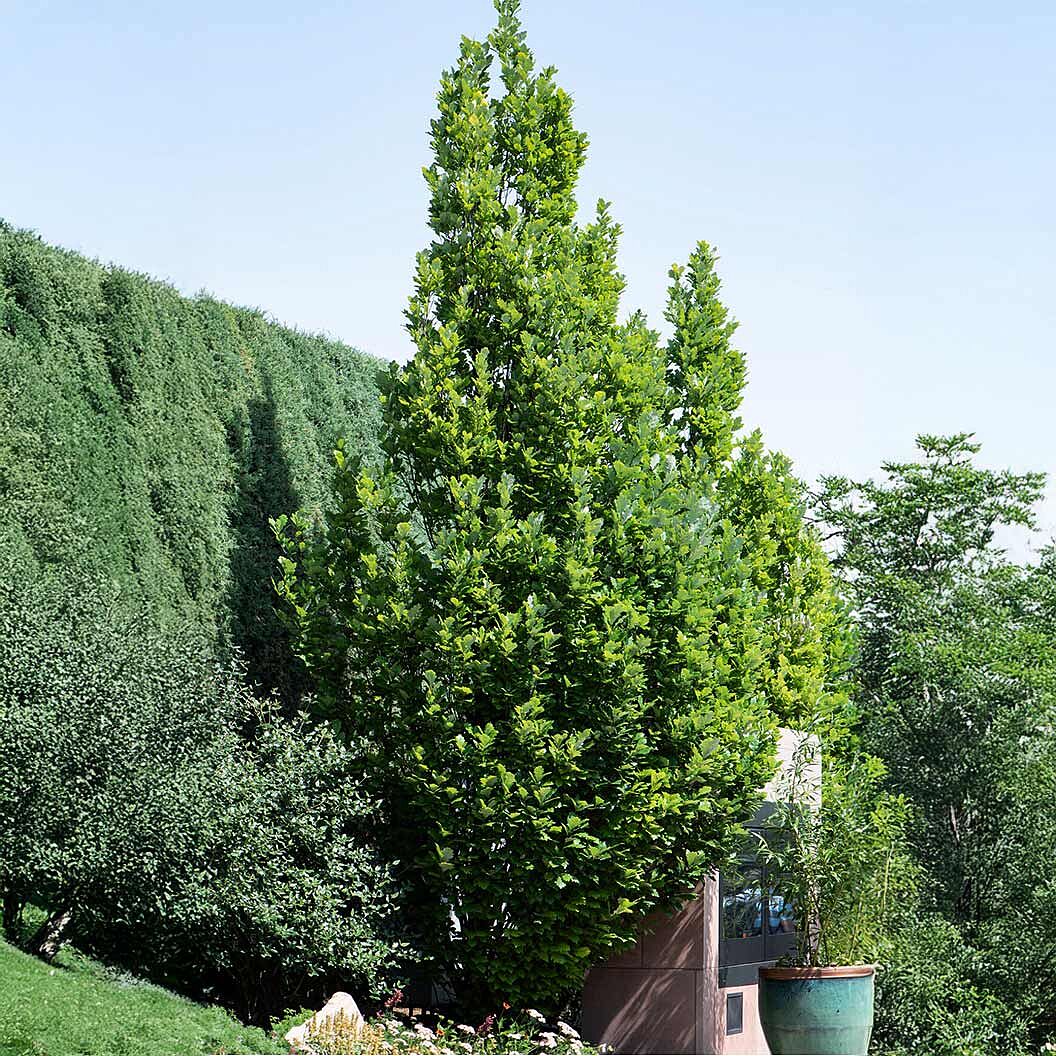
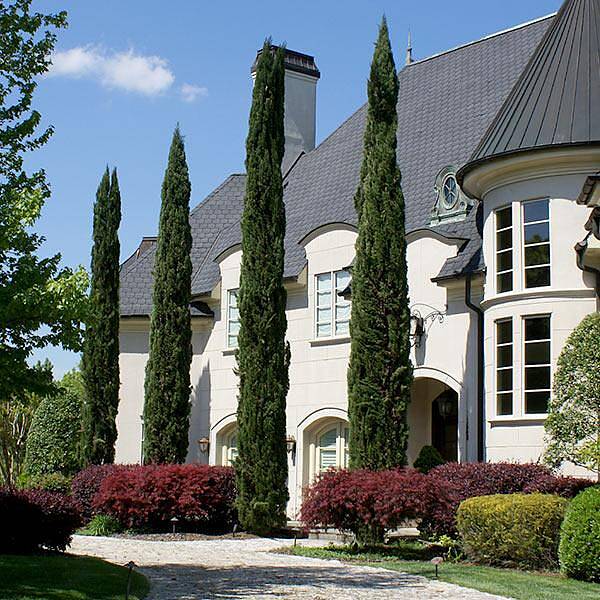
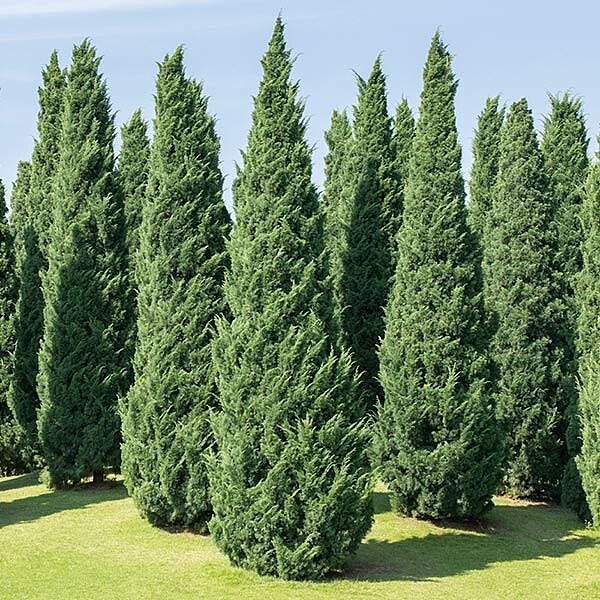
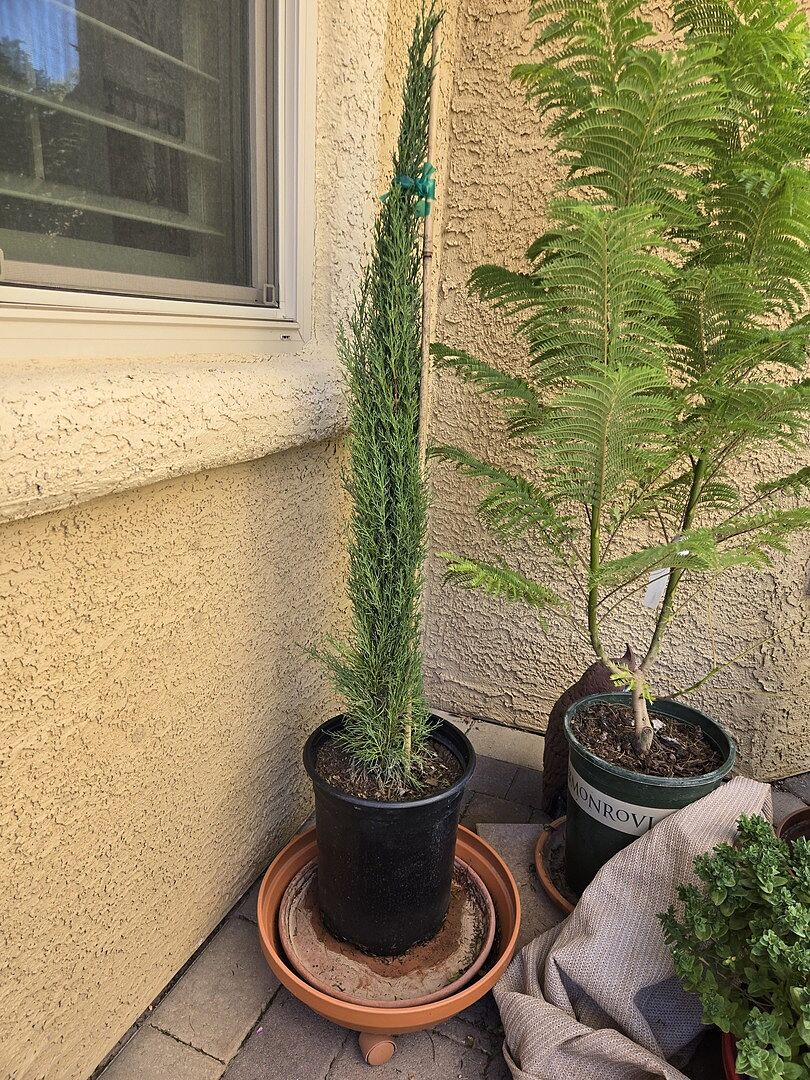
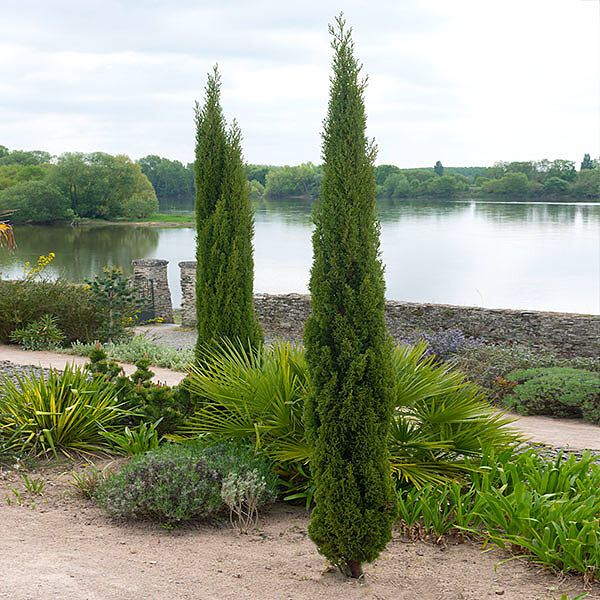
Lead with the zone range on this one, because it's the narrowest here: zones 8 to 10 only. Within that range, Cupressus sempervirens, or the Italian Cypress, is a remarkable plant, and is deer resistant, drought tolerant, and fast growing.
- Mature size: 35–40 ft. tall, 5 ft. wide
- Zones: 8–10, hardy to 20℉
- Sunlight: full sun to partial shade
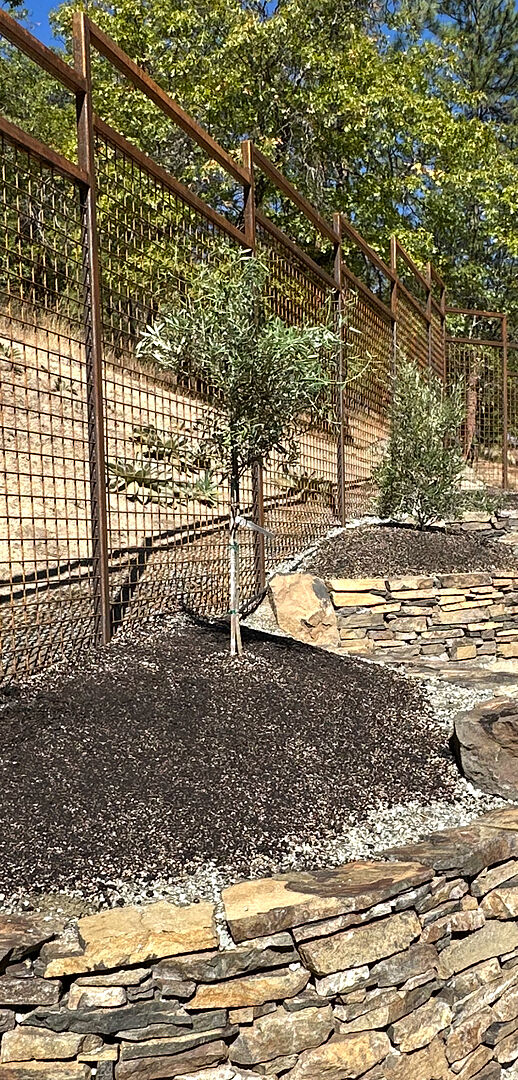
It can reach 40 feet while occupying only about a 5-foot footprint and can grow up to 3 feet per year. That combination makes it a natural for xeriscaping, a landscaping approach that uses drought-tolerant plants and minimizes the need for supplemental water. It's especially well suited to Southwest and California landscapes, and it pairs beautifully with the olive tree below.
8. Full Speed A Hedge American Pillar Arborvitae

When space is tight, American Pillar arborvitae is the tree you want. It’s drought tolerant and fast growing, and is the most cold-hardy evergreen option on this list.
- Mature size: 25��30 ft. tall, 4 ft. wide
- Zones: 3–8, hardy to -30℉
- Sunlight: full sun to partial shade
A 4-foot mature width screens a property line without taking over the yard, and it grows more than 3 feet a year. It also tolerates wet or dry conditions, an adaptability that's unusual on a list like this.
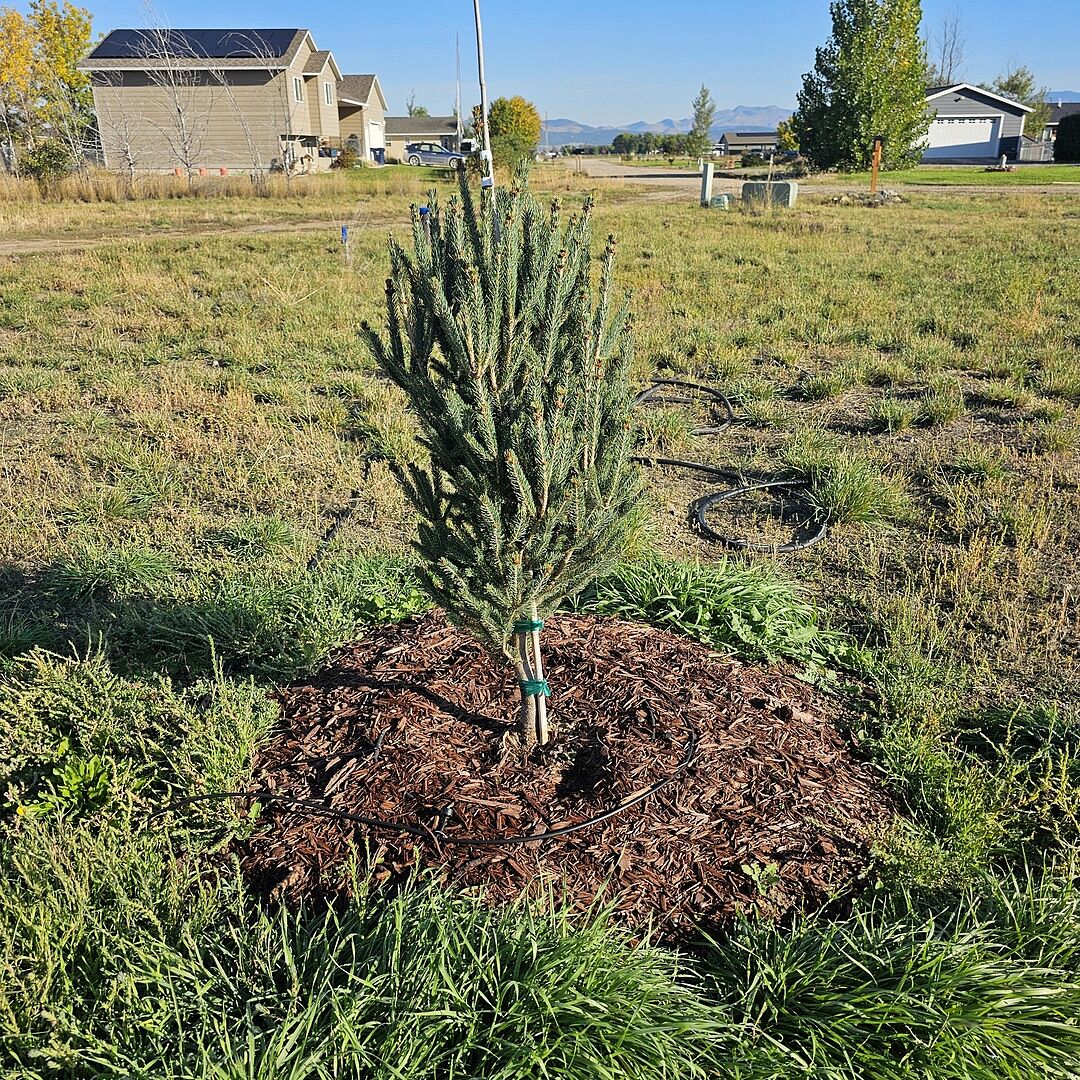
9. Skyrocket Juniper

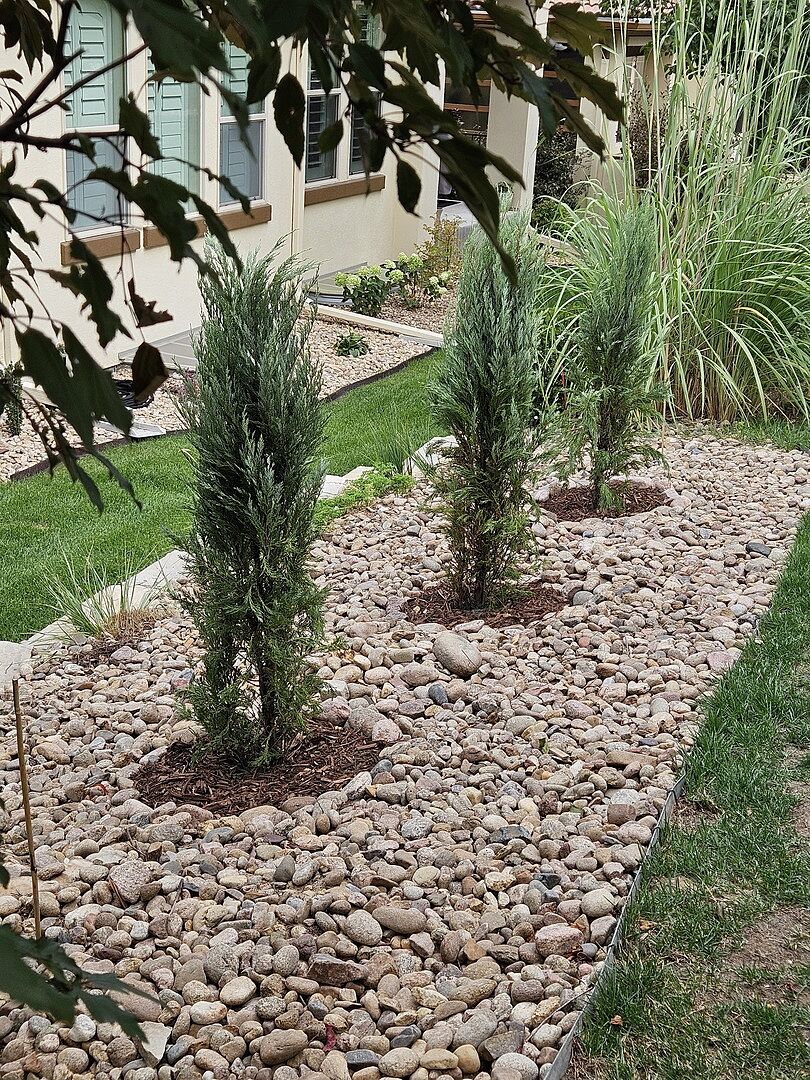
The narrowest tree here at 2 to 3 feet, Juniperus scopulorum 'Skyrocket' is deer resistant, drought tolerant, and fast growing.
- Mature size: 15 ft. tall, 2–3 ft. wide
- Zones: 4–9, hardy to -20℉
- Sunlight: full sun to partial shade
Think of it as a hardy substitute for Italian Cypress in cold climates, growing about a foot a year. Junipers hate wet feet far more than dry ones, so drainage matters more here than your watering schedule. Note it doesn't ship to CA, AZ, AK, or HI.
Best drought-tolerant flowering trees
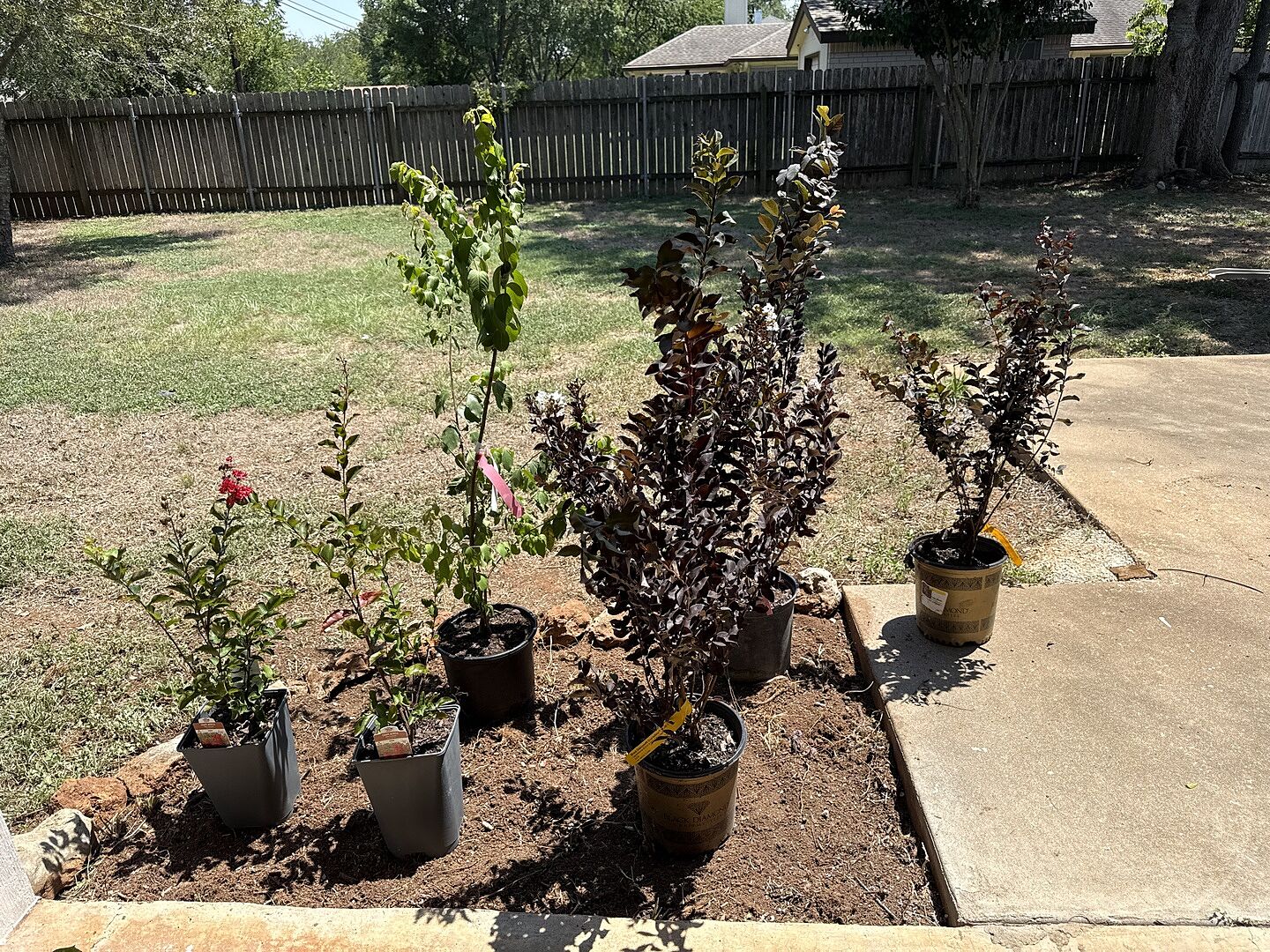
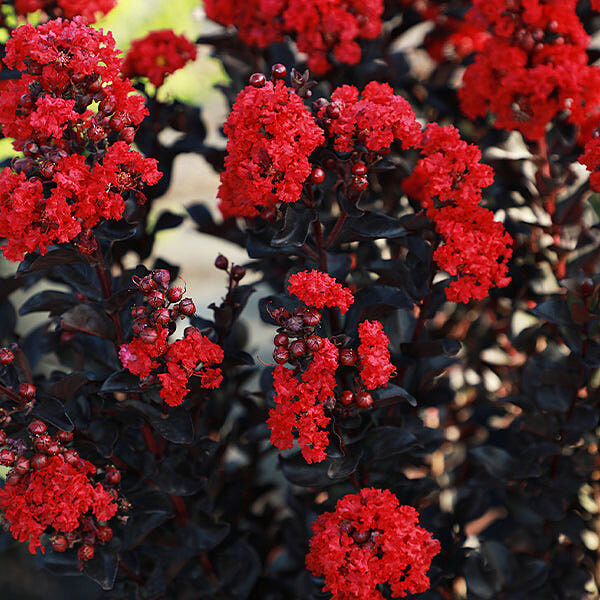
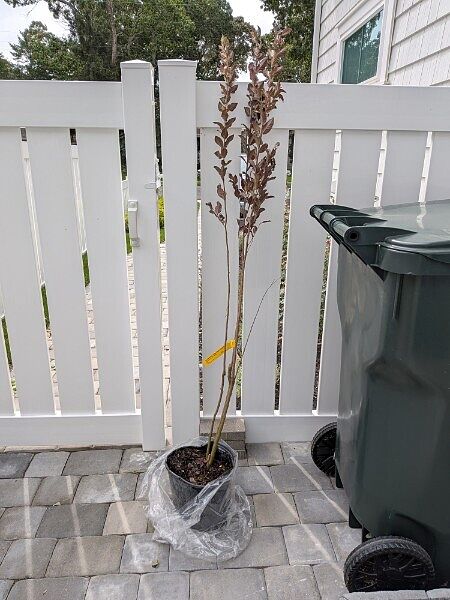
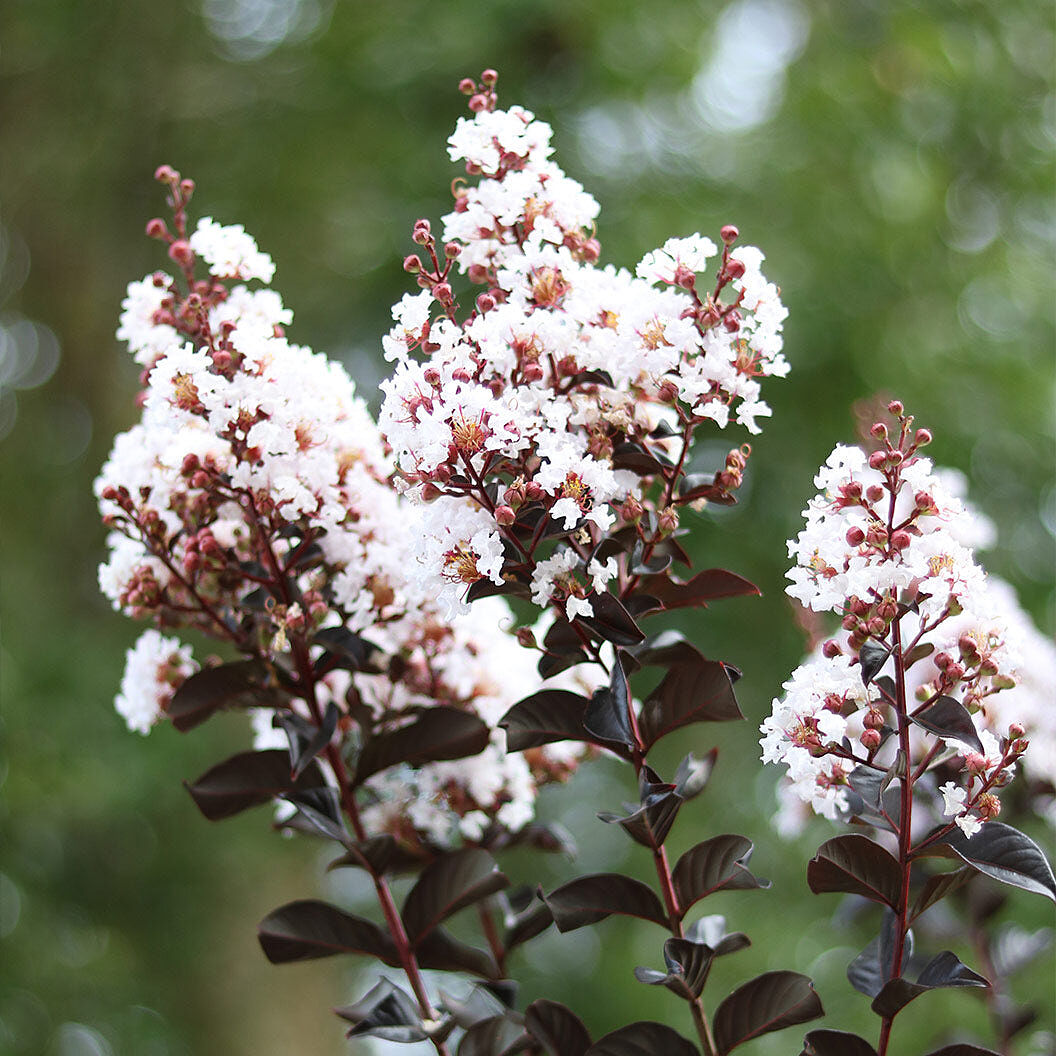
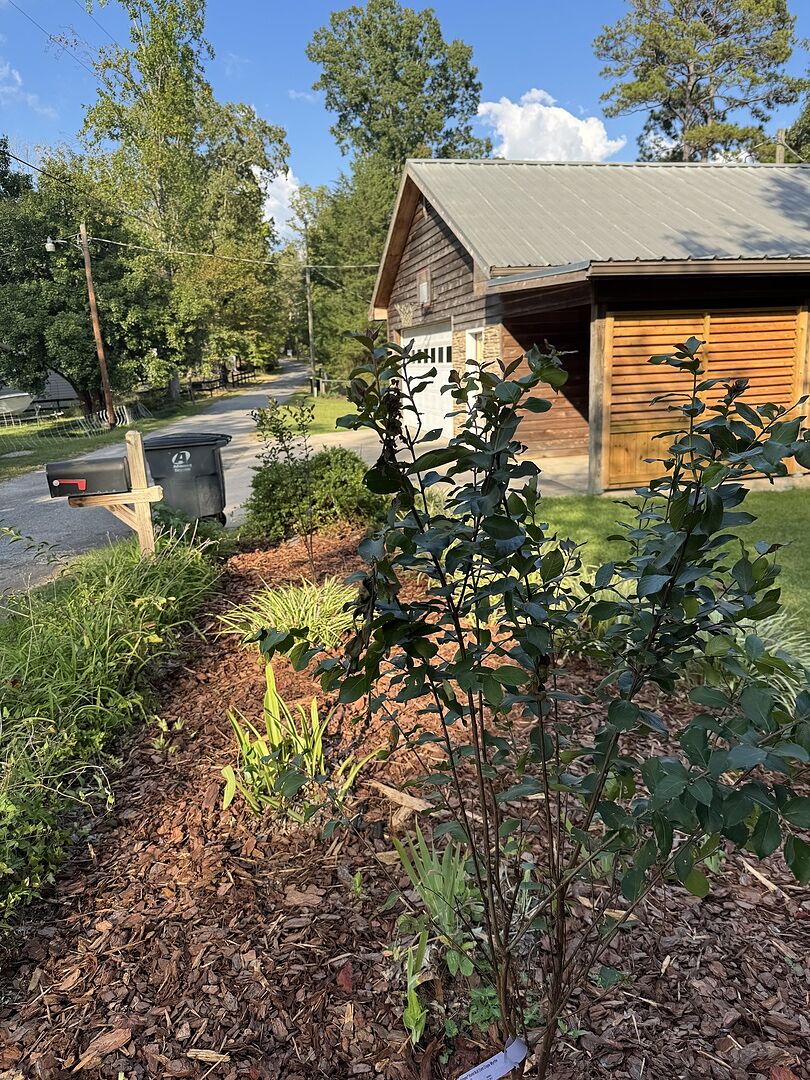
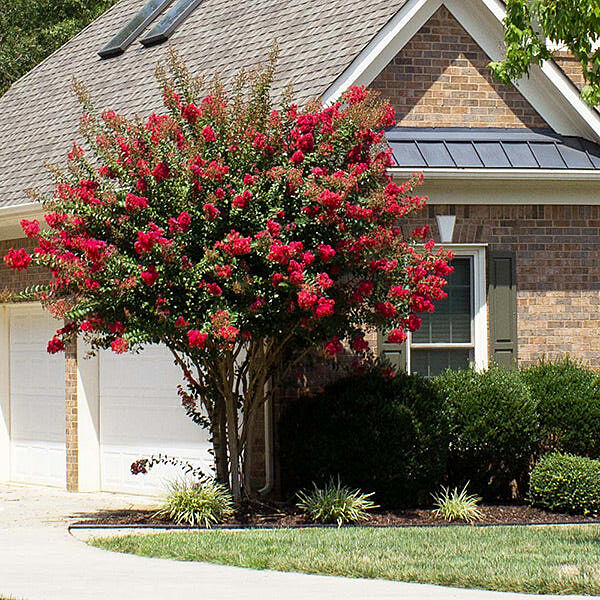
10. Muskogee Crape Myrtle

Crape myrtle is the largest plant group in our drought-tolerant collection, with 32 varieties. That's no coincidence: these trees perform particularly well in heat and drought.
- Mature size: 20–30 ft. tall, 10–15 ft. wide
- Zones: 6–9, hardy to 0℉
- Sunlight: full sun
Muskogee crape myrtle blooms lavender for up to 120 days, carries exfoliating cinnamon bark, turns red-orange in fall, and resists the powdery mildew that plagues other crape myrtles. The most common care mistake is topping it into knuckled stubs, sometimes called crape murder. Instead, thin selectively to maintain the tree’s showy, ornamental shape.
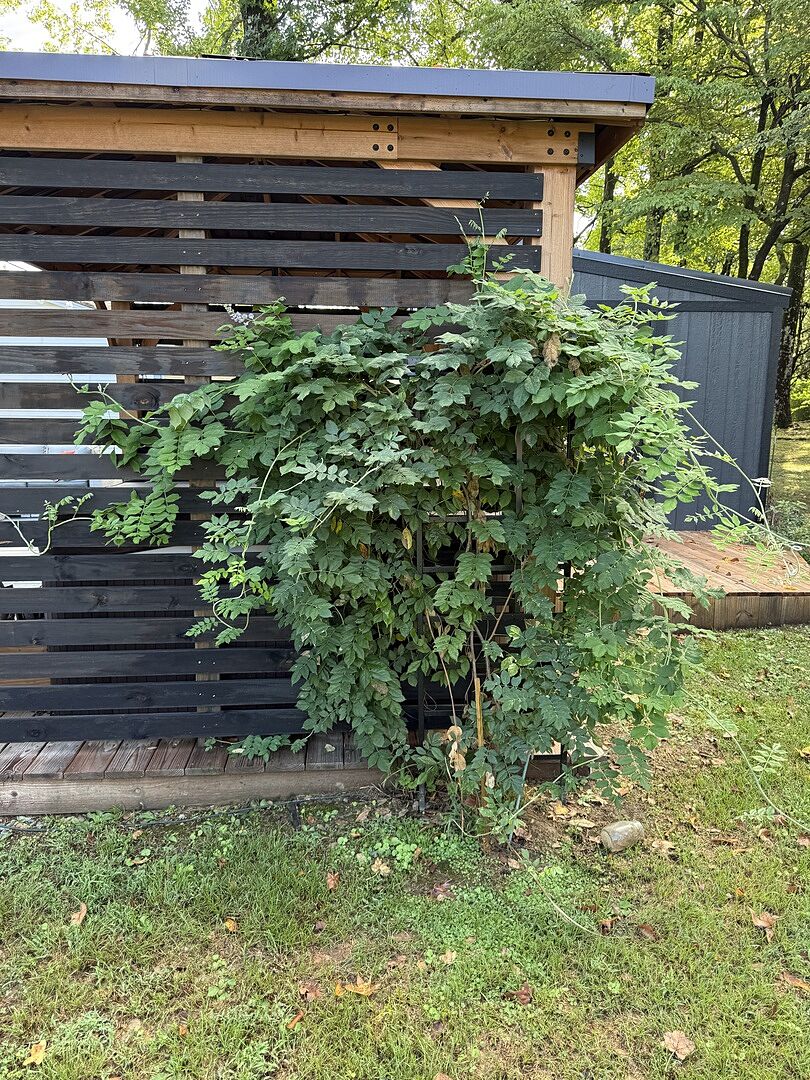
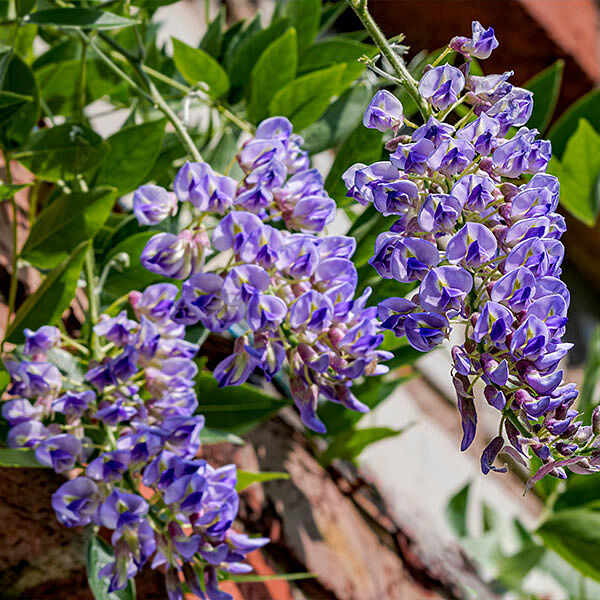
11. Wisteria Tree

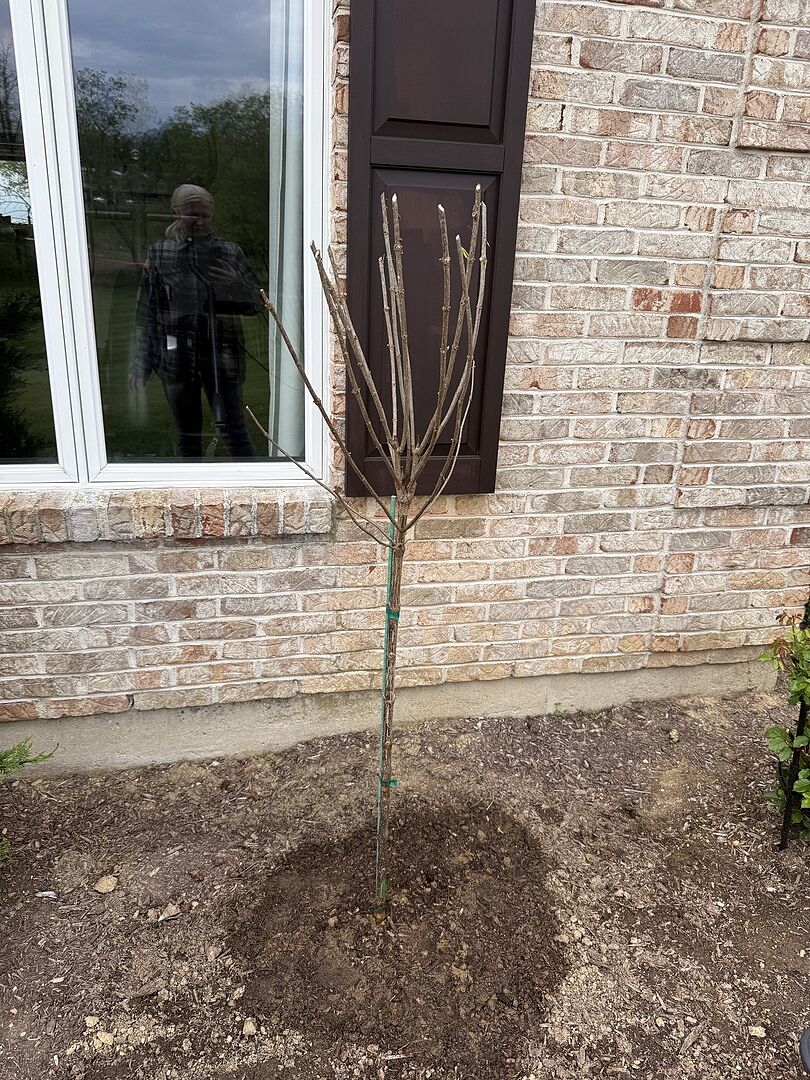
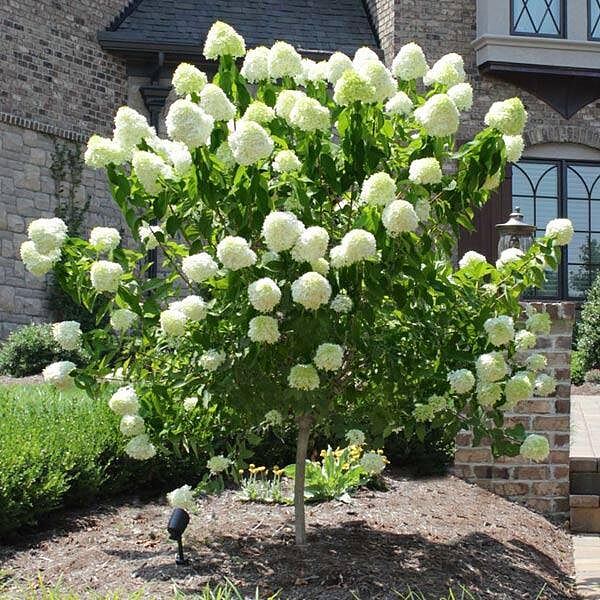
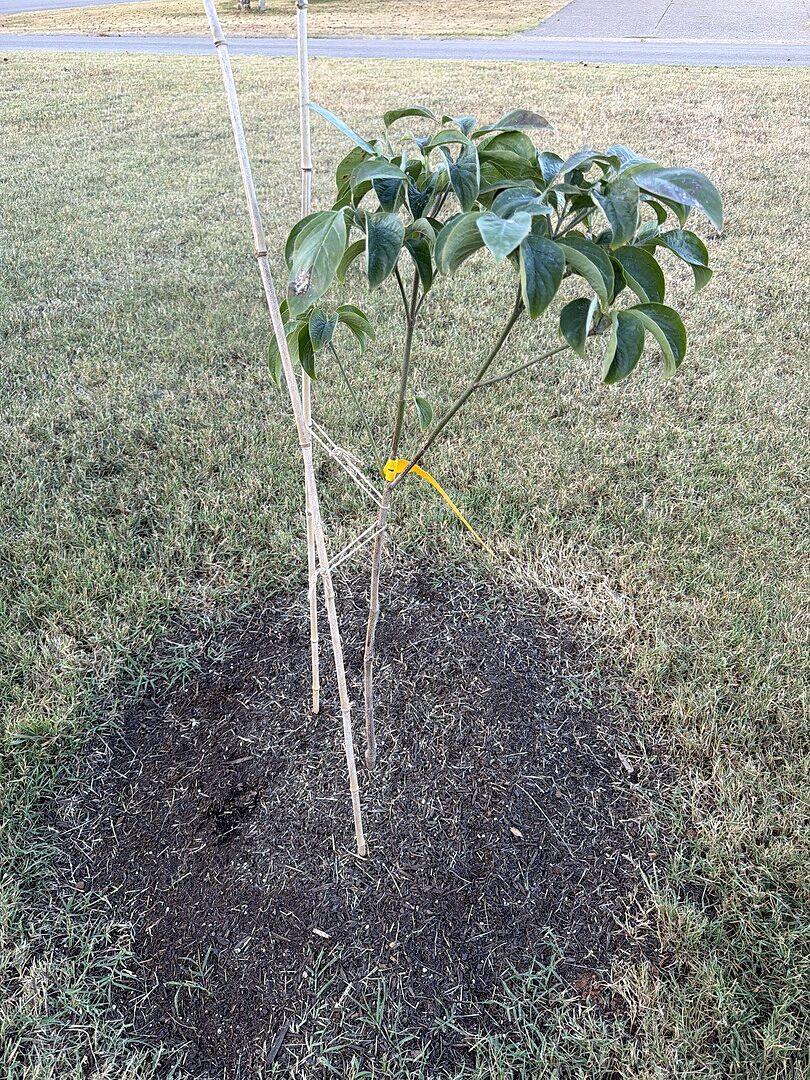
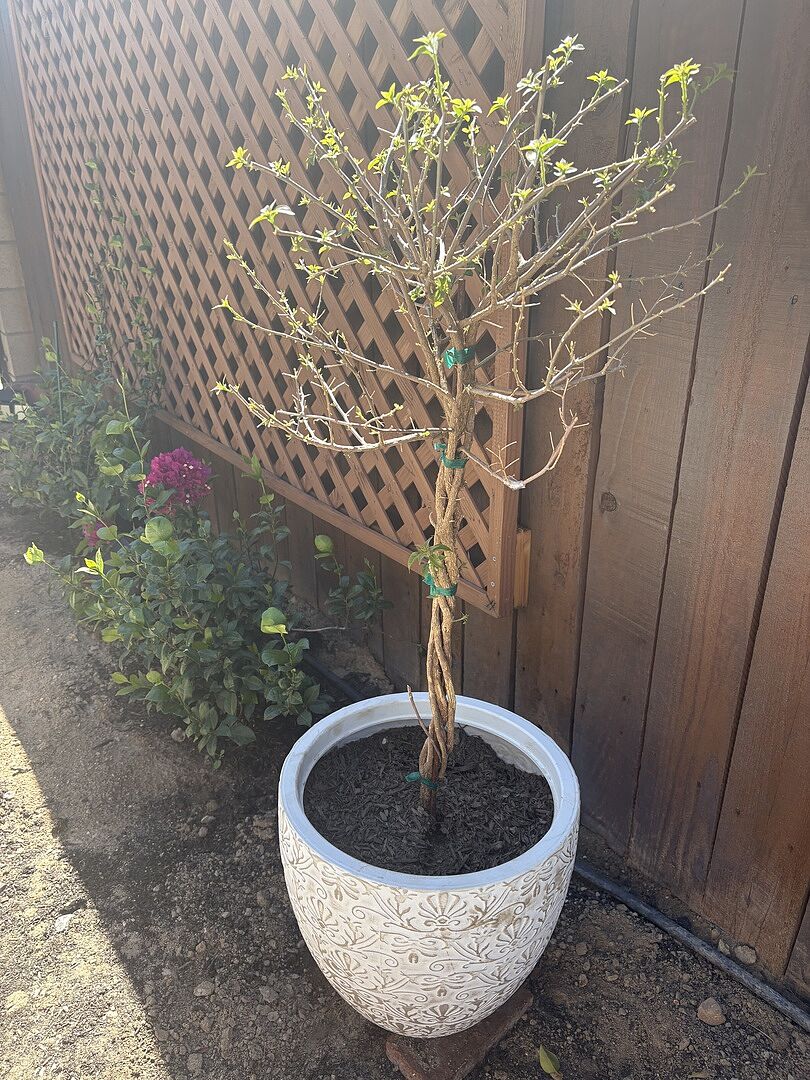
The Wisteria Tree is the smallest tree on the list, and that's exactly why it earns a spot. Wisteria sinensis is a vine trained to a standard, so you get cascading spring blooms in a compact form.
- Mature size: 6–10 ft. tall, 8–10 ft. wide
- Zones: 4–9, hardy to -20℉
- Sunlight: full sun to partial shade
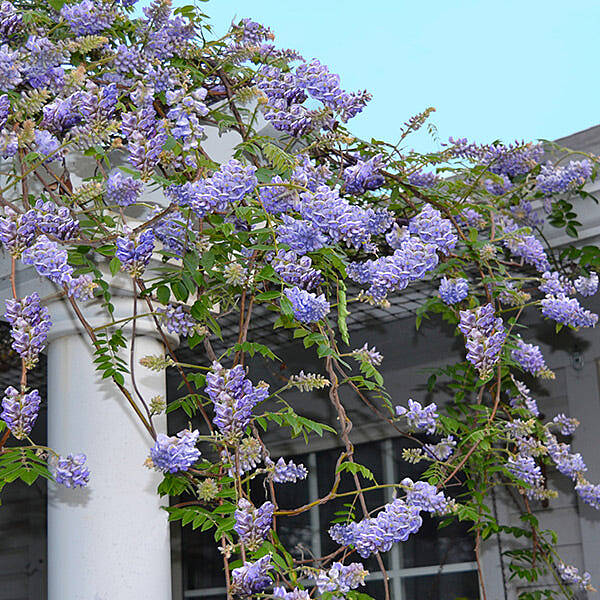
Fragrant violet-blue flowers arrive from spring into early summer, and it's deer resistant and drought tolerant. An important caveat: this is Chinese wisteria, which is invasive across much of the Southeast. The tree form and regular pruning are what keep it contained. If you'd rather not manage that, our Amethyst Falls American wisteria is the native alternative.
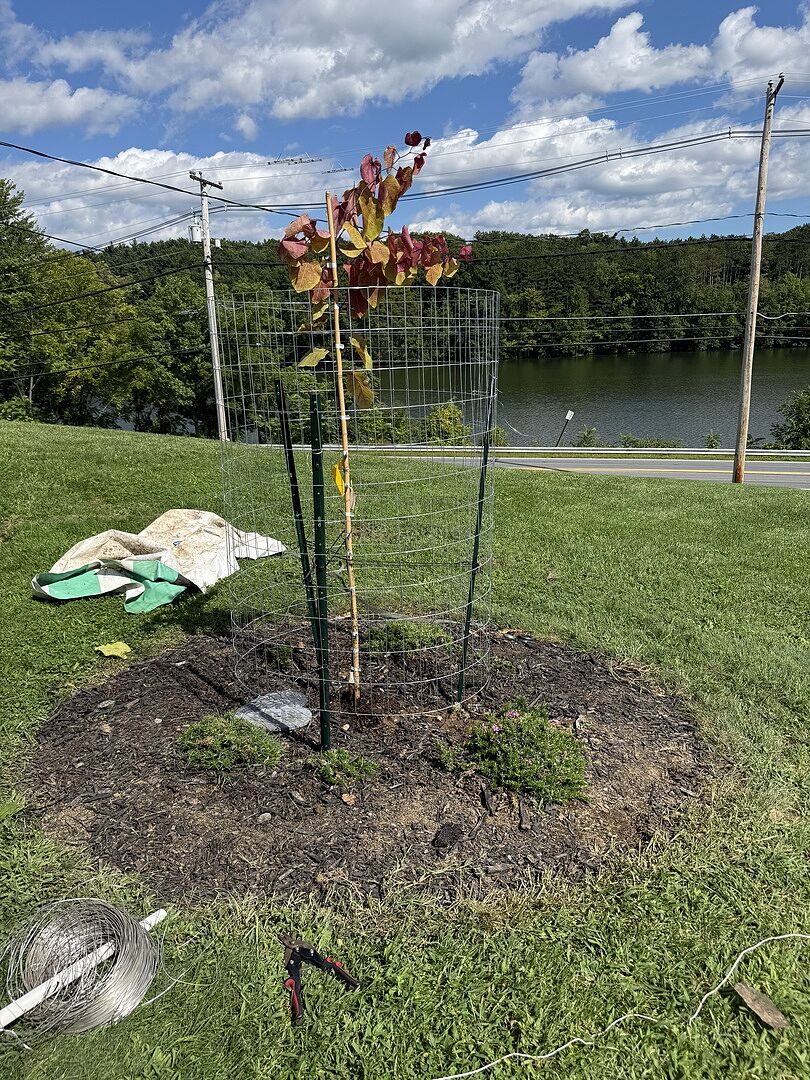
12. Eastern Redbud

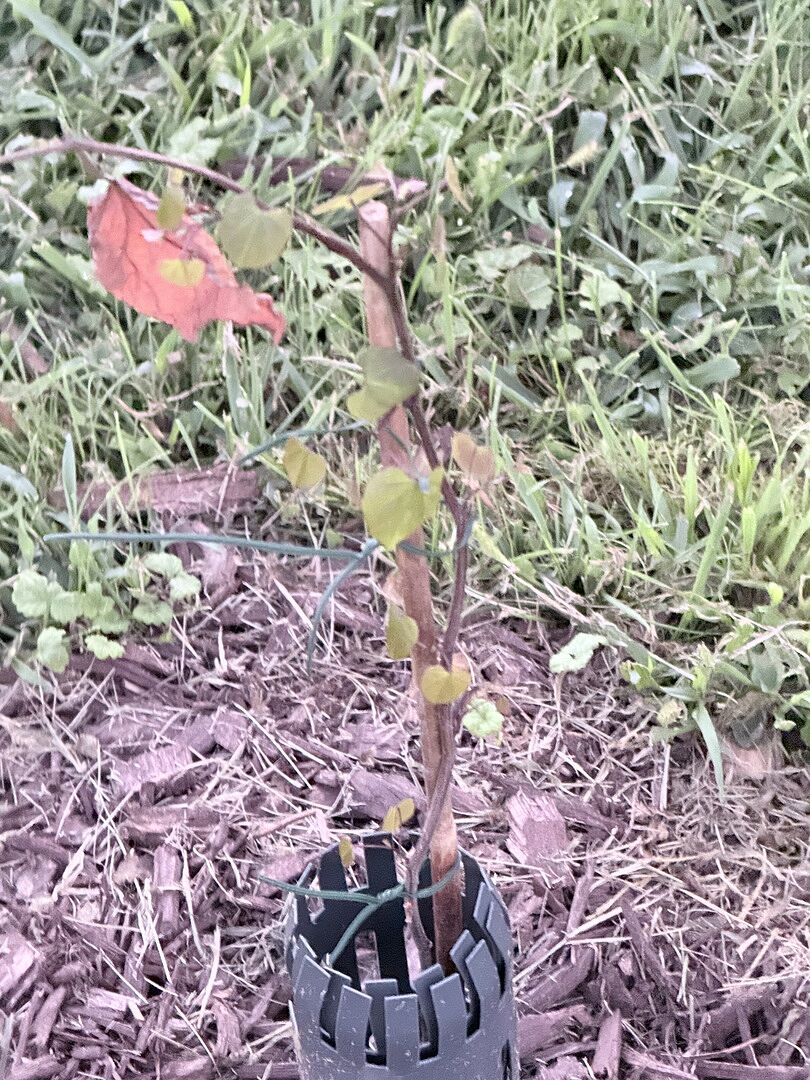
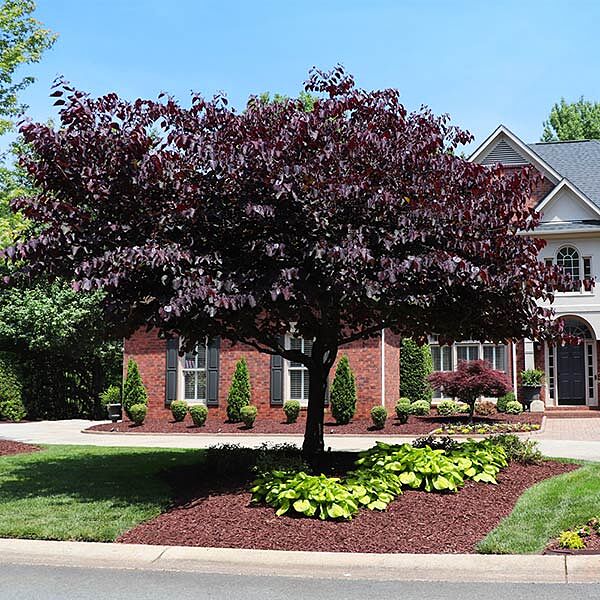
Native to the eastern and central United States, Cercis canadensis, or the Eastern Redbud, is one of the first trees to bloom each spring and an important early nectar source for pollinators.
- Mature size: 20–30 ft. tall, 25–35 ft. wide
- Zones: 4-9, hardy to -20℉
- Sunlight: full sun to partial shade
The pink flowers bloom on old wood, then heart-shaped foliage follows. Its moderate size also makes it a better fit for smaller landscapes than many trees on this list. One thing to keep in mind: Eastern Redbud is less drought tolerant than some of the other trees on this list, especially while young. Once established, however, it can handle periods of dry weather and is a strong choice for gardens where you want a native flowering tree.
Best drought tolerant fruit trees
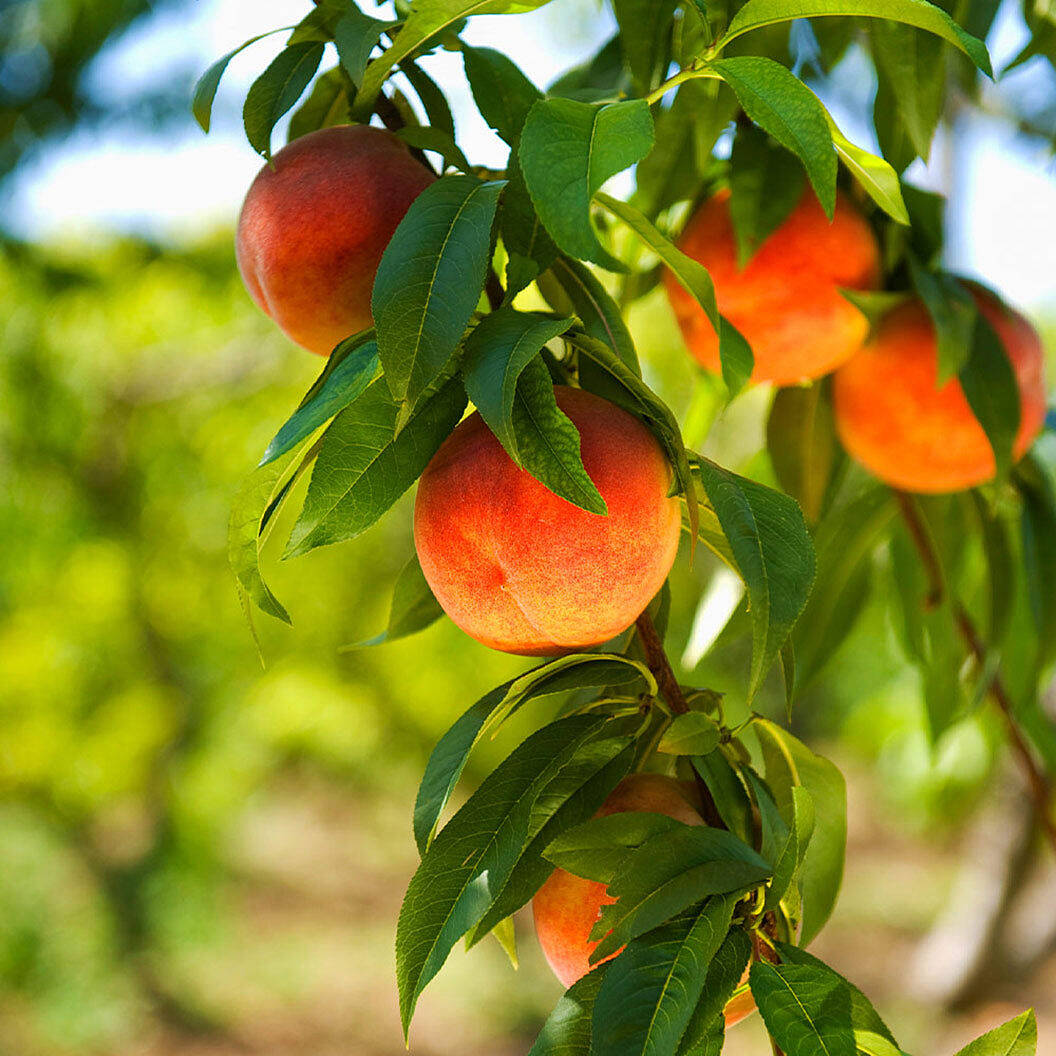
Drought-tolerant fruit trees don't get enough attention. Two trees on this list prove you don't have to choose between drought tolerance and an edible harvest.
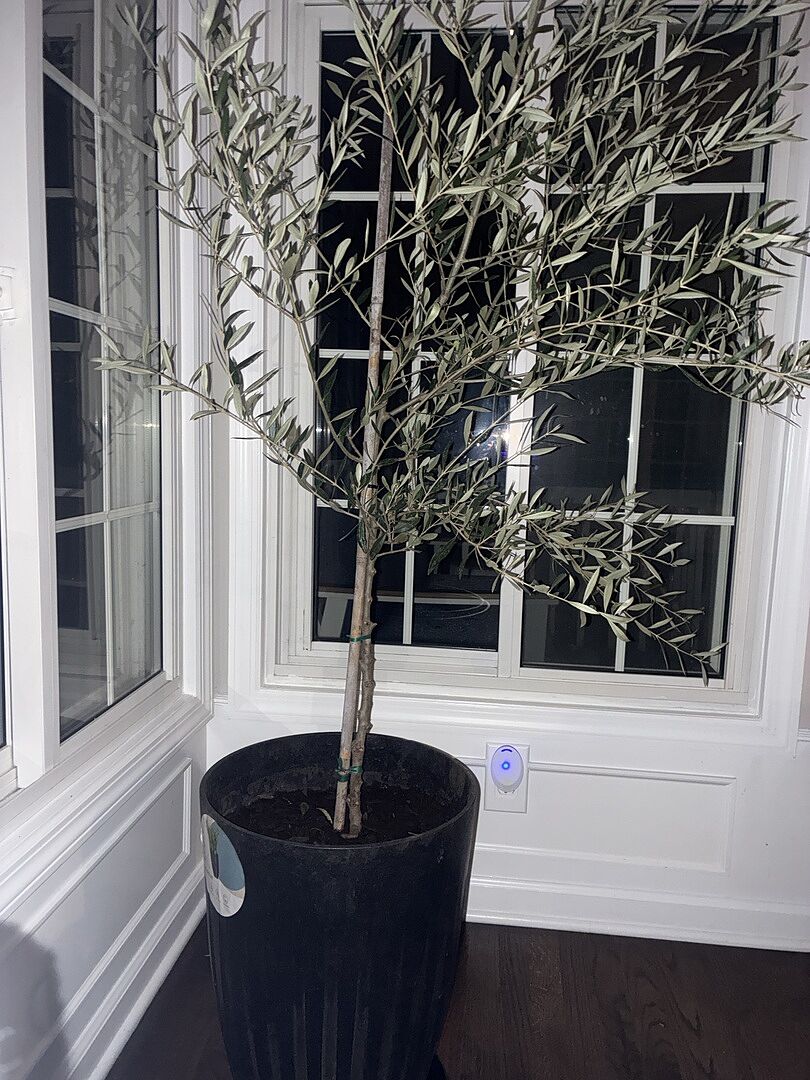
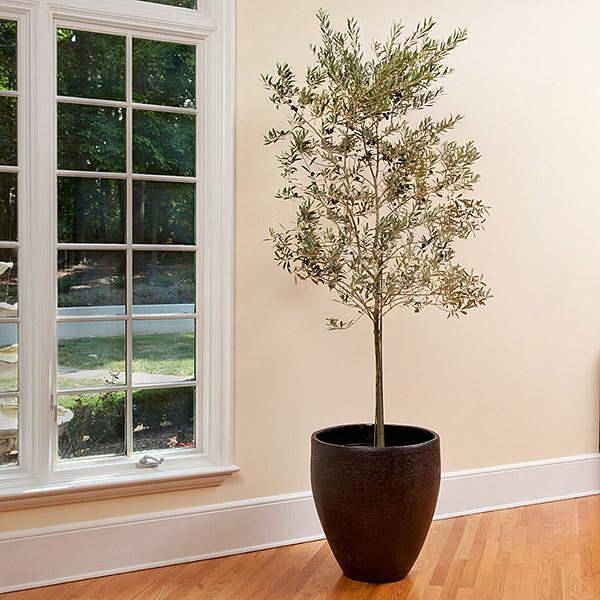
13. Arbequina Olive Tree

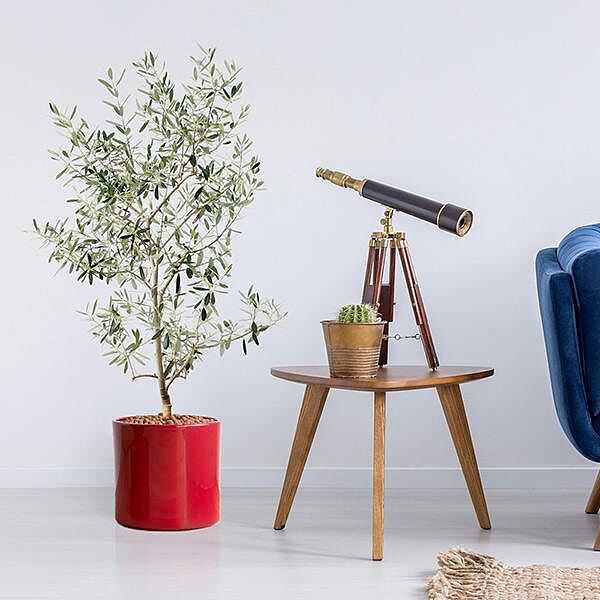
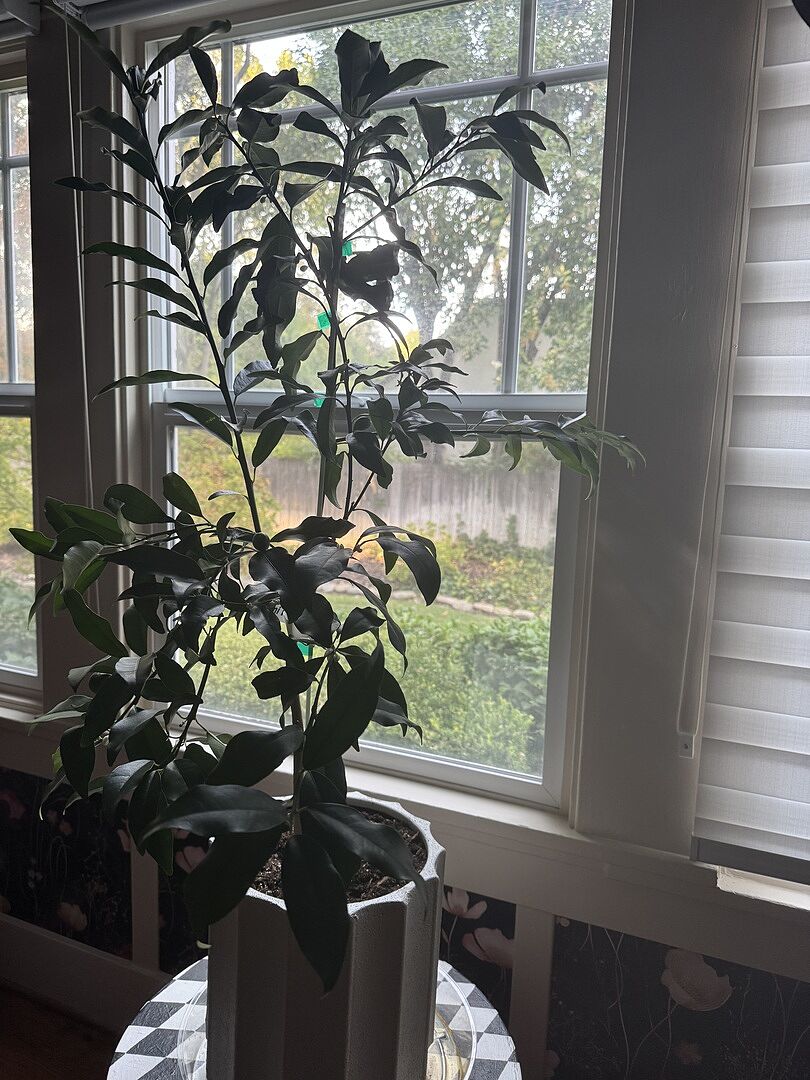
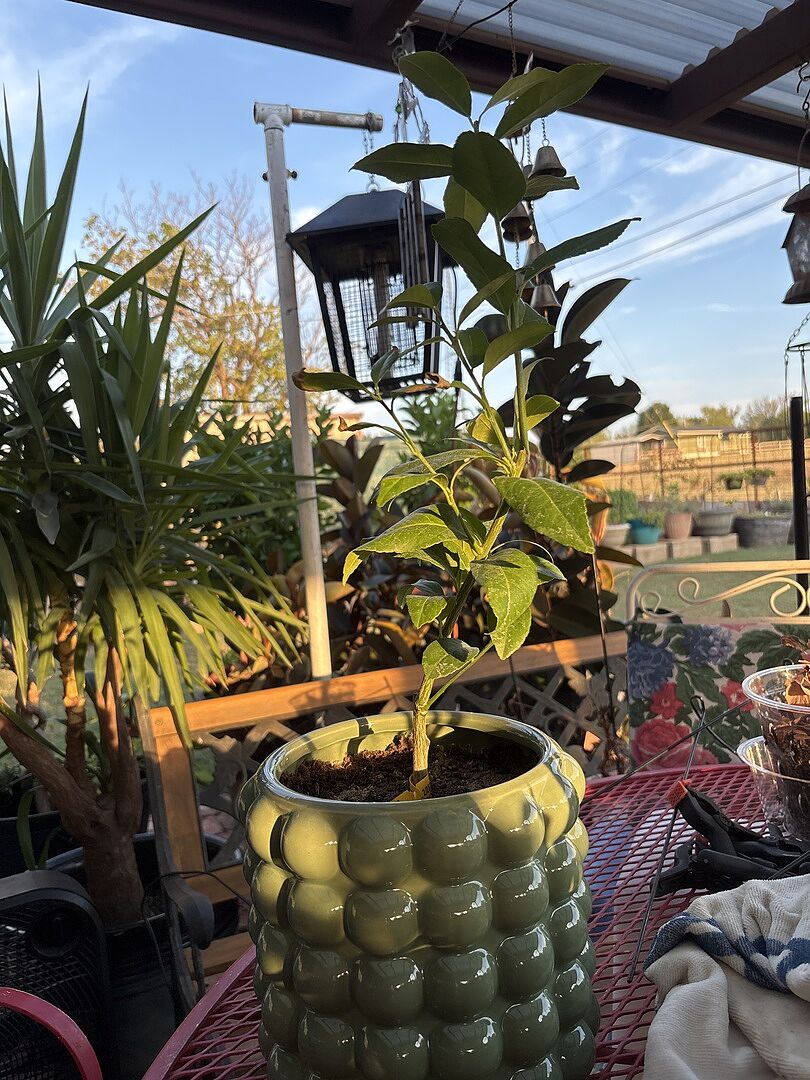
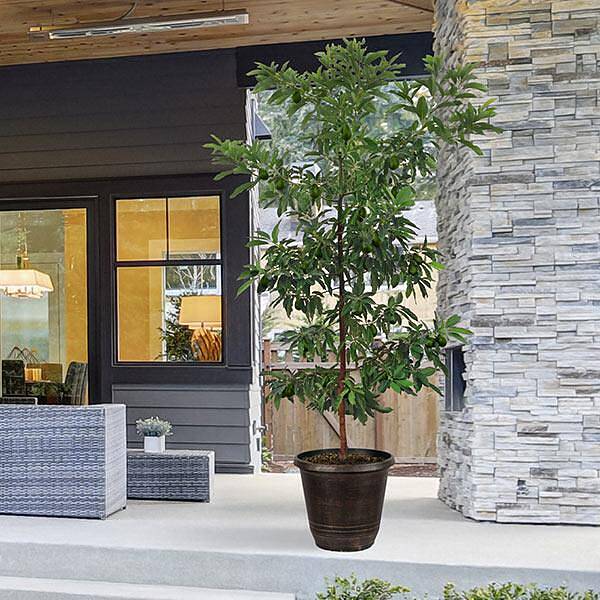
The Arbequina Olive Tree is especially versatile because it can be grown outdoors in warmer climates or kept in a container in much colder regions. Gardeners in zones 3–11 can grow it on a patio and move it indoors when temperatures drop.
- Mature size: 20 ft. tall, 12 ft. wide
- Zones: 8–11 outdoors, 3–11 on a patio, hardy to 20℉
- Sunlight: full sun
Olea europaea 'Arbequina' is self-pollinating and yields up to 20 pounds of olives a year, harvested in fall. That patio range means a much bigger addressable audience than the outdoor range suggests. It can also be grown as a houseplant for the foliage.
14. Chicago Hardy Fig

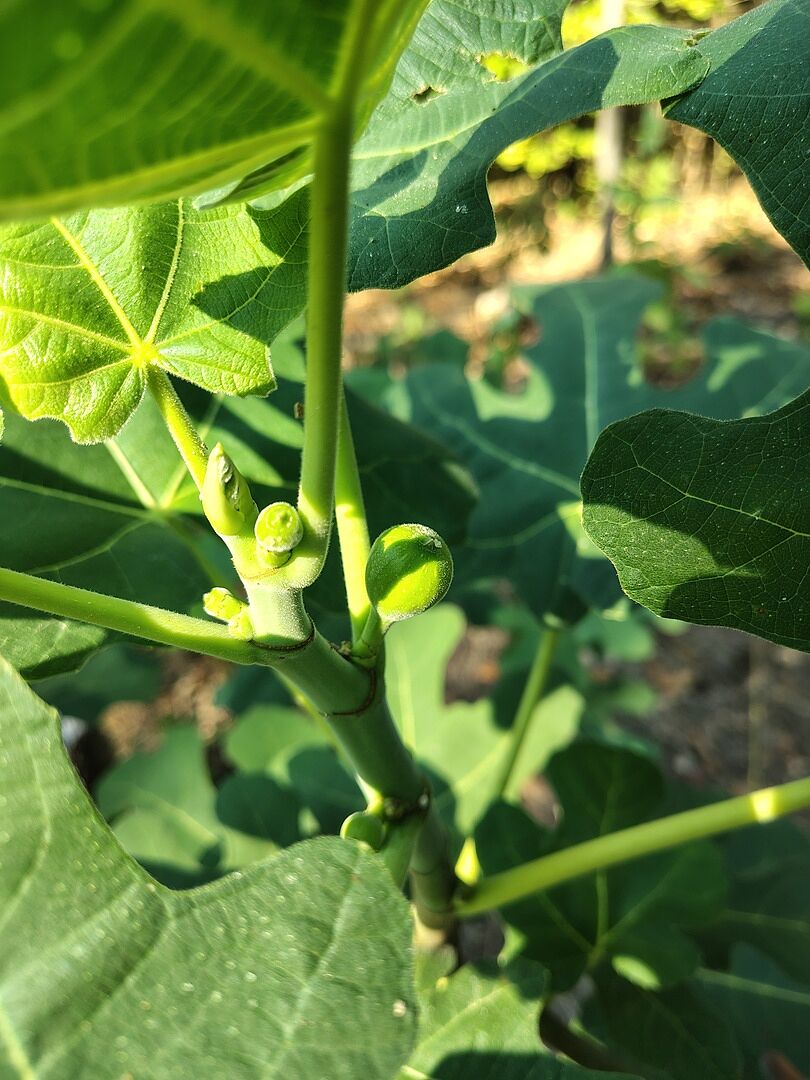
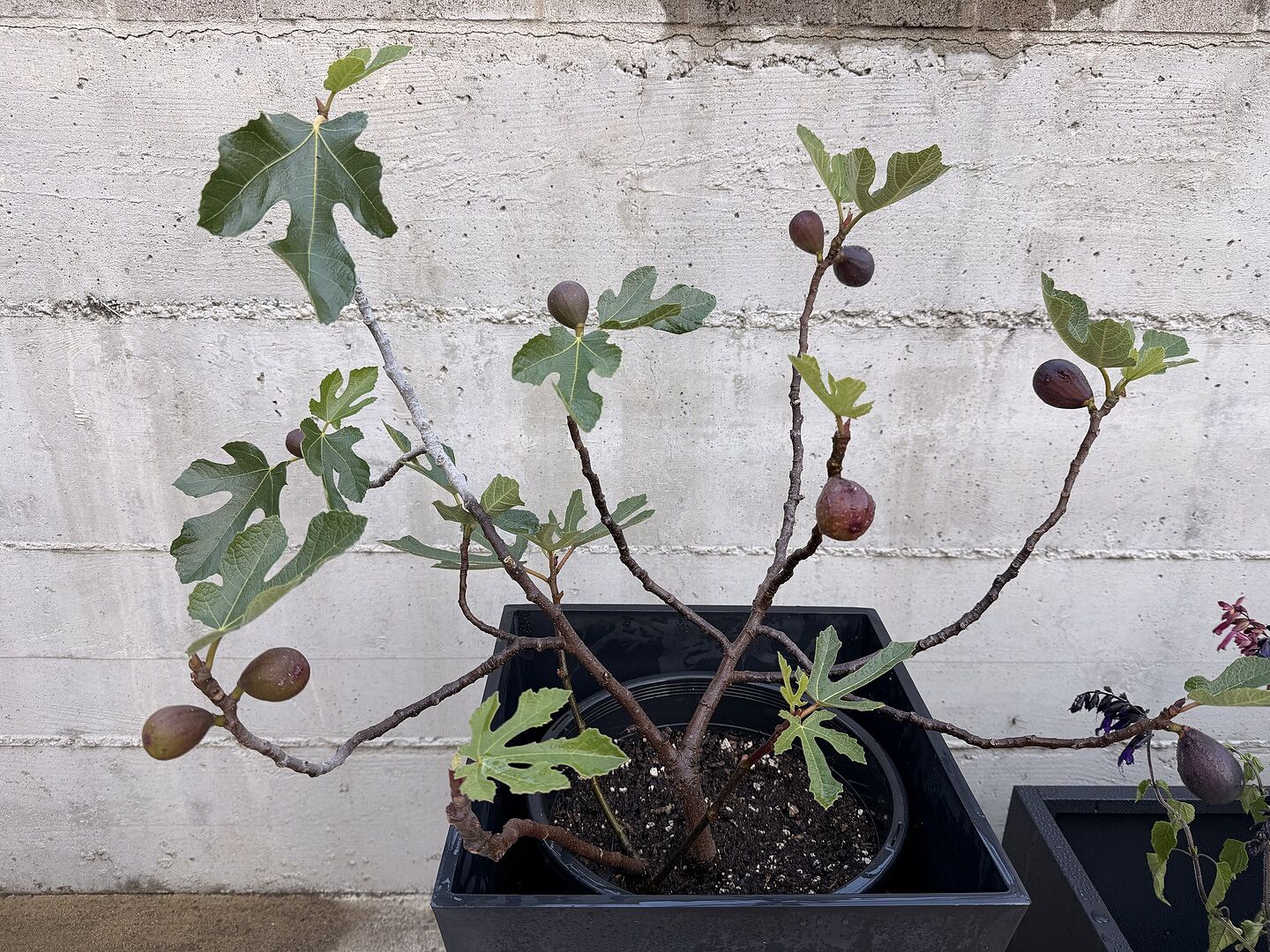
The name is the whole pitch. Ficus carica 'Chicago Hardy' can go dormant in hard winters and return with leaves in the spring, which stretches figs far north of their usual range.
- Mature size: 15–30 ft. tall, 15–30 ft. wide
- Zones: 5–10, hardy to -10℉
- Sunlight: full sun
Self-pollinating, drought tolerant once established, and capable of up to 100 pints of figs a season. We list it on the large side for a fig, so know that it can be kept much smaller with pruning or grown in a container.
Drought-tolerant trees at a glance
|
Tree |
Mature Size (H × W) |
Zones |
Growth Rate |
Sunlight |
Type |
Best Use |
|---|---|---|---|---|---|---|
|
Autumn Blaze Red Maple |
40–50 × 30–40 ft. |
3–8 |
Fast |
Full sun |
Deciduous |
Fastest shade, cold climates |
|
Red Sunset Maple |
40–50 × 30–35 ft. |
4–9 |
Fast |
Full sun to partial shade |
Deciduous |
Hot-climate shade, long fall color |
|
Ginkgo Tree |
40–70 × 30–40 ft. |
3–9 |
Moderate |
Full sun to partial shade |
Deciduous |
Urban and street planting |
|
Chinese Pistache |
25–35 × 25–35 ft. |
6–10 |
Moderate |
Full sun |
Deciduous |
Mid-size shade, poor soil |
|
Thuja Green Giant |
30–50 × 12–15 ft. |
5–8 |
Fast |
Full sun to partial shade |
Evergreen |
Tall privacy with room |
|
Leyland Cypress |
40–60 × 20–25 ft. |
6–10 |
Fast |
Full sun to partial shade |
Evergreen |
Acreage screens, windbreaks |
|
Italian Cypress |
35–40 × 5 ft. |
8–10 |
Fast |
Full sun to partial shade |
Evergreen |
Formal columns, xeriscaping |
|
American Pillar Arborvitae |
25–30 × 4 ft. |
3–8 |
Fast |
Full sun to partial shade |
Evergreen |
Narrow privacy, cold zones |
|
Skyrocket Juniper |
15 × 2–3 ft. |
4–9 |
Fast |
Full sun to partial shade |
Evergreen |
Narrowest footprint |
|
Muskogee Crape Myrtle |
20–30 × 10–15 ft. |
6–9 |
Moderate |
Full sun |
Deciduous |
Long summer bloom |
|
Wisteria Tree |
6–10 × 8–10 ft. |
4–9 |
Moderate |
Full sun to partial shade |
Deciduous |
Small-space spring bloom |
|
Eastern Redbud |
20–30 × 25–35 ft. |
4–9 |
Moderate |
Full sun to partial shade |
Deciduous |
Native early bloom |
|
Arbequina Olive |
20 × 12 ft. |
8–11 outdoors, 3–11 patio |
Moderate |
Full sun |
Evergreen |
Low-water fruit, containers |
|
Chicago Hardy Fig |
15–30 × 15–30 ft. |
5–10 |
Moderate |
Full sun |
Deciduous |
Cold-climate figs |
A few useful comparisons the table surfaces:
- Widest zone range: Ginkgo at 3 to 9, and Arbequina Olive at 3 to 11 on a patio.
- Narrowest footprint: Skyrocket Juniper at 2 to 3 feet.
- Most cold hardy: Autumn Blaze, American Pillar, and Ginkgo, all rated to -30℉.
- Least cold hardy: Italian Cypress and Arbequina Olive, both hardy only to 20℉.
How to water a drought-tolerant tree while it establishes
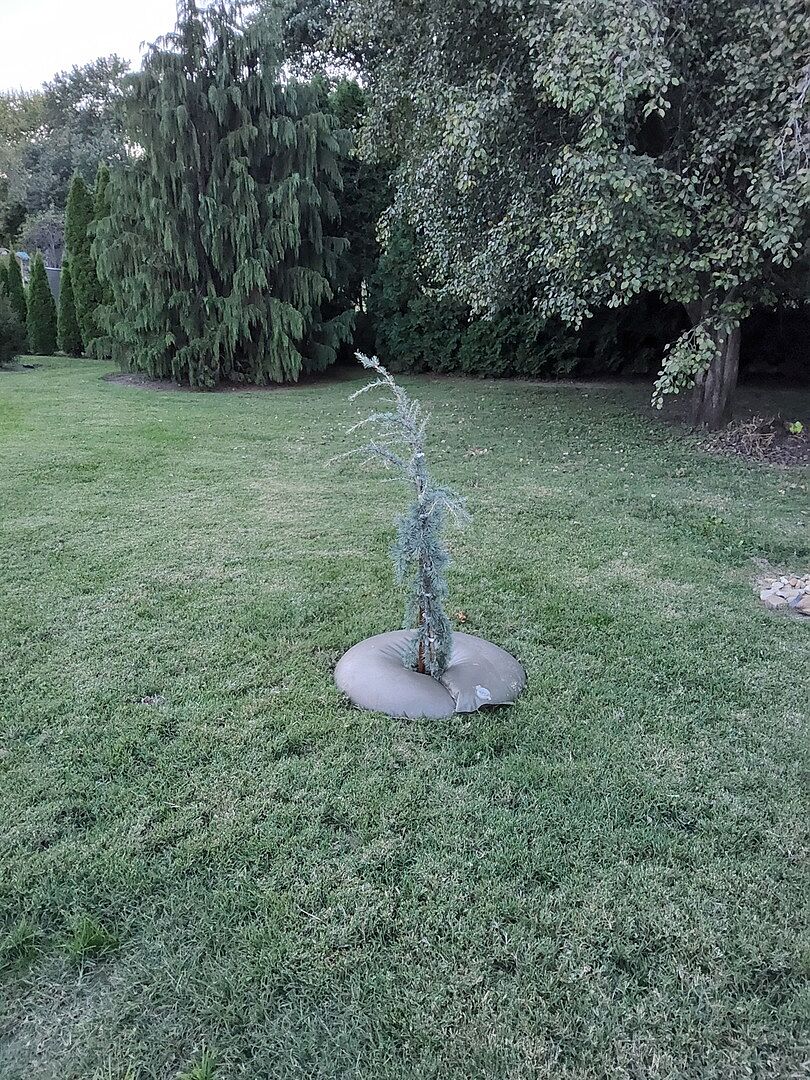
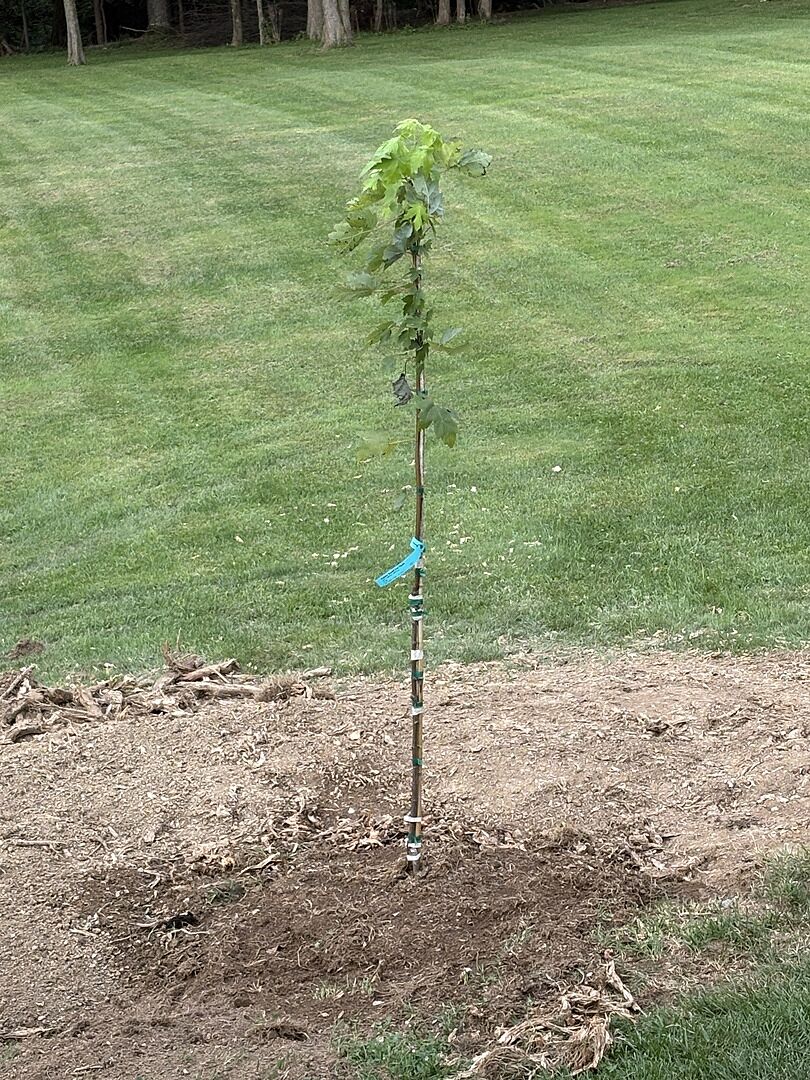
This is the part that determines whether your tree lives to become drought tolerant. During the first year, water deeply and gradually reduce the frequency. Here’s the schedule we recommend:
- First two weeks: every other day.
- Weeks three and four: every three days.
- After the first month: twice a week or more often if it's hot and dry, meaning no rain and temps above 80℉.
- After the first year: Water once a week through the second summer to help establish the roots which can take up to three years.
The practical test matters more than any calendar. Check the soil about 2 inches down, and if it's dry at that depth, water.
The principle behind it is simple. Deep, infrequent watering pushes roots outward chasing moisture. Frequent, shallow water trains roots to stay in their immediate vicinity, causing the tree to have a smaller root system that can't find water in periods of drought.
Watering for establishment depends on climate, soil type, and weather more so than it does type of plant.
Planting and mulching for drought resistance
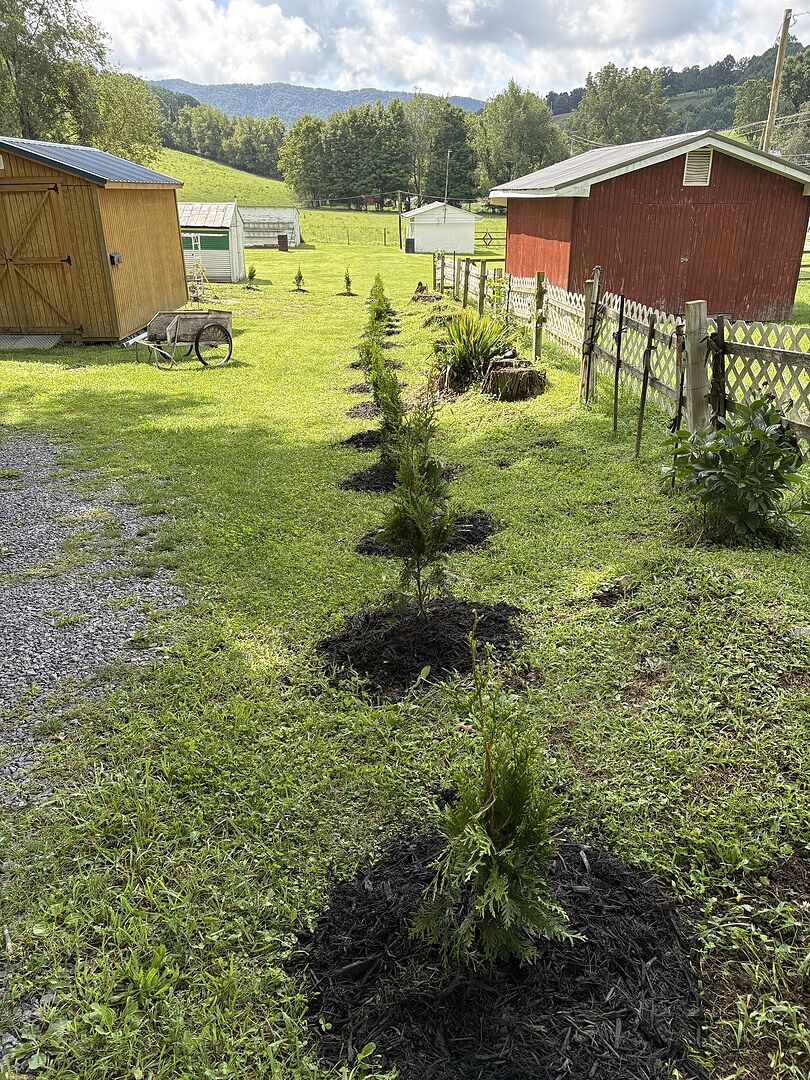
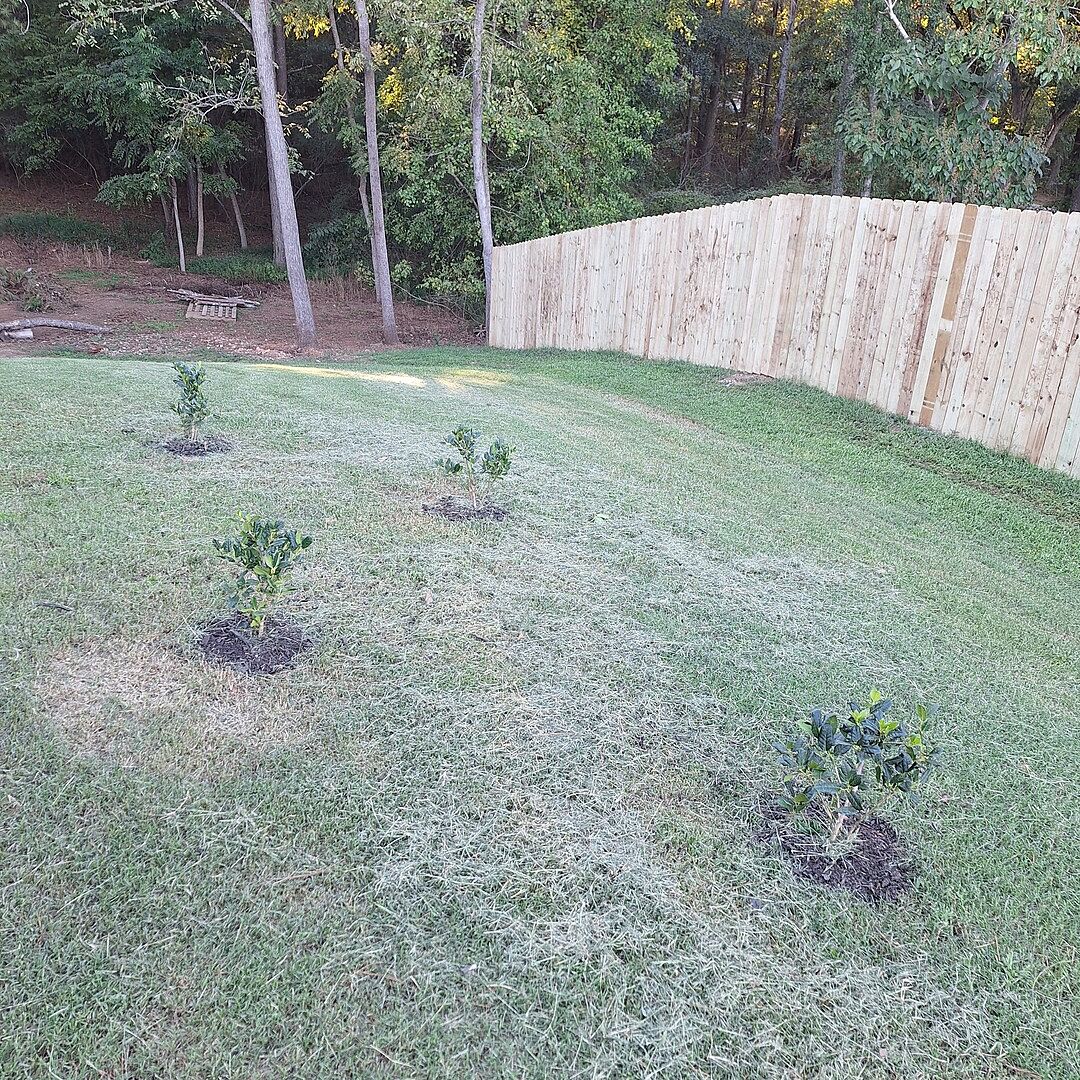
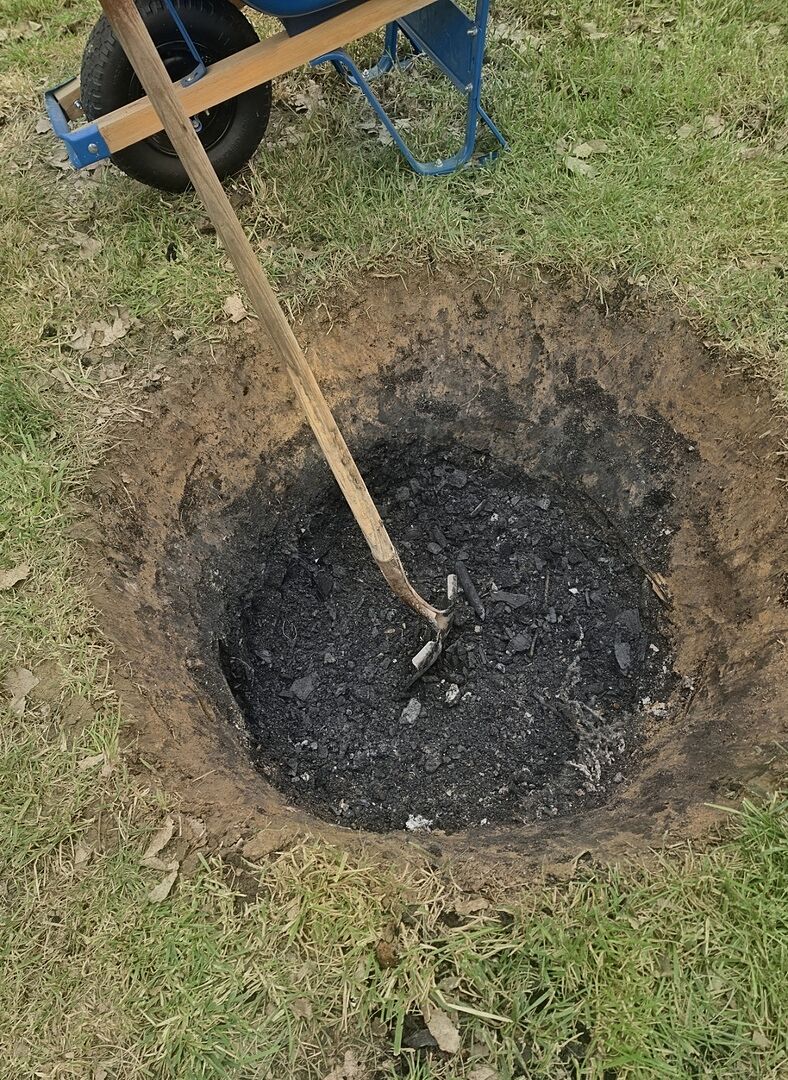
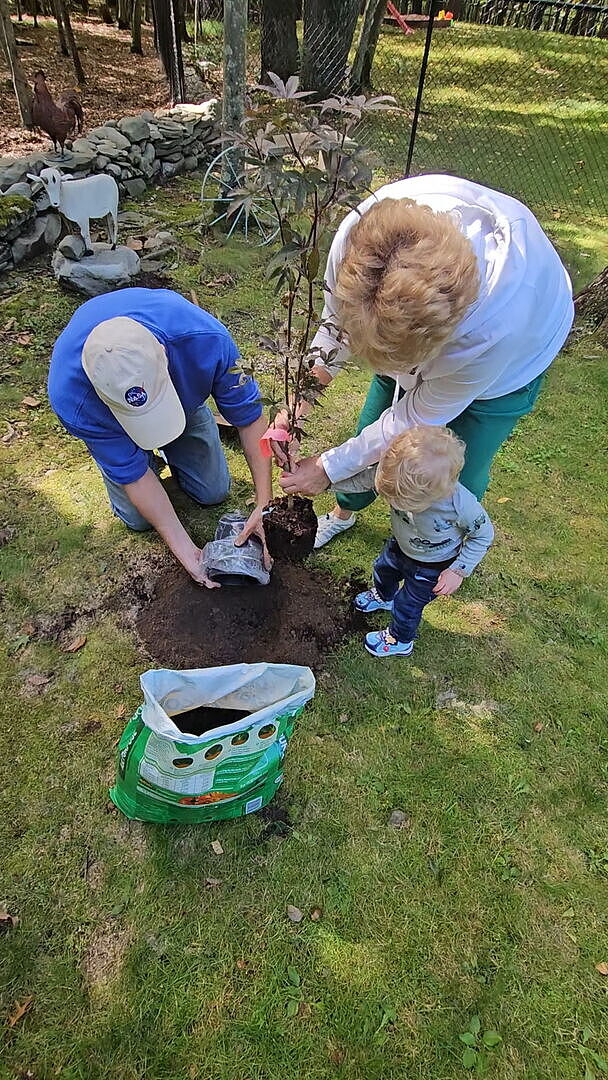
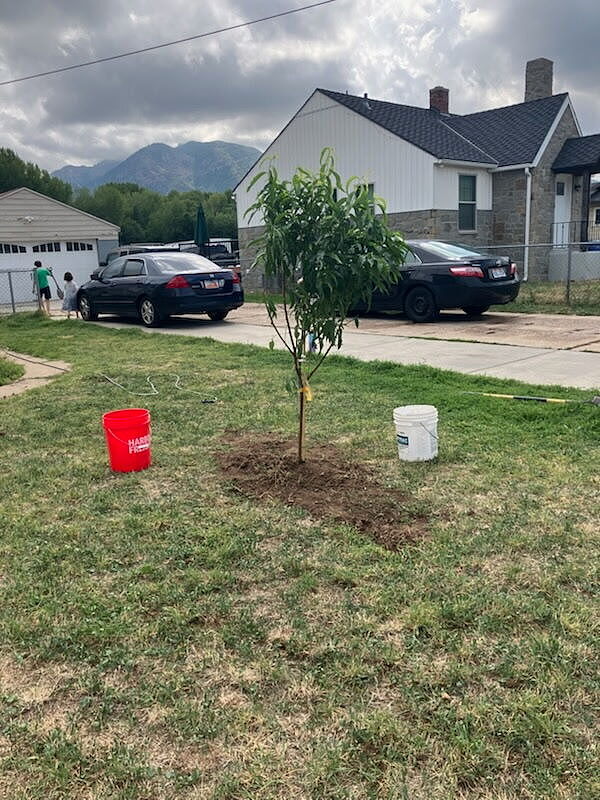
- Dig a hole twice as wide as the root ball and just as deep, ideally into well-drained soil.
- Compost can be mixed in with most native soils. This provides nutrients and moderates the soil texture, adding water holding capacity for sandy light soils and porosity for heavy clay soils. This is important for young plants to create ideal soil conditions before they mature and survive on some of the challenges of native soil alone.
- Backfill and tamp to close air pockets, then water thoroughly.
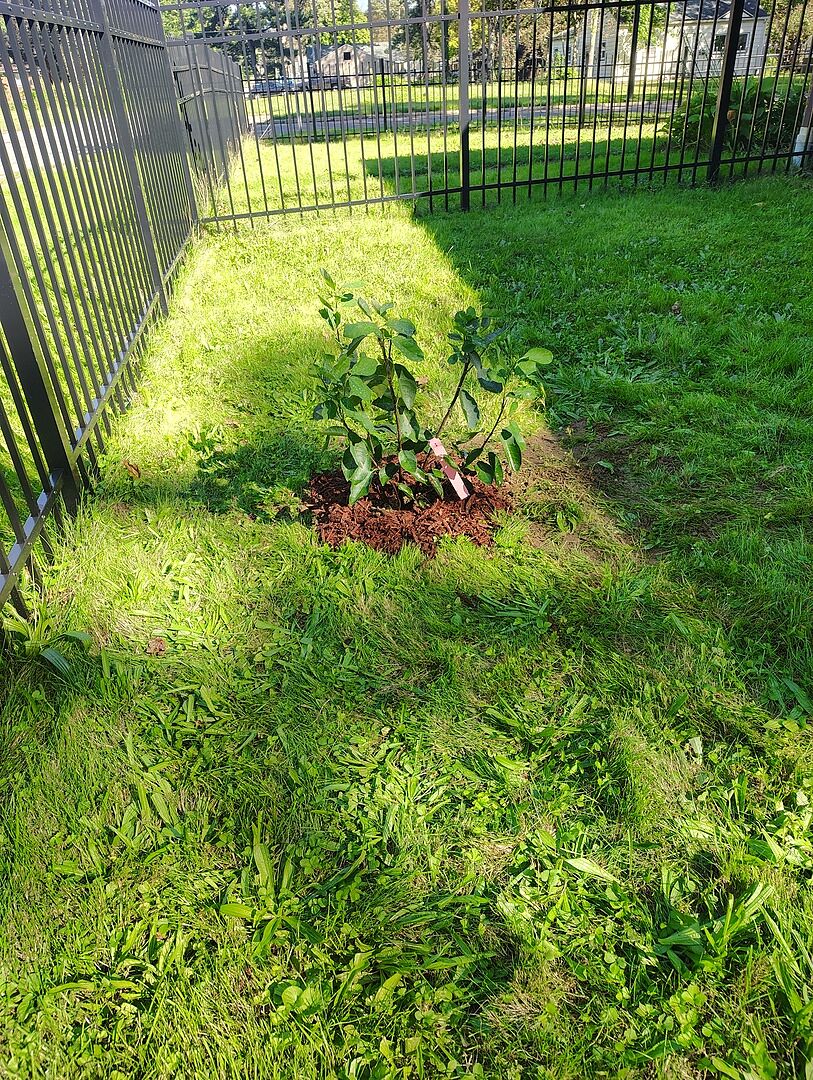
- Mulch about 3 inches deep to conserve moisture and reduce soil erosion, pulled back off the trunk to avoid rot.
- In warm zones, plant in fall so plants can start some root growth before summer heat. In cold zones, planting in spring after the ground has thawed is ideal (always plant 6-8 weeks before your frost date if you're planting in fall in a cold zone).
One more thing worth knowing: our Jumbo sizes deliver superior drought resistance thanks to their more developed root systems. If you're planting into a very dry site, starting bigger is a real advantage.
Common Mistakes to Avoid
- Assuming a newly planted drought tolerant tree needs no water. This is the most common mistake on this list.
- Frequent shallow watering, which builds a shallow root system that fails in the first dry spell.
- Overwatering an established tree. These trees are adapted to dry, so constant moisture is a stressor.
- Planting in poor drainage., which suffocates deep roots before they can establish. Most of these die from wet feet, not dry ones.
- Mulch volcanoes against the trunk, which hold moisture against bark and invite rot.
- Choosing by looks instead of by zone, local climate, and soil type. Italian Cypress is stunning and but it will not survive a zone 6 winter.
Which drought-tolerant tree is right for your yard?
Start with the job you want the tree to do. Fast shade points to Autumn Blaze, and hot-climate shade to Red Sunset. Privacy points to Thuja Green Giant, or American Pillar where the strip is narrow. Mediterranean structure calls for Italian Cypress. Summer color means Muskogee Crape Myrtle. And for low-water fruit, it's Arbequina Olive or Chicago Hardy Fig.
Browse the full drought tolerant trees collection and filter by your zone, which is the single step that prevents the most expensive mistake. If speed is your priority, our fast growing trees collection overlaps considerably.
Shop with confidence
Whichever drought-tolerant tree you choose, it’s covered by our 1-year Alive & Thrive Guarantee™, so it arrives alive and healthy. If it dies of natural causes in its first year, we’ll provide a one-time replacement.
If you still need help deciding, book a consultation with one of our tree experts on our Plant Experts team.
Frequently Asked Questions
What does drought tolerant actually mean?
It's a rating about an established tree, generally one that's been in the ground a full year. It means the tree handles dry spells on natural rainfall thanks to its root system and leaf structure. It does not mean the tree needs no water while it's establishing.
How long until a drought-tolerant tree stops needing water?
Trees need up to three years to establish their roots, during which time they need regular water. Once your tree is established, it's best to water during periods of high heat and dry weather. Even if a tree is drought tolerant, it can still be weakened by drought, leaving it more susceptible to disease and insects.
What is the most drought-tolerant fast-growing tree?
Among the fast growers here, Red Sunset Maple carries the highest formal rating, with Drought Tolerance listed as High. For evergreens, Italian Cypress is the standout, since it's drought tolerant and prefers to be on the dry side.
Can drought-tolerant trees be overwatered?
Yes, any tree can be overwatered especially in water logged or poorly draining soils. Choosing the best tree for your soil type comes first, then paying attention to your local rainfall amounts and temperatures can help guide whether or not to water your established tree.
What are the best-drought tolerant trees for full sun?
Autumn Blaze, Chinese Pistache, Muskogee Crape Myrtle, Chicago Hardy Fig, and Arbequina Olive are all rated full sun. The rest take full sun to partial shade, which gives you more placement flexibility.
Which drought-tolerant trees work in cold climates?
Three are rated to -30℉: Autumn Blaze Red Maple, American Pillar Arborvitae, and Ginkgo. Skyrocket Juniper, Wisteria Tree, and Red Sunset Maple all handle -20℉, and Chicago Hardy Fig goes to -10℉.
Are there drought-tolerant fruit trees?
Yes, and they're underrated. Arbequina Olive is tagged Drought Tolerant and yields up to 20 pounds of olives a year. Chicago Hardy Fig is also tagged Drought Tolerant and can produce up to 100 pints of figs in a season.
What is the best drought-tolerant privacy tree?
Thuja Green Giant if you have 12 to 15 feet of width, since it's tagged Deer Resistant, Drought Tolerant, and Fast Growing. American Pillar Arborvitae if you don't, at a 4-foot mature width. Skyrocket Juniper for the tightest spaces at 2 to 3 feet.