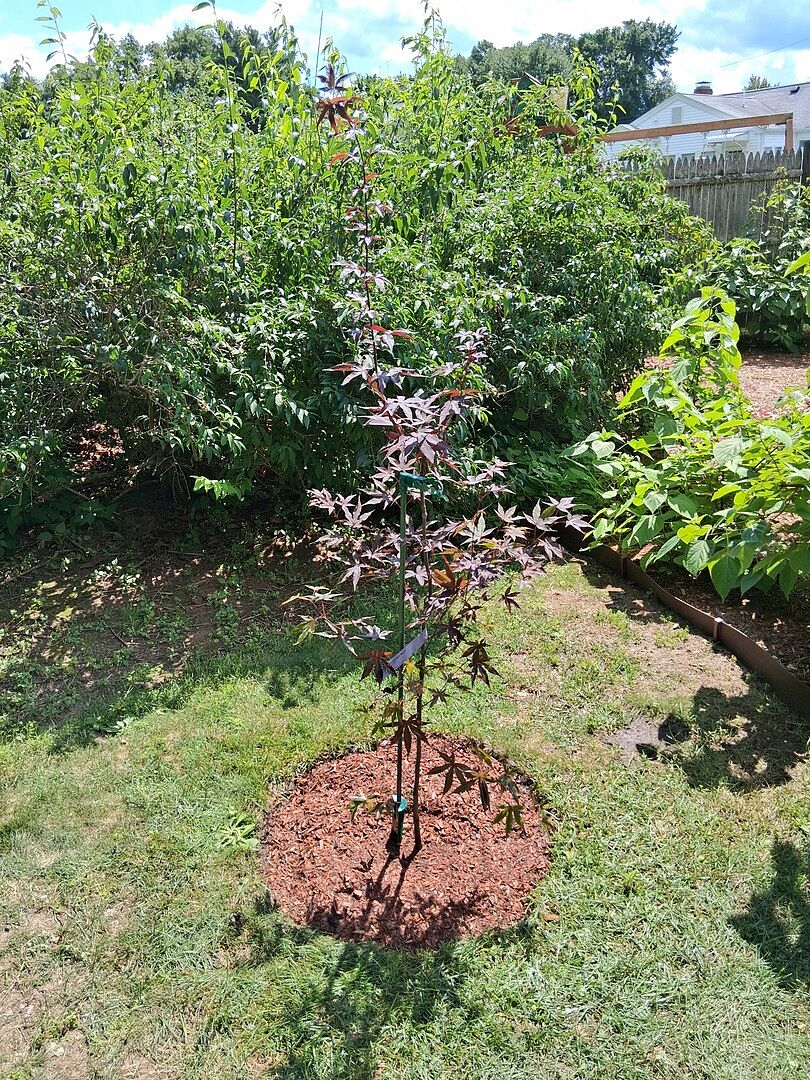
Autumn Blaze vs Red Sunset Maple Trees: Differences + More

If you’re looking for a fast-growing shade tree with brilliant fall color, both Autumn Blaze and Red Sunset maples are worth considering. They’re similar enough, but their differences matter when it comes to growth, size, and performance. Understanding these differences will help you choose what’s right for your backyard.
A quick guide to choosing your best fit
Both Autumn Blaze and Red Sunset mature at about 40 to 50 feet, so height won't be the deciding factor. The better choice for you will come down to what matters most: growth rate, hardiness, fall color, canopy, or cleanup.
- Choose Autumn Blaze for the fastest growth, hardy to zone 3 winters, very little seed litter, later fall color, less prone to chlorosis, and a dense rounded canopy.
- Choose Red Sunset for fast growth, hardy to zone 4, more heat tolerant to zone 9, earlier fall color, acidic soil, and a pyramidal to rounded canopy with symmetrical branching.

Is Autumn Blaze a red maple?
Partly. And this distinction helps explain some of the differences between Red Sunset and Autumn Blaze.
- Red Sunset® (Acer rubrum 'Franksred') is a cultivar of the red maple, a species native to eastern North America that grows wild from Canada to Florida. It’s a true red maple, selected for better color.
- Autumn Blaze® (Acer x freemanii 'Jeffersred') is a Freeman maple, a cross between red maple and silver maple. So it has red maple lineage, but isn’t a red maple cultivar.
The parentage of Autumn Blaze helps explain many of the differences you’ll notice.
- Silver maple brings speed. It also brings faster, softer wood, which is why young Autumn Blaze trees benefit from early structural pruning.
- Red maple brings the spring flower clusters and fall color. That's why Autumn Blaze delivers a strong scarlet color.
- The hybrid cross brings the clean-up advantage. Autumn Blaze produces very little viable seed, which means fewer helicopters to clean up.
Autumn Blaze is also often mistaken for a sugar maple. Sugar maple is Acer saccharum, a different species that grows larger and more slowly, and is better suited to the cooler summers of the Northeast.
Autumn Blaze and Red Sunset Maples at a glance
Here's how the two compare side by side.
|
Autumn Blaze® Red Maple Tree |
Red Sunset® Maple Tree |
|
|---|---|---|
|
Botanical name |
Acer x freemanii 'Jeffersred' |
Acer rubrum 'Franksred' |
|
Parentage |
Hybrid of red maple and silver maple |
Cultivar of native red maple |
|
Mature height |
40–50 ft. |
40–50 ft. |
|
Mature width |
30–40 ft. |
30–35 ft. |
|
Growth rate |
3–5 ft. per year or more once established |
1– 2 ft. per year once established |
|
Growing zones |
3–8 outdoors |
4–9 outdoors |
|
Cold hardiness |
Hardy to -40℉ |
Hardy to -30℉ |
|
Sunlight |
Full sun |
Full sun to partial shade |
|
Fall color |
Orange-red, color lasts longer in fall |
Orange-red, colors earlier in fall |
|
Leaf size |
About 3 in. across |
Roughly 6 in. across |
|
Drought tolerance |
Moderate drought tolerance |
Moderate drought tolerance |
|
Other traits |
Fast growing, plus leaf hopper resistant and better disease resistance |
Native, better heat tolerance |
|
Seed litter |
Little to no viable seed |
Samaras, typical of a true red maple |
|
Best use |
Fast shade in cold climates, low cleanup |
Deep shade and long fall color in the heat |
|
Soil Type |
Less prone to chlorosis in higher pH soils |
Needs acidic soil |
Where the differences matter most
Once you know Autumn Blaze is a hybrid and Red Sunset is a true red maple, five things will actually inform your decision. Let’s dive deeper into hardiness range, growth rate, fall color timing, canopy density, and cleanup.
Cold hardiness: what temps can they take
Autumn Blaze grows is cold hardy to zone 3 and can handle temperatures down to -40℉. Red Sunset is cold hardy to zone 4 and can handle temperatures down to -30℉. So Autumn Blaze is the cold-hardy pick.
In practice:
- Zone 3, northern Minnesota and upper Maine: Choose Autumn Blaze. Red Sunset isn't rated that far north.
- Zone 9, central Florida, east Texas, inland California: Choose Red Sunset. Autumn Blaze stops at zone 8.
- Zones 4–8: For cold hardiness, both can survive the winter. In this case, it's important to look at factors like native soil pH and climate.
Check your zone on the USDA Plant Hardiness Zone Map before you order.
Growth rate: how fast will they fill in
Autumn Blaze is the faster grower, reaching 3 to 5 feet per year or more. Red Sunset typically grows a bit slower at 1 to 2 feet per year once established.
While Autumn Blaze grows faster, there’s a tradeoff. Fast-growing maples tend toward softer wood and tighter branch angles. Give a young Autumn Blaze early structural pruning and you'll help build a stronger framework. Red Sunset grows more slowly, but that pace can mean sturdier branching from the start.
Fall color: when it arrives
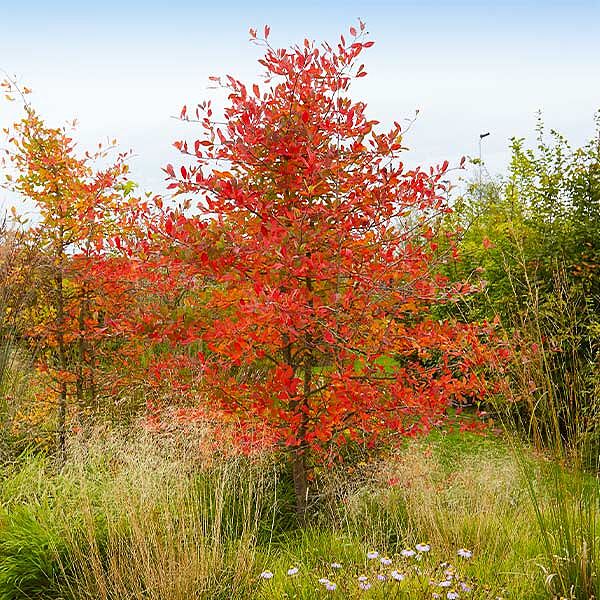
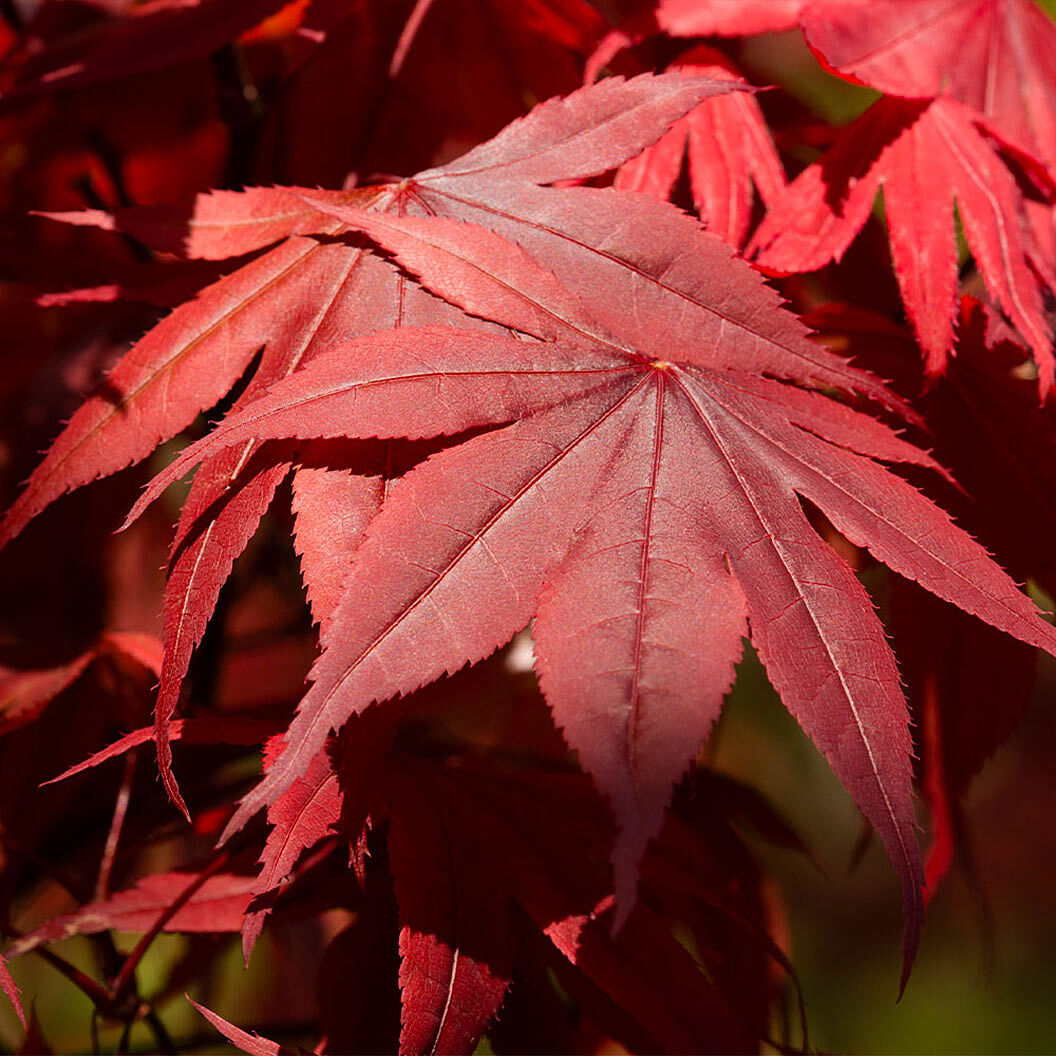
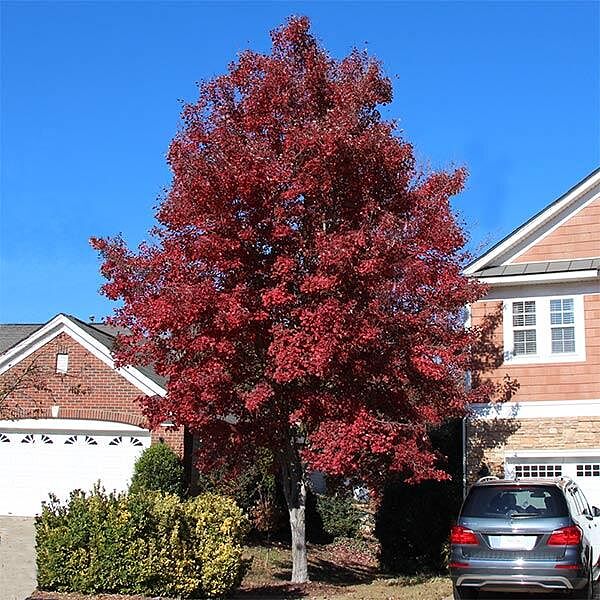
Both maple trees deliver beautiful orange and red fall foliage, but their timing sets them apart.
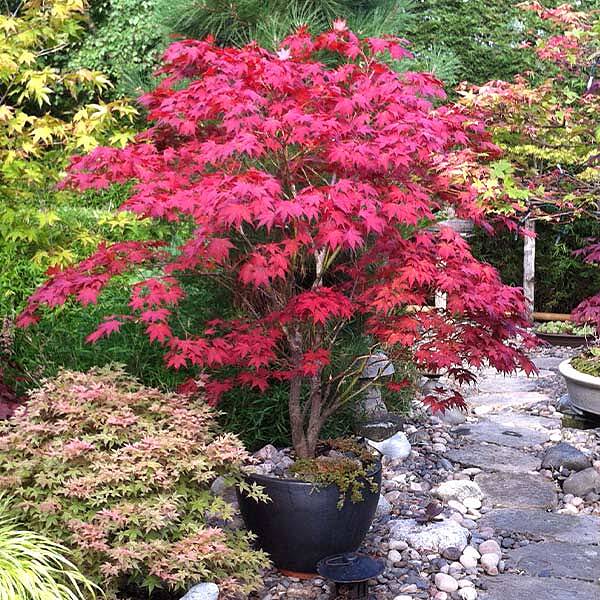
- Red Sunset Maple develops its bold red color earlier, making it a great choice for cooler climates where fall temperatures arrive sooner.
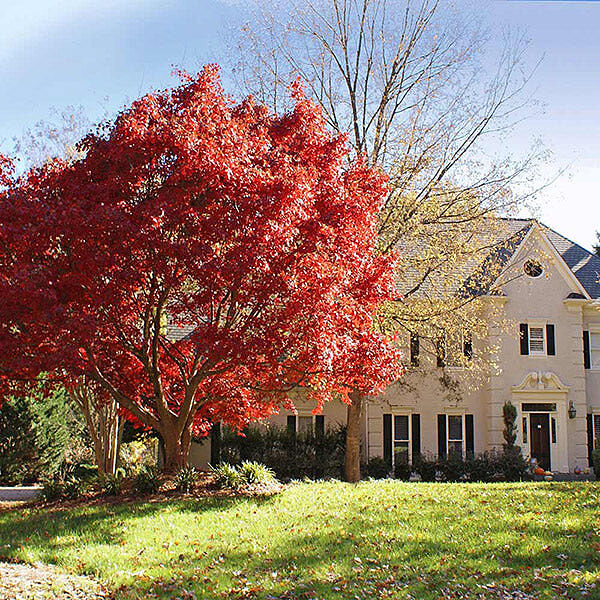
- Autumn Blaze Maple colors later and tends to lean more orange-red, making it better suited to warmer climates with longer fall seasons.
In warmer areas, heat can cause Red Sunset to color prematurely or drop leaves early. In cooler areas, Autumn Blaze may not reach its full fall display before an early frost. Choose the variety that best matches your climate for the most impressive fall color.

Canopy and cleanup: Leaf size, density, and shade
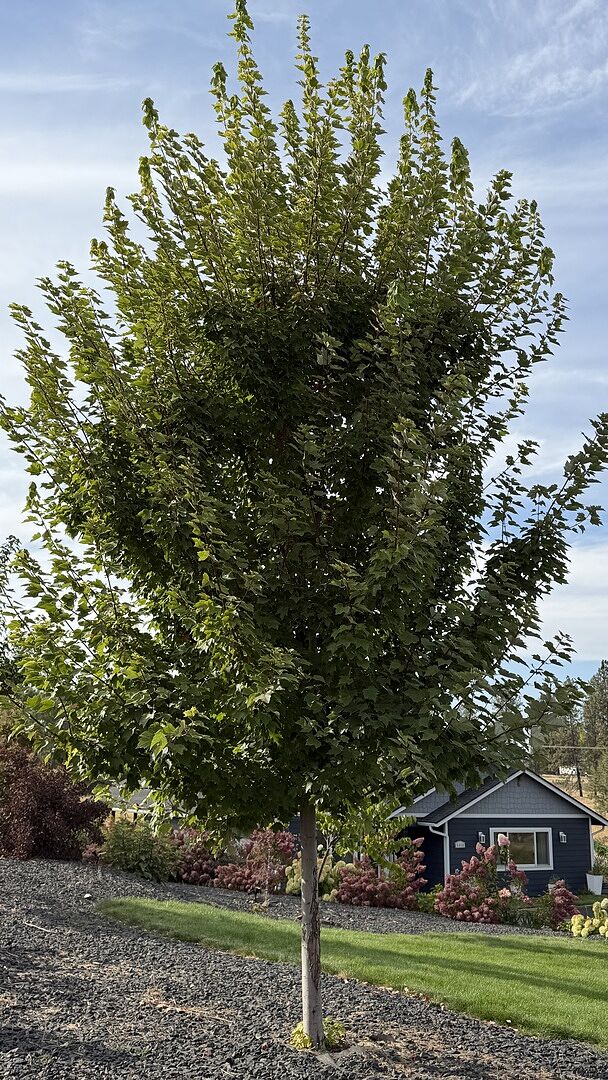
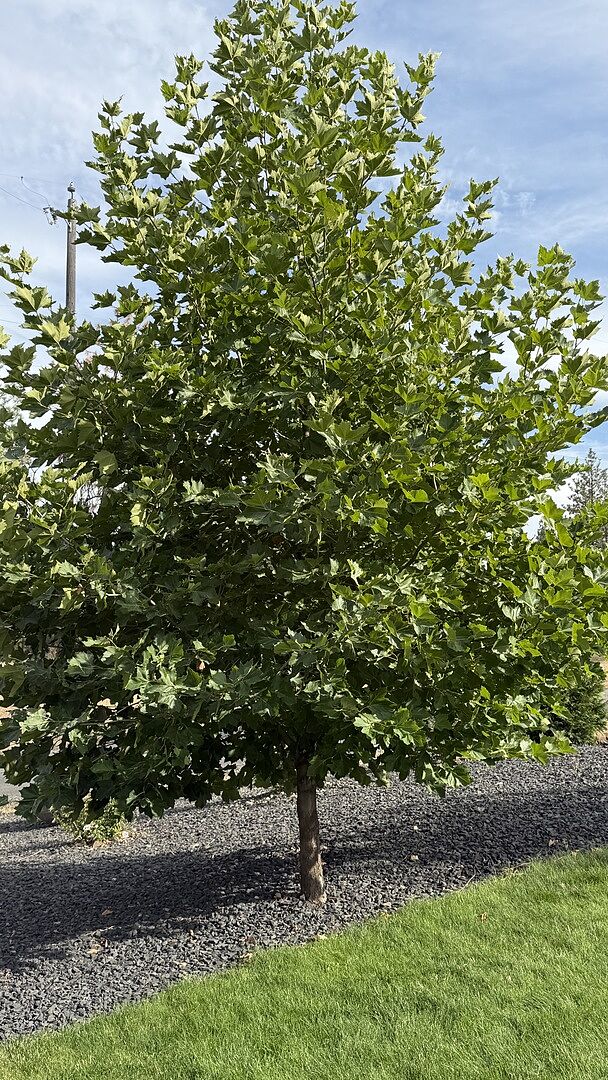
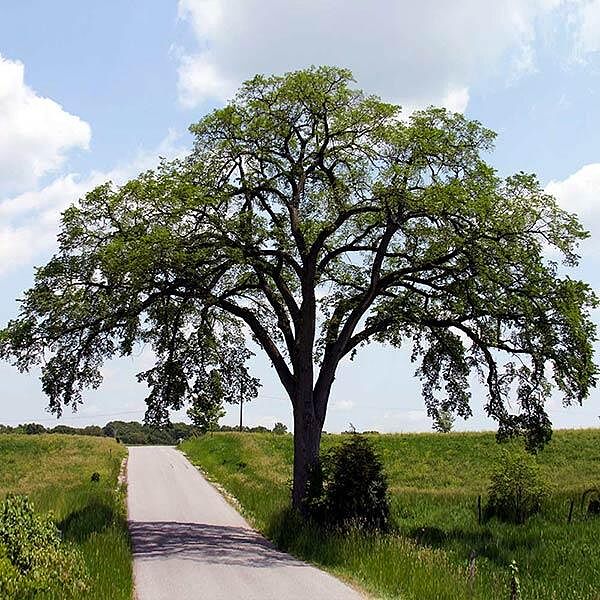
Autumn Blaze has a denser, oval canopy with a stronger central leader and little to no samaras (seed). Red Sunset has a more pyramidal to rounded form with good symmetrical branches but does produce samaras.
How Autumn Blaze and Red Sunset maples are similar
For all their differences, these trees do have plenty in common.
- Fast-growing deciduous shade maples that mature at 40–50 feet across most growing regions
- At their best for color in full sun
- Adaptable to a wide range of soils, including clay, though Autumn Blaze is more pH adaptable
- Moderate drought tolerance once established
- Requires yearly structural pruning
Both also have shallow surface roots, so neither belongs tight against a walk or foundation. And both struggle in alkaline soil above pH 7.0, where chlorosis shows up as yellowing leaves with green veins. A soil test is worth doing before you dig.
Match the maple to your yard
Still deciding? Start with the conditions you’re growing in:
- Cold winters: Autumn Blaze
- Hot summers: Red Sunset
- Fastest shade: Autumn Blaze
- Symmetrical branching: Red Sunset
- Less seed cleanup: Autumn Blaze
- Earlier color: Red Sunset
- Partial shade: Red Sunset
How to plant and grow Autumn Blaze and Red Sunset maples
The basics are similar for both trees. Where care differs, we’ve made note.
Planting location and spacing
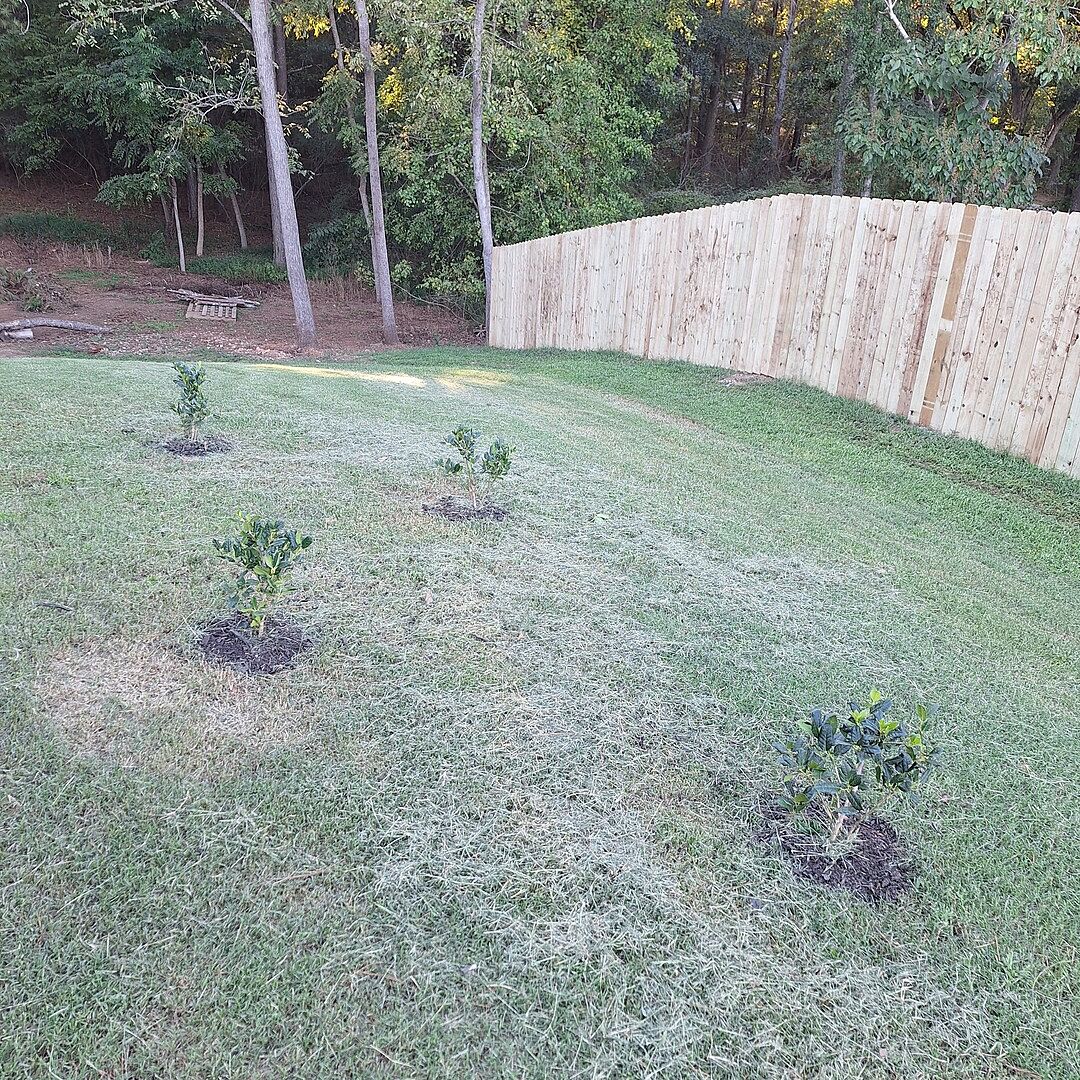
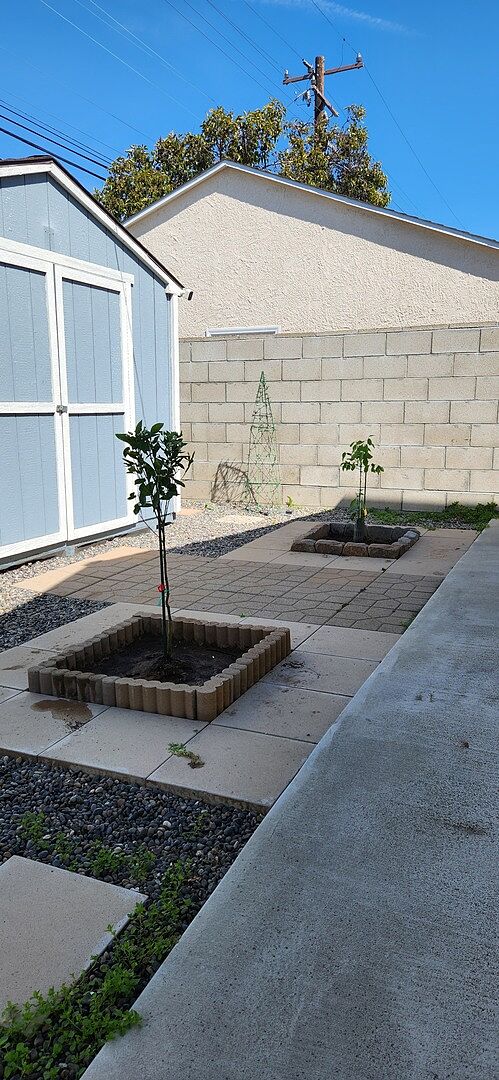
These are 40 to 50 foot trees with canopies of 30 to 40 feet, so give them plenty of room. Plant them 50 feet away from structures and power lines, and 20 feet away from sidewalks, driveways, or patios.
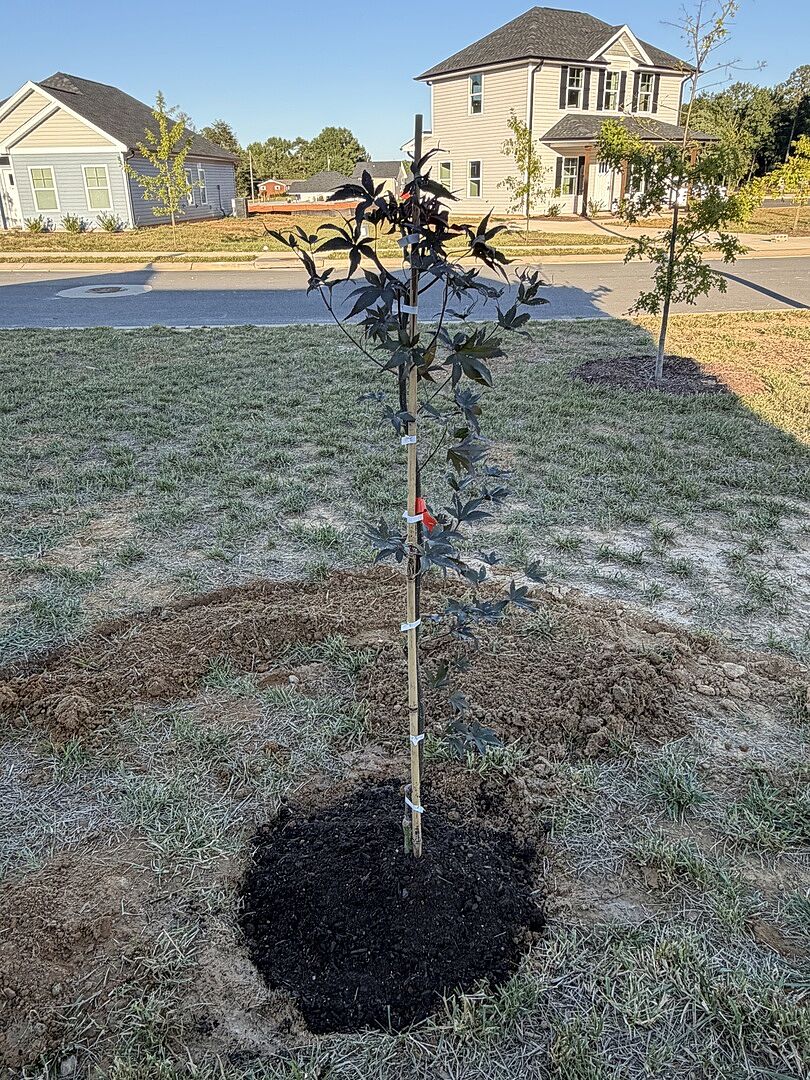
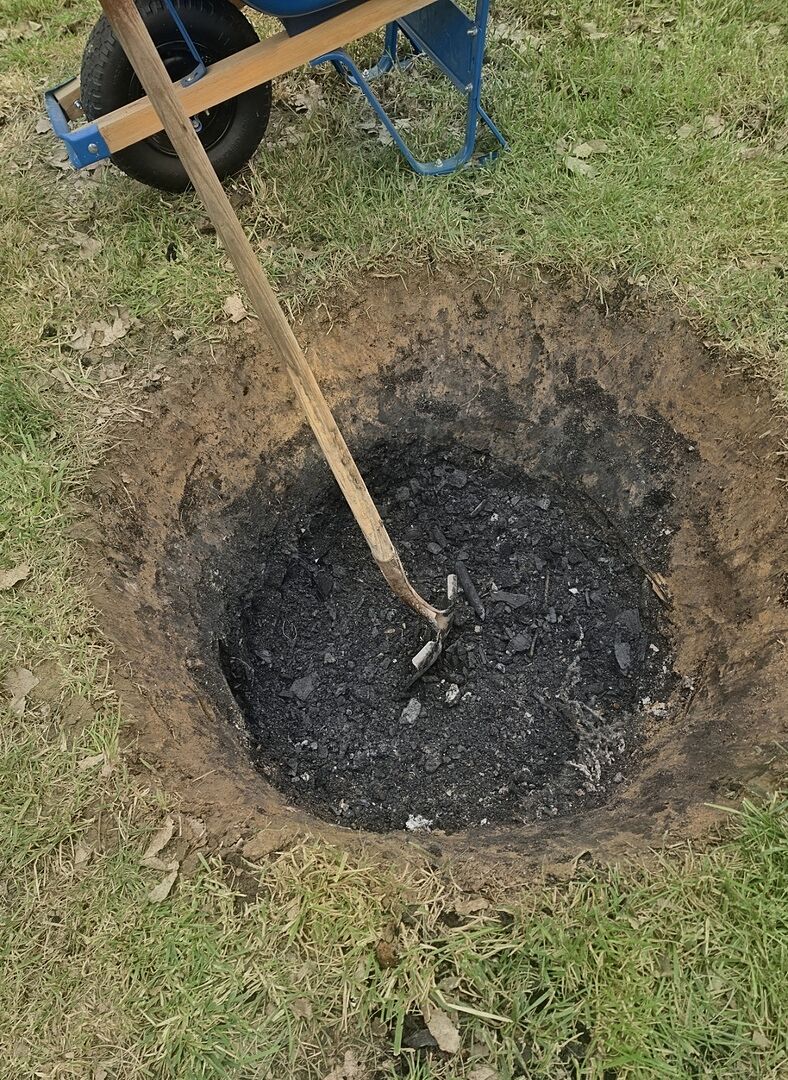
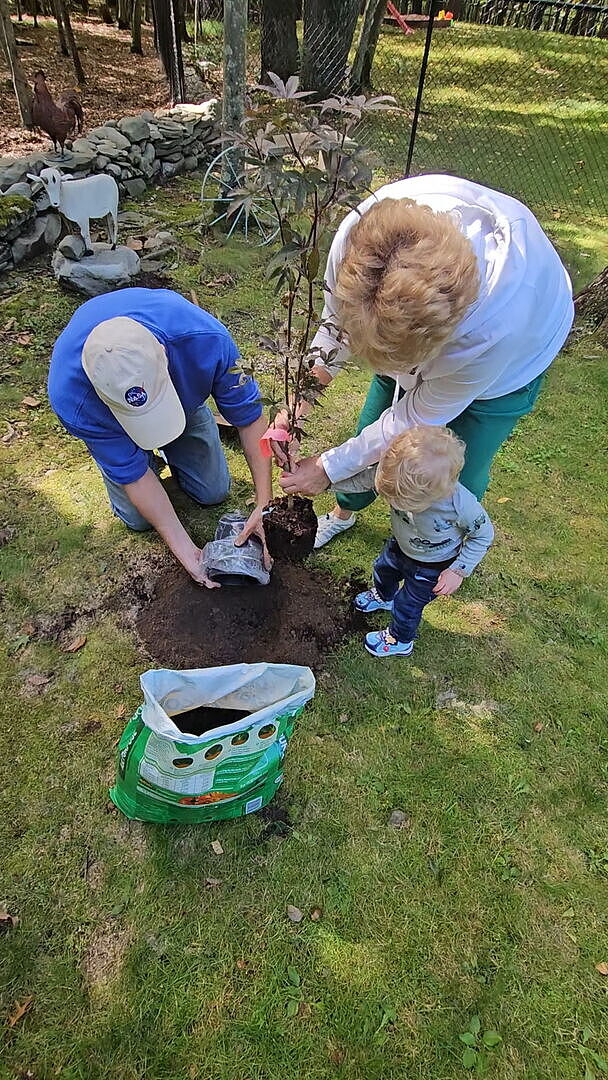
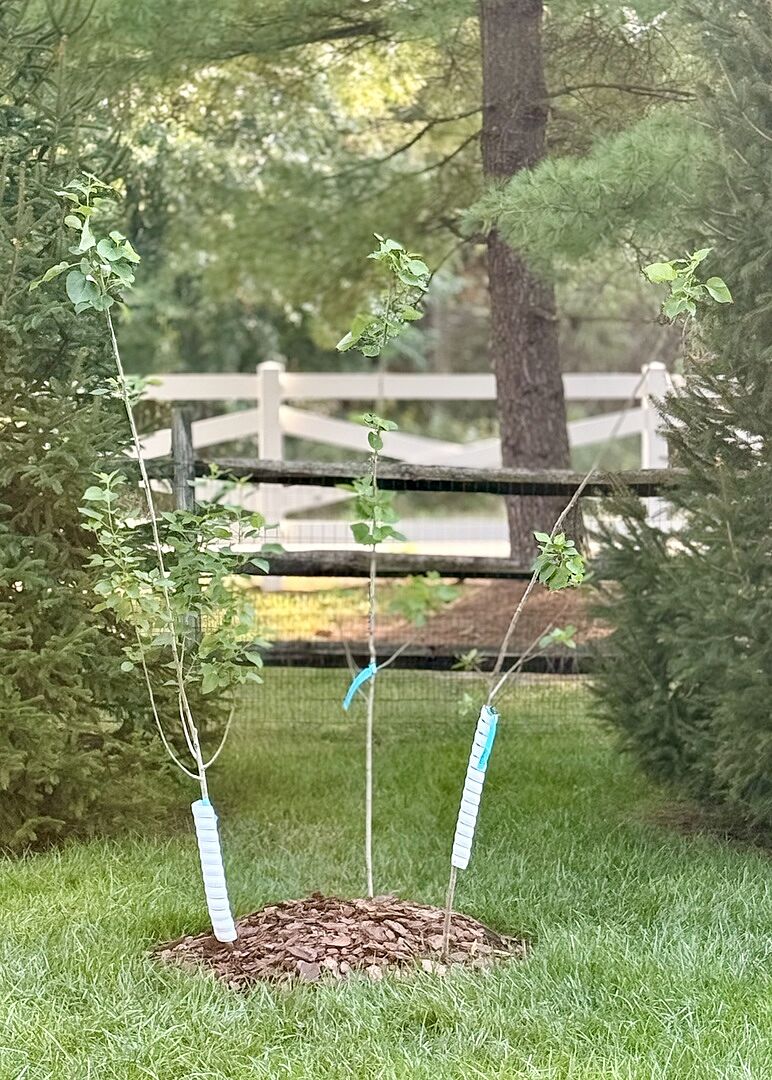
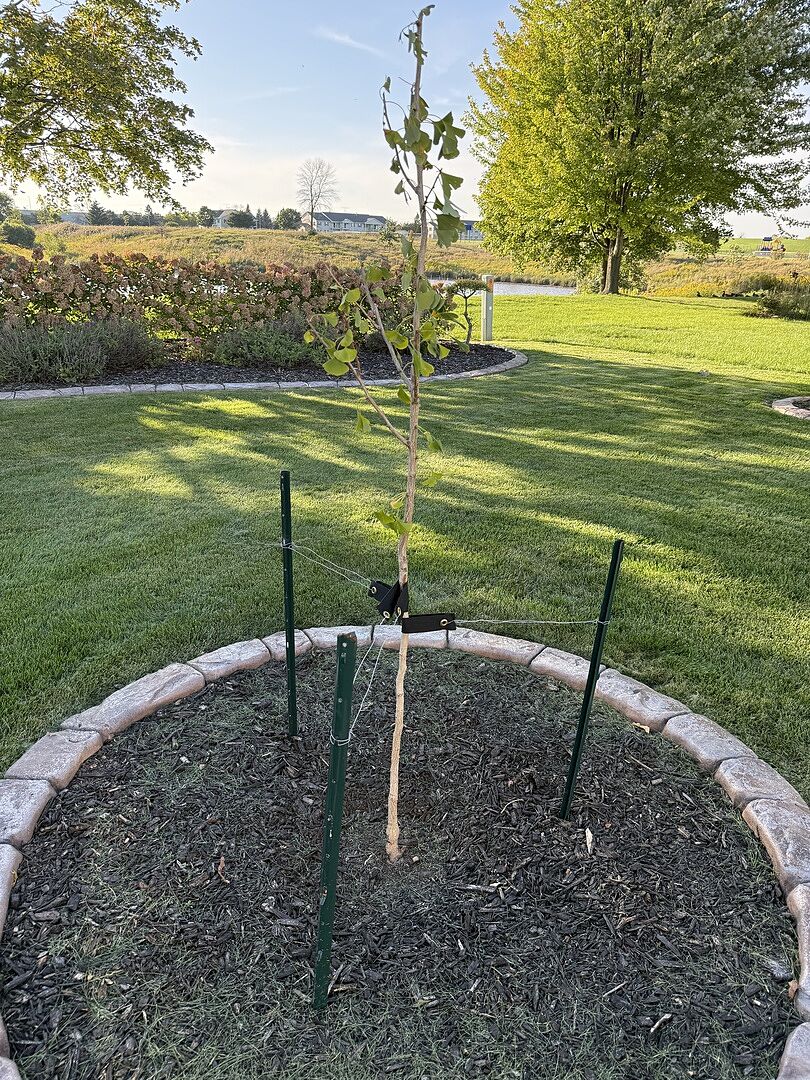
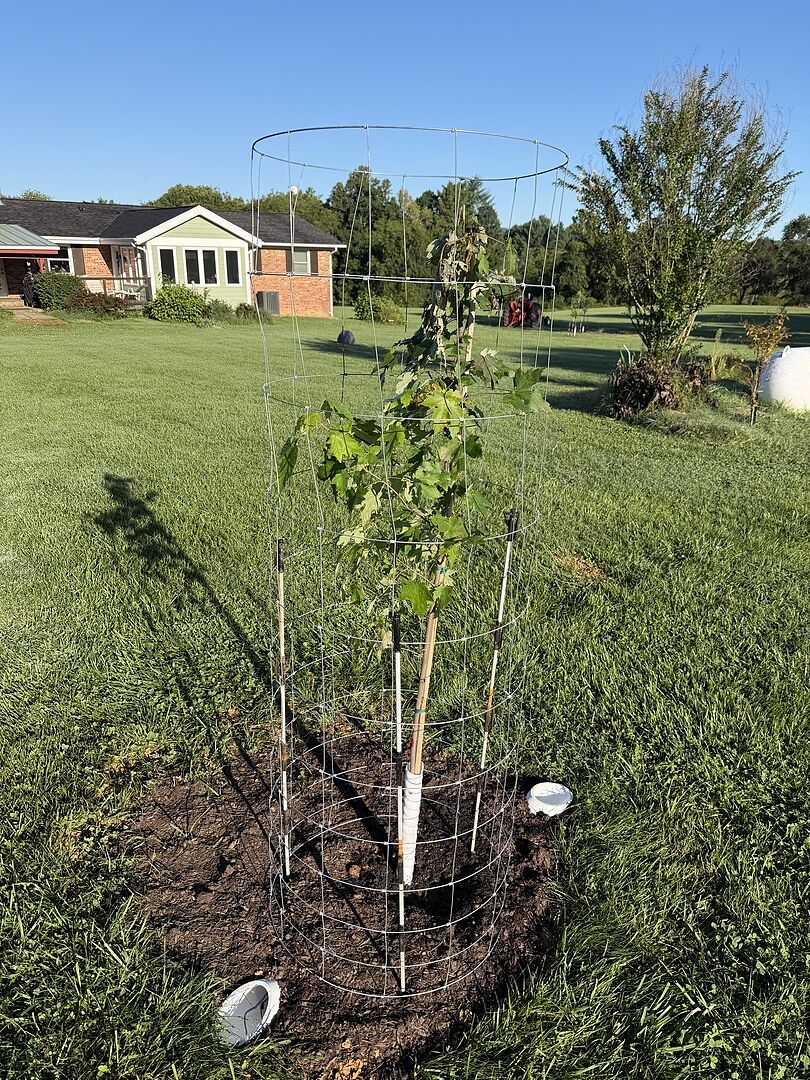
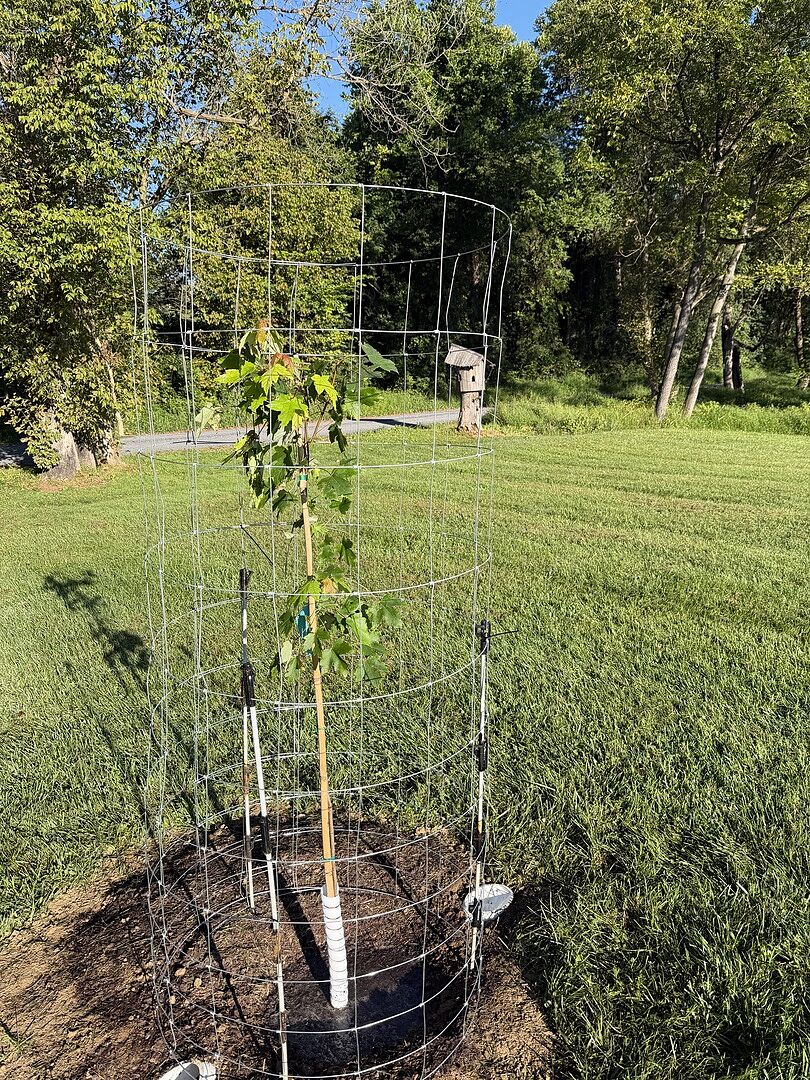
Dig a hole twice as wide as the root ball and just as deep, backfill and tamp to remove air pockets, water thoroughly, then add a 3" layer of mulch 3 feet around the tree, pulled back 3-6" from the trunk. Remember to keep the mulch off the trunk. Because both trees have surface roots, stay well clear of driveways, sidewalks, and foundations.
In cold climates 3-6, spring is the best time to plant. If you need to plant in fall, plant 6-8 weeks before your frost date. In warm climates 7-9, plant in fall.
Sunlight, soil, and watering
Autumn Blaze grows best in full sun. Red Sunset has more flexibility, growing well in full sun to partial shade with up to about six hours of direct sun with some afternoon shade. Both produce their best fall color in full sun and prefer well-drained, acidic to neutral soil.
Both prefer well-drained soil and appreciate consistent moisture while getting established. Once mature, they can handle periods of drought, but newly planted trees need regular watering. For both trees, water deeply every 2-3 days during the first summer, watering when the top 2" of soil are dry. Water once or twice a week the second summer. After establishment, water deeply once a week in times of dry, hot weather.

Pruning and structural care
The basic pruning approach is the same for both trees. Prune in winter or early spring before bud break, while the tree is fully dormant, because maples bleed sap heavily during the growing season. Remove dead or broken branches first, then thin the canopy for light and air, never taking more than 30% of the living canopy at once.
For the first 10 years, structural pruning for Autumn Blaze and Red Sunset is crucial. Focus on maintaining a central leader, pruning out any branches that don't have a 45-50" crotch angle, and pruning lower branches for clearance.
Common problems and how to avoid them
- Chlorosis in alkaline soil. Yellow leaves with green veins can signal chlorosis, and it’s the most common complaint with both trees. NC State Extension notes Red and Freeman maples require acidic soil, though Freeman maples are more adaptable to neutral and slightly alkaline soils. Both maples will develop iron chlorosis in high pH soils, which can be costly to treat. Test your soil prior to planting. If your soil has a high pH, consider a Chinese Pistache or Honeylocust for brilliant fall color.
- Leaf spot and tar spot. These can affect maples and are usually more of a cosmetic concern than a serious threat. Keep the tree healthy and rake up fallen leaves in autumn.
- Storm and limb breakage. Young Autumn Blaze trees can benefit from early structural pruning because of their rapid growth. Establishing strong branch structure while the tree is young is much easier than correcting problems later.
- Sunscald on young trunks. Thin bark on a west-facing trunk can split over winter. A trunk wrap through the first several winters helps.
- Surface roots lifting hardscape. The best solution is prevention. Give your tree plenty of room from sidewalks, driveways, and foundations when you plant.
Other maples worth considering
- October Glory® Red Maple grows 40 to 50 ft. tall and 25 to 35 ft. wide in zones 4 to 9, hardy to -20℉, at a moderate rate. Another red maple cultivar, badged Deer Resistant, that colors later in the season. The October Glory is the best cultivar for the south because it's very heat resistant and colors later in the fall, therefore avoiding the heat stress that makes other maples very dull in color.
- Redpointe® Maple reaches 45 ft. tall and 30 ft. wide in zones 5 to 9, and is hardy to -10℉. A fast-growing red maple selected for better performance in higher-pH soils. If your soil tends alkaline and other red maples struggle with chlorosis, it’s worth a look.
- Sugar Maple is much larger, at 55 to 75 ft. tall and 30 to 50 ft. wide in zones 3 to 8, hardy to -30℉, growing moderately. But, the Sugar Maple can only grow in northern climates with cooler summers. The classic choice for a large shade tree, growing considerably larger than either Autumn Blaze or Red Sunset. It’s slower growing, but its fall color can move from gold to orange to deep red.
Compare the full lineup in our maple trees collection.
Shop with confidence at Trees.com
Whichever maple you choose, it’s covered by our 1-year Alive & Thrive Guarantee™, so it arrives alive and healthy If it dies of natural causes in its first year, we’ll provide a one-time replacement. Check out the policy page for full details.
If you still need help deciding, book a consultation with one of our Plant Experts.
Frequently Asked Questions
Is Autumn Blaze a red maple?
Autumn Blaze (Acer x freemanii 'Jeffersred') is a Freeman maple, a hybrid of red maple and silver maple. Red Sunset (Acer rubrum 'Franksred') is a true red maple cultivar. So Autumn Blaze is half red maple, not a true one.
Which is faster growing, Autumn Blaze or Red Sunset maple?
Autumn Blaze. Our product specs list it at 3 to 5 feet per year or more, compared with 1 to 2 feet per year for Red Sunset once established.
Which maple has better fall color?
Both put on an impressive show, though Red Sunset wins on timing. Its color develops almost a month before other similar varieties, making it a perfect choice for colder climates. Autumn Blaze is a better choice for warmer climates with later autumns.
Can Autumn Blaze maple grow in zone 3?
Yes. Autumn Blaze is rated for zones 3 to 8 and hardy to -40℉, which makes it the pick for northern Minnesota or upper Maine. Red Sunset starts at zone 4.
Do Autumn Blaze maples produce helicopter seeds?
Very few. As a hybrid, Autumn Blaze produces little to no viable seed, so most homeowners see few or no helicopters. Expect minimal cleanup compared with a true red maple like Red Sunset, which does drop samaras.
How big do Autumn Blaze and Red Sunset maples get?
Both reach 40 to 50 feet tall. Autumn Blaze spreads 30 to 40 feet and Red Sunset spreads 30 to 35 feet. Mature height is effectively identical, so size shouldn't be your deciding factor.
Do these maples have invasive roots?
They have shallow, spreading ones rather than invasive ones. Both form surface roots that can lift nearby walkways over time, so site either tree well away from driveways, sidewalks, and foundations.
When should I prune a maple tree?
In winter or early spring, before bud break, while the tree is fully dormant. Maples bleed sap heavily if pruned during the growing season. Remove dead or broken branches first, then thin for light and air, never taking more than 30% of the living canopy at once.