Magnolia vs Dogwood Tree: What's the Difference?

Last updated: Nov 02 2026

If you’re looking for a flowering tree to anchor your yard, magnolia and dogwood are popular options. Both put on a beautiful spring display, but magnolias can be either evergreen or deciduous. Deciduous varieties like saucer magnolias are more commonly compared with dogwoods because they bloom around the same time and have a similar mature size. Southern magnolias, on the other hand, are much larger evergreens that can reach 60 to 80 feet tall. A flowering dogwood stays under 25 feet, drops its leaves in fall, and grows in flat, layered tiers that tuck in beside a house or underneath taller trees. Deciding which is best for your yard comes down to your available space, growing zone, sunlight, and the features you want most.
A quick guide to choosing your best fit
Both trees bloom in spring, so bloom season isn't the deciding factor. The real question is how much room you have, and whether you want winter foliage or a fall color show.
- Choose a Southern magnolia if you have 30 feet or more of open space and want a larger tree with big, fragrant flowers and evergreen foliage.
- Choose a saucer magnolia if you want a tree similar in size and bloom time to a dogwood, but with larger, often fragrant flowers.
- Choose a dogwood if your planting spot is under about 25 feet across, gets afternoon shade, or you want dependable red fall color.
Magnolia and dogwood are different tree families
Magnolias and dogwoods aren't two types of the same tree. They actually belong to two different plant families. NC State Extension places southern magnolias and saucer magnolias in Magnoliaceae, the magnolia family, and puts flowering dogwood in Cornaceae, the dogwood family.
Still, their beauty and popularity as flowering landscape trees means the comparison keeps coming up.
Magnolia vs dogwood at a glance
Here's how the two compare side by side.
|
Magnolia (Magnoliaceae) |
Dogwood (Cornaceae) |
|
|---|---|---|
|
Representative species |
Southern magnolia (Magnolia grandiflora), saucer magnolia (Magnolia x soulangeana) |
Flowering dogwood (Cornus florida), kousa dogwood (Cornus kousa) |
|
Mature height |
60–80 ft. (southern); 15–33 ft. (saucer) |
15–25 ft. |
|
Mature width |
30–50 ft. (southern); 15–25 ft. (saucer) |
15–30 ft. |
|
Canopy shape |
Southern magnolias are pyramid-shaped, dense, often branching close to the ground. Saucer magnolias are multi-stemmed with a shrubby form |
Rounded to flat-topped, with distinctly horizontal, layered branches |
|
Leaf retention |
Evergreen (southern) or deciduous (saucer, star, Jane) |
Deciduous |
|
Bloom |
Southern magnolias have large single flowers, and bloom late spring into summer. Saucer magnolias bloom in early spring and have cup-shaped flowers |
Four petal-like bracts around a small green flower cluster, early spring |
|
Bloom size |
8–12 in. across on southern magnolia; over 6 in. on saucer magnolia |
Bracts about 2 in. long |
|
Fragrance |
Strong and sweet on many species. Saucer magnolias are slightly fragrant |
Little to none |
|
Fall color |
None on evergreen types; brown-copper to gold-yellow on saucer magnolia |
Red to reddish purple |
|
Growing zones |
6–10 (southern); 4–9 (saucer) |
5–9 |
|
Sunlight |
Full sun to partial shade |
Partial shade, especially in hot climates |
|
Best use |
Southern magnolias are large specimen or shade trees in an open lawn. Saucer magnolia is a smaller tree for fountains or garden bed focal points |
Foundation planting, small yard, or under taller trees |
|
Available at Trees.com |
Southern Magnolia at 30–50 ft. tall and 15–30 ft. wide, zones 7–9; Little Gem Magnolia at 15–20 ft. tall and 8–10 ft. wide, zones 7–9; Saucer Magnolia at 15–30 ft. tall and 15–25 ft. wide, zones 4–9, hardy to -20℉ |
White Dogwood at 15–25 ft. tall and 20–25 ft. wide, zones 5–9, hardy to -10℉; White Kousa Dogwood at 15–25 ft. tall and 25 ft. wide, zones 5–8, hardy to -10℉ |
You’ll notice that the biggest difference between these two trees is the footprint, not the flower. A mature southern magnolia can be three times the height of a mature flowering dogwood and cover twice the ground. Dogwood has the advantage when fall color matters, while magnolia stands out for flower size, fragrance, and, on evergreen types, winter foliage. And notice that our named varieties run smaller than the category range on the magnolia side, because the grafted landscape selections are bred to stay manageable.

Key differences between magnolia and dogwood trees
Once you know how the two compare, four things will have the biggest impact on your decision: mature size and shape, flowers and fragrance, fall color, and winter appearance.
Mature size and shape
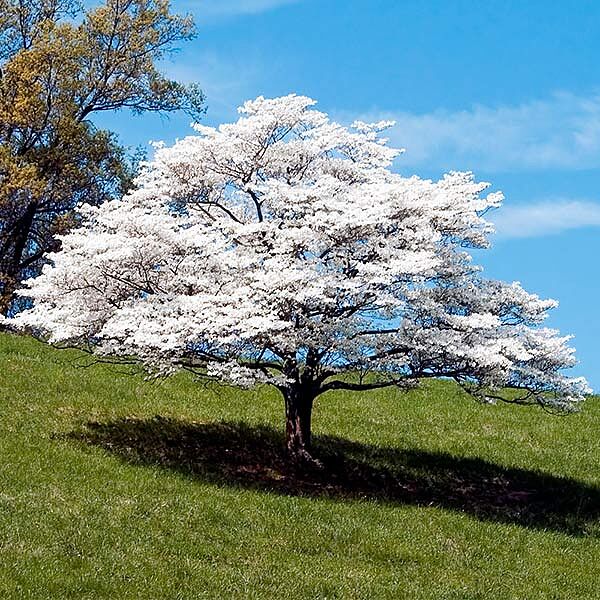
Dogwoods stay small. NC State Extension lists flowering dogwood at 15 to 25 feet tall and 15 to 30 feet wide, with a rounded or flat-topped crown and horizontal branches that grow in visible tiers. That layered look is the reason dogwoods read as elegant even when they're young and thin.
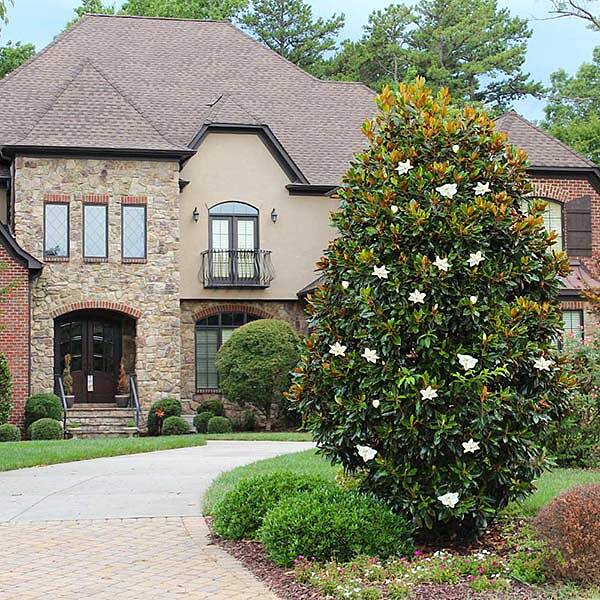
Magnolias grow in a much wider range of sizes. Southern magnolia alone reaches 60 to 80 feet tall and 30 to 50 feet wide, with a dense pyramid-shaped canopy that often branches all the way to the ground. Deciduous magnolias like saucer magnolia are far smaller, at 15 to 33 feet tall, according to NC State Extension.
What that means for your yard: a dogwood works in a foundation bed, a side yard, or a spot already shaded by bigger trees. A full-size Southern magnolia needs real estate. Give it less and you'll spend years pruning a tree that just wants to be wide.
Flowers and fragrance
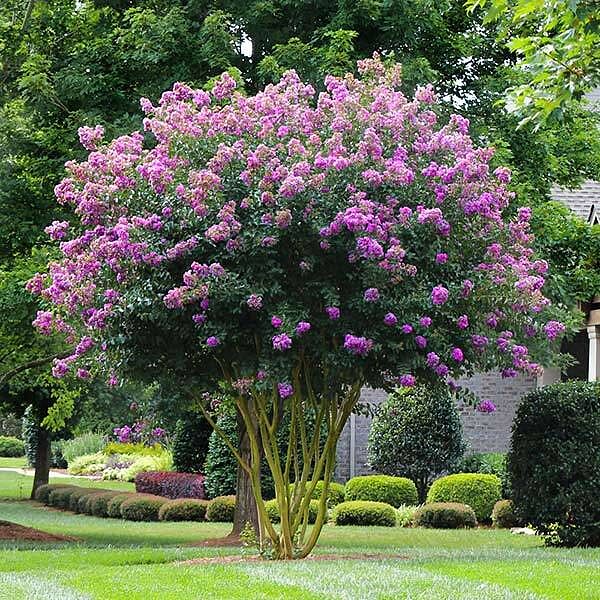
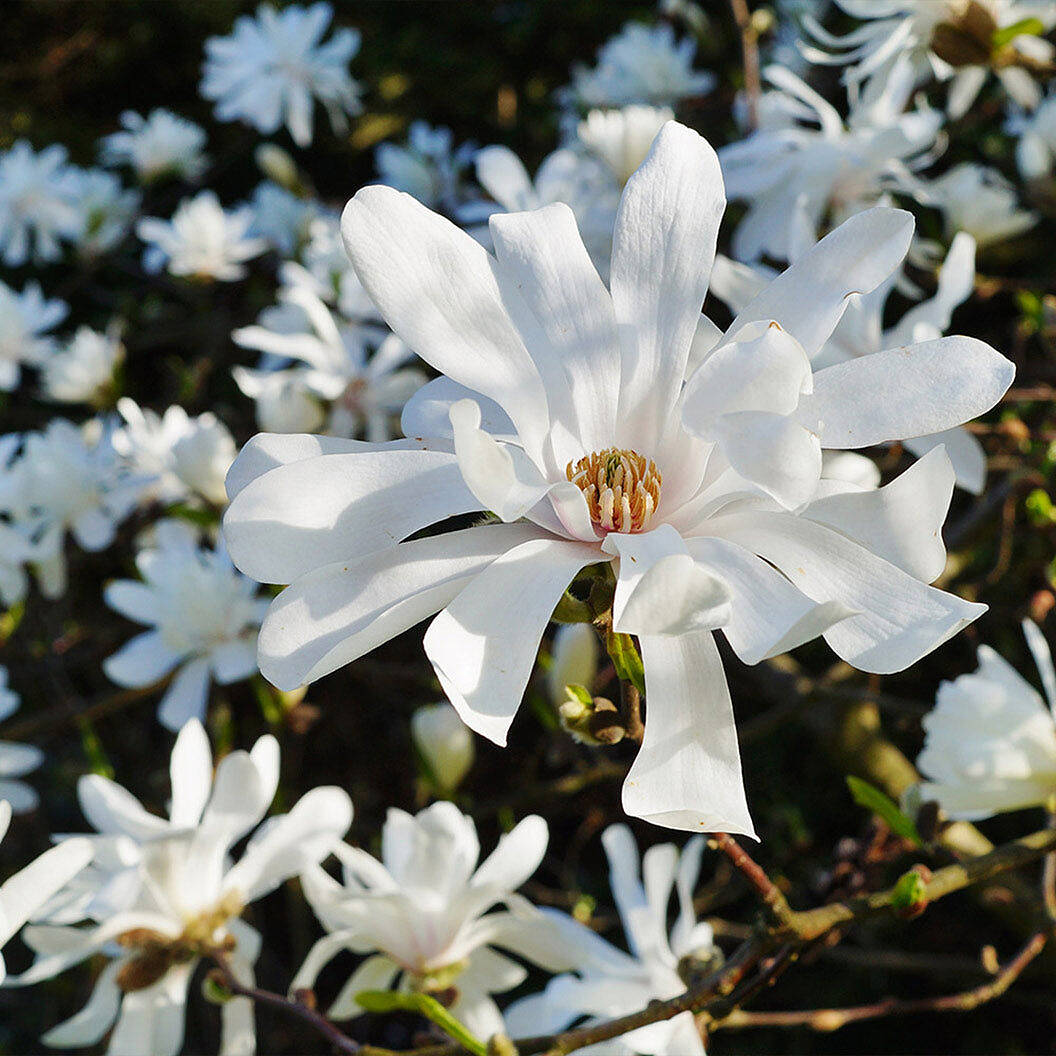
Magnolia blooms are the whole show. Southern magnolia produces large, creamy white flowers that can reach 8 to 12 inches in diameter and have a strong, sweet fragrance. Saucer magnolia produces cupped, tulip-shaped purple-pink blooms that can exceed 6 inches across.
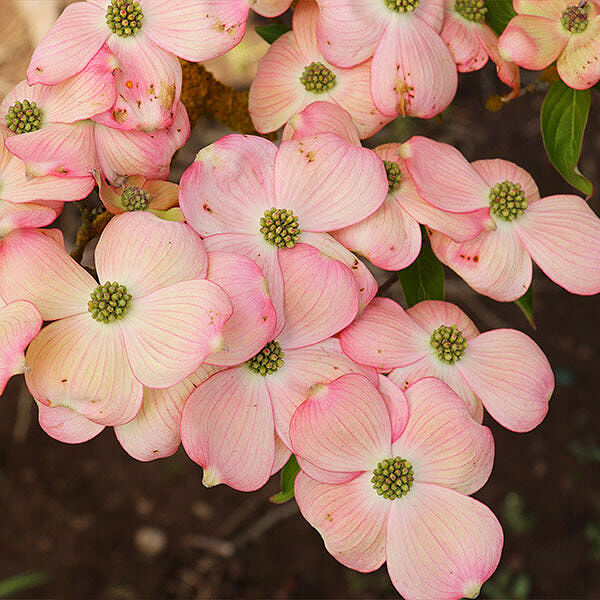
Dogwood flowers are much smaller, but there’s an important detail: what you think of as the flower isn't one. NC State Extension describes the four white "petals" as bracts, which are modified leaves about 2 inches long with a notch at the tip. The true flowers are the small green cluster in the middle, and they're easy to miss entirely. That's also why a dogwood bloom lasts so long: bracts hold up far better than petals do.
Both magnolias and dogwoods put on impressive and spectacular floral displays. Dogwoods can bloom so heavily that the canopy appears covered in flowers, while magnolias are known for their large, often fragrant blooms. The choice may come down to fragrance and flowering time: dogwoods and saucer magnolias bloom earlier in spring, while Southern magnolias typically flower later, from late spring into early summer.
Our guide to flowering trees covers how bloom timing stacks up across other spring options, like cherry trees and redbuds, if you want to widen the field.
Fall color and winter interest
Dogwoods deliver in autumn with both colorful foliage and showy fruit. Flowering dogwood turns red to reddish purple and produces clusters of bright red fruit prized by birds, supporting more than 35 bird species. Kousa dogwood turns red and purple and produces highly ornamental, strawberry-like fruit that's also edible to humans. After the leaves drop, its peeling bark continues to add winter interest.
Magnolias bring a different kind of interest to the fall landscape. In late summer through fall, many varieties develop showy, knobby fruit cones that can reach 3 to 4 inches long. As they mature, bright red seeds emerge from the cones, adding an unexpected pop of color and texture after the blooms have faded. On evergreen types like Southern magnolia, the leathery leaves stay shiny and dark green on top through winter, often with fuzzy, rust-brown undersides. That two-tone leaf also makes tree identification easy.
Match the tree to your yard
Still deciding? Start with the conditions of your yard and go from there.
- A small or narrow yard: dogwood or a saucer magnolia. A White Dogwood tops out around 25 feet and won't swallow a front bed.
- You want a real shade or specimen tree: Southern magnolia. Nothing in the dogwood family gets close to a mature southern magnolia for size and presence.
- You want the best fall color: dogwood. Red to reddish purple every year, and kousa dogwood adds peeling bark for winter.
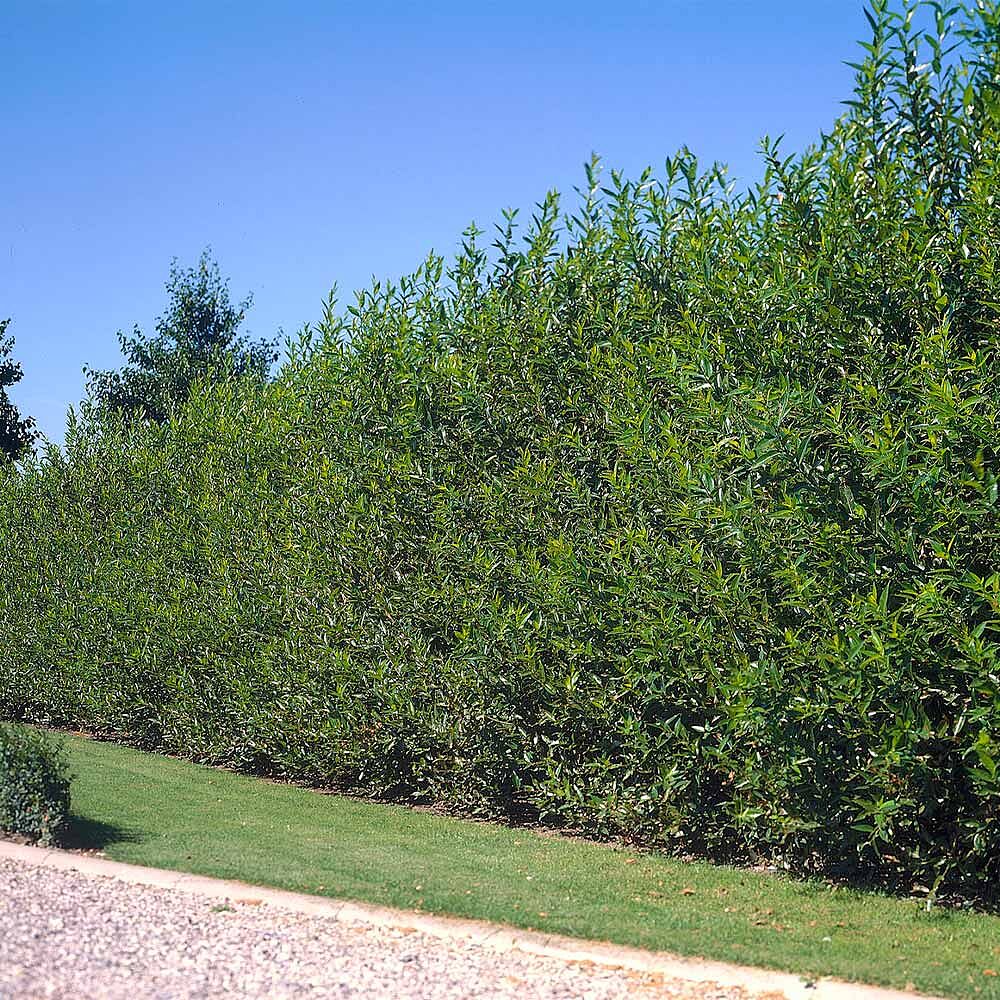
- You want evergreen structure in winter: magnolia, specifically Southern Magnolia or Little Gem Magnolia. Both hold their leaves year-round. Little Gem's dense, compact habit also makes it a good fit for an evergreen privacy hedge.
- Planting near a patio, walkway, or foundation: dogwood, Little Gem Magnolia, or a saucer magnolia if you have your heart set on magnolia blooms. Little Gem stays 15 to 20 feet tall and 8 to 10 feet wide, which is about a third of the footprint of a full southern magnolia.
- You want the biggest, most fragrant flower: Southern magnolia. Eight to twelve inches of fragrant white bloom is not something a dogwood can deliver.
- You garden in zone 4 or 5: check the variety carefully. Jane and Saucer Magnolia is hardy to -20℉ and handles zone 4, while Southern Magnolia stops at zone 7. Kousa dogwood grows in hardiness zones 5 through zone 8 and flowering dogwood in zones 5 through 9, so both can struggle anywhere colder.
Browse the full selection of magnolia trees and dogwood trees to compare mature sizes before you order the right plants for your landscape. If you're weighing a shadier spot, our roundup of shade-loving plants pairs well with a dogwood underplanting.
How to plant and grow magnolia and dogwood trees
Both trees prefer moist, well-drained, slightly acidic soil and a hole twice as wide as the root ball and no deeper. From there the two diverge more than you'd expect, mostly because of where they grow in the wild.
Sunlight and planting location
Magnolias generally do best in full sun and open ground. Southern magnolia can tolerate partial shade, but the dense pyramid-shaped canopy needs room on all sides to fill in evenly. Crowd a magnolia tree against a house or a fence line and you'll get a lopsided tree. Saucer magnolias can be planted in full to part sun, but they need protection from Southern exposures, which can radiate heat onto plants and cause the buds to open too early and get frost damaged. Their root system also needs to spread out.
Dogwoods are more comfortable with some shade. Flowering dogwood is naturally an understory tree, meaning it grows beneath taller trees in a forest where it receives filtered or partial sunlight. The USDA identifies it as an important understory species, and University of Maryland Extension recommends partial shade, particularly in areas with hot, dry summers.
Soil and watering
Maryland Extension puts the ideal dogwood soil pH at 5.6 to 6.5 and notes that dogwoods are shallow-rooted, don't compete well with turfgrass, and often need watering through July and August dry spells. Check the soil 4 to 6 inches down each week for the first couple of years, and water when it's dry at that depth.
Magnolias are quite adaptable and tolerate a slightly wider range once they're established, including some flooding on southern magnolia. Young trees still want steady moisture through the first two or three seasons. We recommend mulching out to the drip line on both, kept a few inches back from the trunk. If you're planting in autumn, our fall planting guide walks through watering through the first winter.

Common problems and how to avoid them
Disease pressure: University of Maryland Extension flags spot anthracnose and dogwood anthracnose as the main concerns, along with powdery mildew and dogwood borer, which goes after trees already under stress. The fix is mostly upstream. Pick a resistant cultivar of flowering dogwood, a Kousa dogwood, or a hybrid dogwood, keep the tree out of full afternoon sun in hot climates, water it through summer, and avoid nicking the trunk with a mower or trimmer, since borers enter through wounds.
Magnolia scale: University of Georgia Extension calls it one of the largest scale insects in the countryU.S., and it hits southern, star, and saucer magnolias along with various hybrids. The insects excrete honeydew, which grows black sooty mold on the leaves below. UGA lists 'Little Gem' and sweetbay magnolia among the resistant options, so variety choice does a lot of the work here. Check branches in late summer and early fall, when infestations are easiest to spot.
Planting too close to the house: This is a problem that will appear years into growth. To avoid it, look at the mature width, not the pot, when choosing. A southern magnolia at 30 to 50 feet wide needs its center set at least 20 feet off any structure. Even a dogwood at 15 to 30 feet wide wants 12 to 15 feet of clearance.
Magnolia or dogwood: which one fits your yard?
The choice comes down to the role you want the tree to play in your yard. Magnolia is the pick when you have space and want size, fragrance, and year-round structure from a tree that becomes the yard's main event. Dogwood is the pick when the spot is smaller or shadier and you want a layered, graceful tree that pays you back every October in red and purple.
Check mature size and hardiness zone before you order, and compare varieties across our magnolia trees and dogwood trees collections. The named varieties we carry often run considerably smaller than the wild species. Jane Magnolia reaches about 10 to 15 feet, and Little Gem Magnolia stays around 15 to 25 feet, compact enough for most yards. On the dogwood side, best sellers like the White Dogwood and Pink Dogwood are easy places to start.
Shop with confidence
Whichever tree you choose, it's covered by our 1-year Alive & Thrive Guarantee™, so it arrives alive and healthy. If it dies of natural causes in its first year, we'll provide a one-time replacement.
Still torn between the two? Book a free Plant Expert consultation and we'll help you match the tree to your zone, your soil, and the exact spot you have in mind.
Frequently Asked Questions
Are magnolia and dogwood trees related?
No. Magnolias belong to the family Magnoliaceae and dogwoods to Cornaceae, per NC State Extension. They're separate plant families with no close botanical relationship. People compare them because both are popular spring-flowering landscape trees, not because they're kin.
Which tree is better for a small yard, magnolia or dogwood?
Dogwood or a saucer magnolia. Flowering dogwood matures at 15 to 25 feet tall, which fits a foundation bed or a narrow front yard. Most magnolias outgrow small spaces, though compact varieties like Little Gem stay around 15 to 20 feet tall and 8 to 10 feet wide. A saucer magnolia is a deciduous tree about the same size as a flowering dogwood.
Do dogwood trees have fall color?
Yes, and it's one of their best features. NC State Extension lists flowering dogwood's fall foliage as red to reddish purple. Kousa dogwood turns red and purple, then adds peeling bark for winter interest after the leaves drop.
How big does a magnolia tree get?
It depends on the species. Southern magnolia reaches 60 to 80 feet tall and 30 to 50 feet wide, according to NC State Extension. Deciduous types like saucer magnolia stay at 15 to 33 feet, and grafted landscape varieties are often smaller still.
Can you plant a magnolia and a dogwood near each other?
Yes, with spacing. Set them far enough apart that the magnolia's mature canopy won't shade out the dogwood's bloom, though dogwoods are understory trees and handle partial shade well. Allow at least 20 feet between trunks.
Which is more fragrant, magnolia or dogwood flowers?
Magnolia, by a wide margin. Southern magnolia's 8 to 12 inch blooms carry a strong, sweet scent you can smell across a yard. Dogwood bracts are showy but have little to no fragrance, since the true flowers at the center are tiny.
Written by
Abby Healy
Abby is an avid plant lover and the Director of Content at Trees.com. She grew up in Maine, graduated from Davidson College, and now resides in Charlotte, North Carolina with her husband and two dogs. Her previous roles include leading content teams at Red Ventures, a large digital media company, and launching the content and marketing functions at an ecommerce analytics start-up.
While her indoor plant collection is always growing, she also loves landscaping tips and learning more about plant care and maintenance. Her favorite plants are Japanese maples, roses of all kinds, and unique house plants.