Rose of Sharon vs Hibiscus: Differences + More

If you’re looking for a flowering shrub that can bring color to your yard, Rose of Sharon and hibiscus are great options. Both produce showy flowers in summer, attract pollinators, and come in a wide range of colors. But their similarities can make them easy to confuse. Rose of Sharon is a type of hibiscus, but it isn’t the same hibiscus you may have seen in patio containers with the enormous tropical blooms. Rose of Sharon is a cold-hardy, woody shrub that can stay in the ground through winter. Trees.com sells two types of hibiscus: tropical hibiscus, also called annual hibiscus, and perennial hibiscus. Tropical hibiscus is not frost hardy and will not return after exposure to freezing temperatures. Perennial hibiscus dies back to the ground after a freeze but emerges again in spring and can be just as cold hardy as, or even more cold hardy than, Rose of Sharon.
A quick guide to choosing your best fit
The Rose of Sharon vs hibiscus decision comes down to two things: whether the plant needs to survive winter outdoors where you live, and mature size of the plant. Rose of Sharon is a woody shrub hardy in zones 4, 5 through 9, so it stays put, drops its leaves, and comes back every spring on its own. Tropical hibiscus only survives outdoors in zones 9 and warmer, which means everyone else grows it in a pot and carries it inside before frost.
- Choose Rose of Sharon or perennial hibiscus if you're in zone 8 or colder and want a permanent, in-ground shrub you never have to move.
- Choose tropical hibiscus if you're in zone 9 or warmer, or you're happy bringing a container indoors in early fall. Unlike perennial hibiscus and Rose of Sharon, tropical hibiscus can bloom continuously throughout the summer rather than within a set flowering window.
Is Rose of Sharon a type of hibiscus?
Yes. NC State Extension lists Rose of Sharon as Hibiscus syriacus, a deciduous shrub in the Malvaceae (mallow) family. It's a genuine member of the Hibiscus genus, not a lookalike with a confusing nickname. Native to China and other parts of Asia, it's been grown as an ornamental for centuries and is the national flower of South Korea.
Most of the confusion starts at the nursery, where a tag reading "hibiscus" can mean one of three very different plants:
- Rose of Sharon (Hibiscus syriacus), a hardy woody shrub that keeps its structure through winter.
- Tropical hibiscus (Hibiscus rosa-sinensis), an evergreen shrub that cannot tolerate frost.
- Hardy or perennial hibiscus (Hibiscus moscheutos), a cold-tolerant perennial that dies to the ground each fall and regrows from the roots. It's also commonly called rose mallow.
Everything below builds on those three. Keep them straight and the rest falls into place.

Rose of Sharon vs hibiscus at a glance
Here's how the Rose of Sharon vs hibiscus comparison looks side by side, with the perennial type included since it's the one most shoppers don't know exists.
|
Rose of Sharon |
Tropical Hibiscus |
Hardy (Perennial) Hibiscus |
|
|---|---|---|---|
|
Botanical name |
Hibiscus syriacus |
Hibiscus rosa-sinensis |
Hibiscus moscheutos |
|
Growth habit |
Deciduous woody shrub |
Broadleaf evergreen shrub |
Herbaceous perennial |
|
Growing zones |
5–9 |
9–11 outdoors |
4–9 |
|
Mature size |
8–12 ft. tall, 6–10 ft. wide |
4–10 ft. tall, 5–8 ft. wide |
2–8 ft. tall, 3–6 ft. wide |
|
Bloom season |
Midsummer into fall |
Spring through fall |
Mid to late summer |
|
Bloom size |
2–4 in. |
4–6 in. |
6–8 in. |
|
Flower life |
One day per bloom |
One day per bloom |
One to two days per bloom |
|
Winter behavior |
Drops leaves, keeps its woody frame |
Must come indoors below about 50℉ |
Dies to the ground, regrows from the roots |
|
Soil moisture |
Well-drained, tolerates brief drought |
Well-drained, kept evenly moist in pots |
Moist to wet, handles low spots |
|
Best use |
Permanent hedge, screen, or specimen shrub |
Patio container or warm-zone landscape |
Perennial border or rain garden |
|
Available at Trees.com |
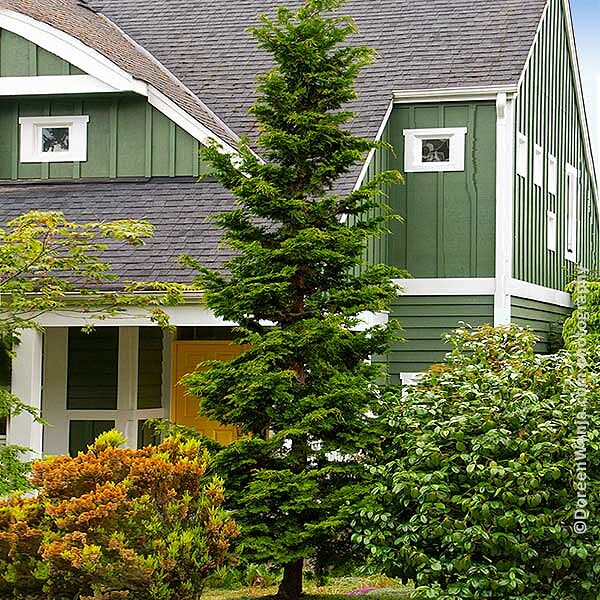
Blue Chiffon |
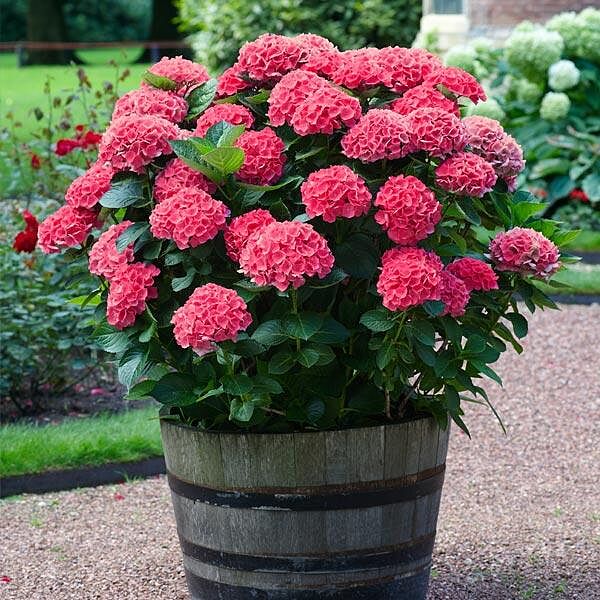
Pink Tropical Hibiscus Shrub |
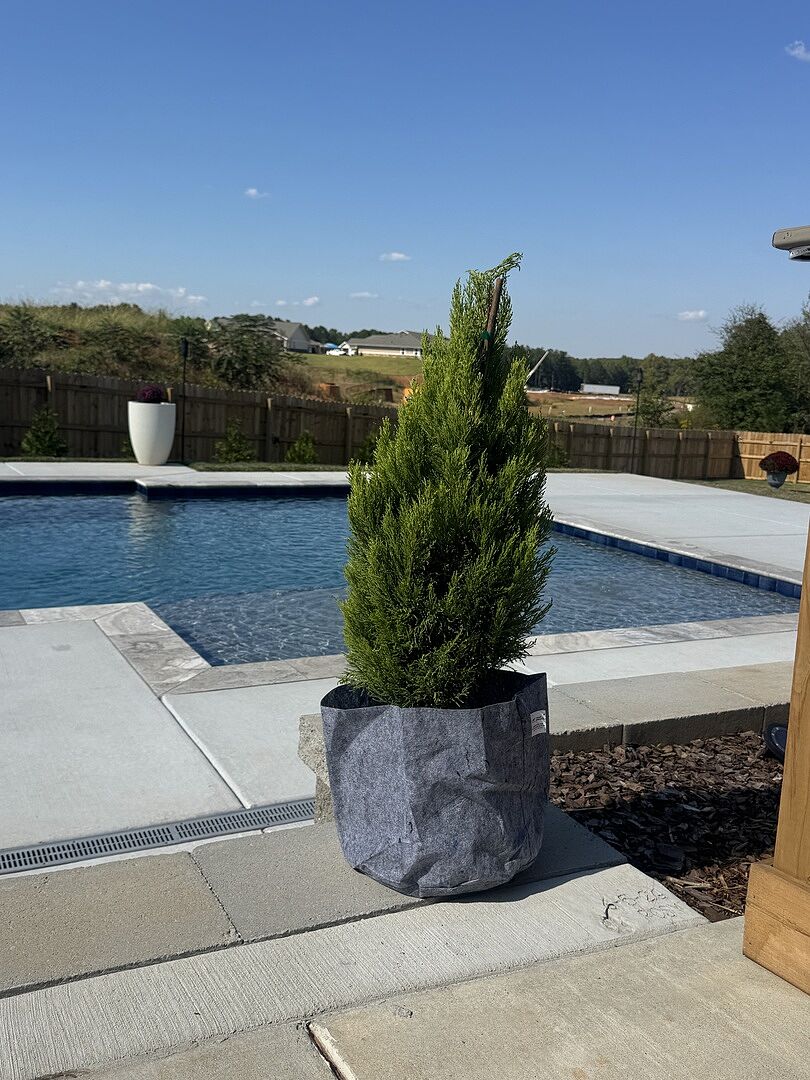
Midnight Marvel |
Where the differences matter most:
- Widest growing range: hardy perennial hibiscus, at zones 4 through 9. It's the only one of the three that will take a zone 4 winter in the ground.
- Biggest flower: also hardy perennial hibiscus, roughly double the width of a Rose of Sharon bloom.
- Longest bloom window: tropical hibiscus, which flowers in the spring through fall wherever it never freezes.
- Least work: Rose of Sharon. It's the only one you plant once and then mostly leave alone.
- Most forgiving of a soggy spot: hardy perennial hibiscus, a swamp native that actually prefers wet feet.
Key differences between Rose of Sharon and hibiscus
Once you know which plants you're comparing, four things will help you narrow it down: cold hardiness, bloom size, mature size, and season, whether the plant has to come indoors for winter.
Cold hardiness: Can it stay outside all winter?
Rose of Sharon is hardy in zones 5a through 9b, according to NC State Extension, and it overwinters outdoors as a dormant woody shrub. Several named varieties at Trees.com are rated hardy down to -10℉, which covers a lot of the country.
Tropical hibiscus is a different story. NC State Extension puts it in zones 9a through 11b, and the tropical varieties sold at Trees.com are rated hardy only to about 30℉ outdoors. Below zone 9, it's a container plant that spends winter in your house.
Hardy perennial hibiscus splits the difference. Clemson Cooperative Extension rates it for zones 4 through 9, where it dies back to the ground each fall and regrows from the roots in spring.
The practical version: if you're in zone 8 or colder and you want a shrub you can plant once and forget about, default to Rose of Sharon. Not sure where you land? Check your growing zone before you order. Mature size is also a huge consideration when deciding which plant is best for you.
Bloom size, color, and season
Rose of Sharon produces 2 to 4 inch saucer-shaped flowers with five crepe-textured petals. They come in white, pink, purple, or blue, including classic blues like Oiseau Bleu and Marina. Flowers often have a darker eye at the center, like the deep crimson one on the white Red Heart variety, and they bloom from midsummer until frost. Each individual bloom lasts a single day, which sounds disappointing until you see how many this prolific shrub produces at once.
Tropical hibiscus flowers run larger, roughly 4 to 6 inches across, in saturated reds, yellows, oranges, and corals that the hardy types don't come in. Same one-day flower life, same continuous production through the season.
Hardy perennial hibiscus has the biggest flowers of the three, often reaching 6 to 8 inches across. They're the giant, showstopping "dinner plate" flowers that catch people’s eyes. Each bloom lasts a day or two. It starts flowering in midsummer, usually July, and continues for up to three months.
Growth: shrub vs. perennial vs. container plant
Rose of Sharon behaves like a shrub in every season. It drops its leaves in fall but holds its branch structure all winter, so it keeps working as a screen or a hedge line even when it's bare.
Hardy perennial hibiscus disappears completely. Stems die back, you cut them down, and the spot looks empty until late spring. Illinois Extension calls it "one of the latest perennials to emerge in the spring," and every year some gardener digs one up assuming it's dead. Mark the spot and be patient. It always comes back.
Tropical hibiscus keeps its glossy leaves year-round, but only where it never sees frost. Everywhere else it's an evergreen in a pot that lives outside for six months and inside for six.

How Rose of Sharon and hibiscus are similar
The good news for anyone still deciding: care overlaps a lot more than the differences suggest.
- Sun: All three plants bloom best with 6 or more hours of direct sun. Shade doesn't kill them, it just costs you flowers.
- Soil: Well-drained soil suits all three. Hardy perennial hibiscus can tolerate much wetter soil and even prefers consistently moist ground.
- Mulch: A 2 to 3 inch layer keeps roots cool and moisture steady for every one of them.
- Bloom timing: All three flower on new growth, which is why pruning at the wrong time costs you a season of blooms.
- Pollinators: Bees, butterflies, and hummingbirds work all three hard.
Which should you plant: Rose of Sharon or hibiscus?
Still deciding? It helps to start with where you’re planting or what you need.
- Want a tall, flowering hedge with lasting structure? Rose of Sharon. Its woody framework remains through winter, though it drops its leaves, and Blue Chiffon Rose of Sharon grows 8 to 12 feet tall and 6 to 10 feet wide.
- Need a plant for a narrow strip along a fence or driveway? A columnar like Purple Pillar Rose of Sharon reaches about 15 feet tall and stays roughly 5 feet wide. Red Pillar Rose of Sharon does the same job at 10 to 12 feet with a 4 foot footprint.
- Live in a cold climate but still want a tropical look? Hardy perennial hibiscus can survive zone 4 winters and produces 6 to 8 inch plant flowers.
- Want flowers for a patio container you can move indoors? Pink Tropical Hibiscus Shrub is rated for patio growing in zones 3 through 11 and outdoor planting in zones 9 through 11.
- Have a damp or low-lying corner that stays soggy? Hardy perennial hibiscus again. It's a swamp native, and the wet spot that rots other shrubs is exactly where it's happiest.
- Want the biggest flower you can grow? Hardy perennial hibiscus, no contest. It flowers for about four to six weeks of peak show in mid to late summer.
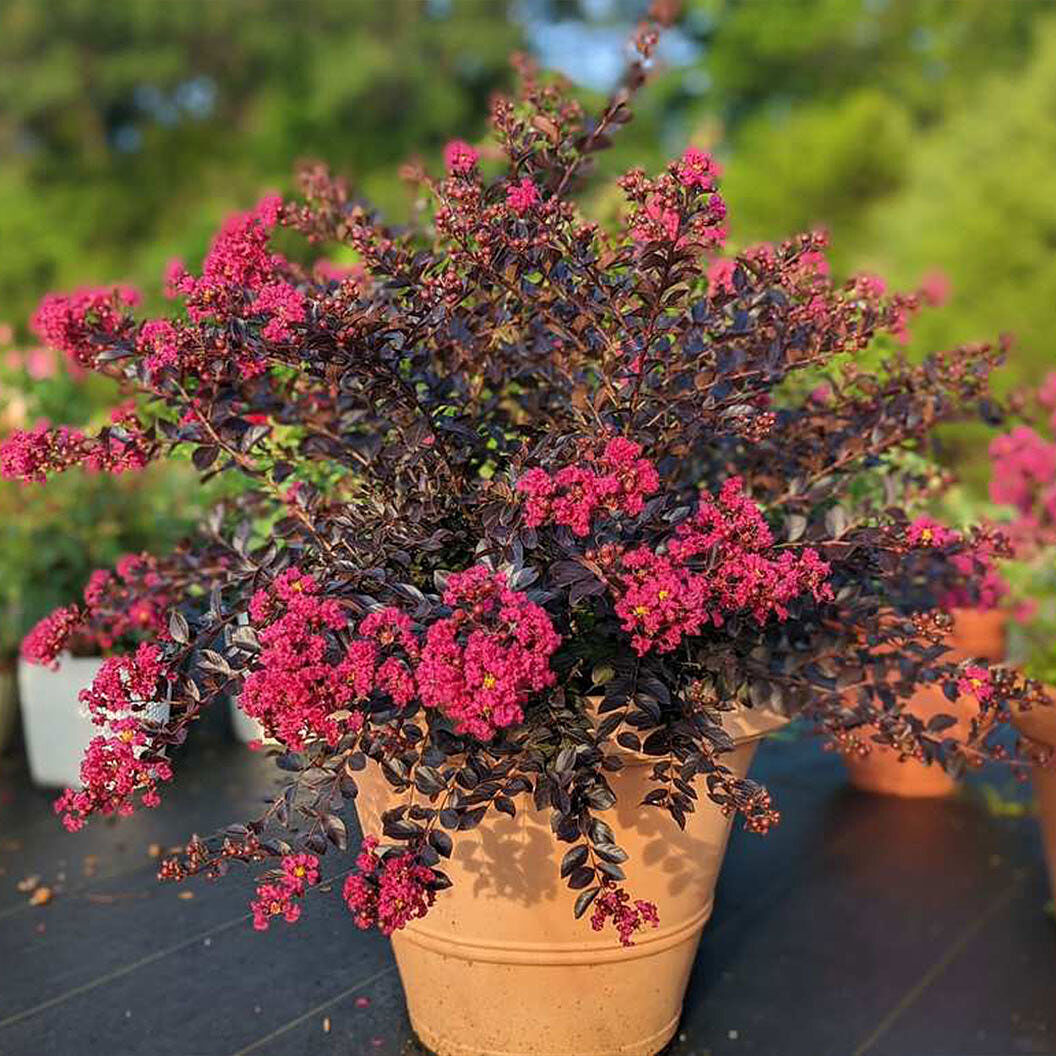
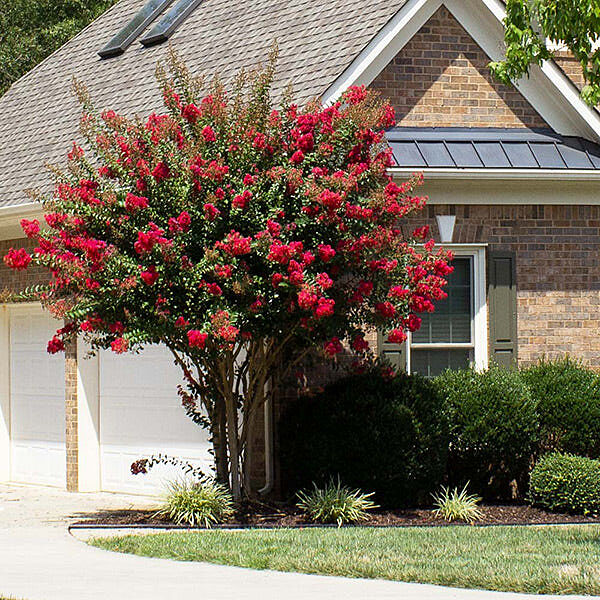
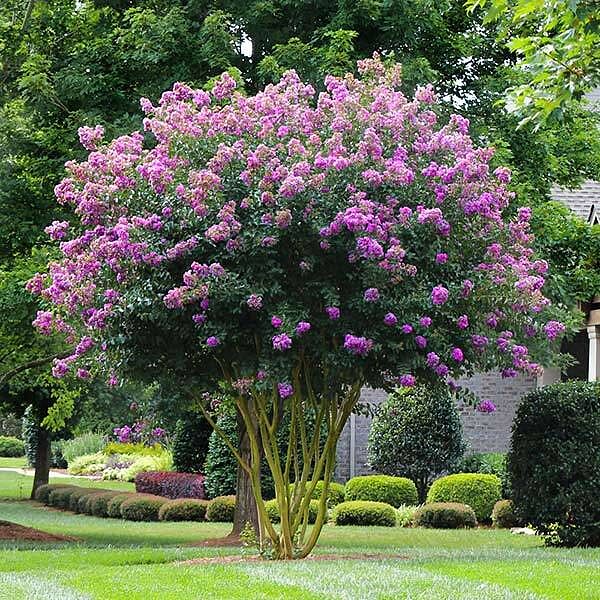
One thing to know before you buy: NC State Extension reports that Rose of Sharon has been listed as invasive in some states, including Virginia and Kentucky, and it can self-seed aggressively in a mulched bed. Clip the spent seed pods before they split open in fall and you'll head off most of the volunteers. If self-seeding is a concern where you garden, a crape myrtle tree gives you a similar long summer bloom without the seedling problem.
How to plant and care for Rose of Sharon and hibiscus
The planting basics are similar for all three, but their watering and winter care differ. Plant in a sunny spot in spring or early fall, dig a hole twice as wide as the root ball and no deeper, and water deeply at the base a couple of times a week for the first season.
Sun, soil, and watering
Full sun is the single biggest lever on bloom count for all three. Six hours is the minimum, and more is better.
Rose of Sharon prefers well-drained soil and tolerates short dry spells once it's established, usually by its second season. Hardy perennial hibiscus is the outlier: Clemson notes it adapts well to rain gardens and naturally moist sites, so don't be shy about watering it.
Container-grown tropical hibiscus is the thirstiest of the bunch. A pot in August heat can dry out in a day, so check it daily and water until it runs from the drainage holes.
Pruning: when to cut them back
Here's where most people lose a year of flowers. Rose of Sharon and hardy hibiscus set buds on the growth they put on in the current season, so cutting in late spring or summer removes the flowers you were waiting for.
Rose of Sharon flowers on new growth, so Penn State Extension recommends pruning in late winter or early spring while the plant is dormant. Hardy perennial hibiscus can be cut back to about 6 inches in late winter.
The basic rule is simple: finish major pruning before new growth starts in spring. Once new leaves begin appearing, wait until the following winter for major cuts.
Tropical hibiscus is more forgiving because it flowers over a longer period. Clemson recommends cutting older growth back by about one-third in spring. Light shaping and pruning during summer is also possible.
Overwintering tropical hibiscus
If you're growing tropical hibiscus outside zones 9 through 11, plan on bringing it in. Clemson recommends moving plants indoors once nighttime temperatures fall into the low 50s℉, which for most of the country means late September or early October.
Put it in your brightest window and expect some leaf drop in the first couple of weeks. That's a normal response to the light change.
Cut watering back while it's inside, since a plant that isn't actively growing needs far less. Hold off on fertilizer until spring, then resume feeding when you move it back outdoors after your last frost date. Move it out gradually over a week or so, because a plant that spent winter in a window will scorch in full sun on day one.
Common problems and how to avoid them
Most hibiscus trouble traces back to a handful of causes, and nearly all of them are fixable.
- No blooms: Nine times out of ten it's from pruning at the wrong time. Too little sun and too much nitrogen fertilizer account for most of the rest, since nitrogen pushes leaves at the expense of flowers.
- Chewed leaves and ragged flowers: Aphids, whiteflies, and Japanese beetles can all affect hibiscus. Hand-pick beetles into soapy water in the morning when they're sluggish, and knock aphids off with a strong spray from the hose.
- Sticky leaves or fine webbing on a plant that's overwintering inside: Dry indoor air invites spider mites and whiteflies. Raise the humidity, check the leaf undersides weekly, and treat early while the population is small.
- Scale on tropical hibiscus: NC State Extension flags scale insects as the main pest concern for Hibiscus rosa-sinensis. Look for small bumps along stems and leaf veins.
- Yellowing leaves on a container plant: Usually a watering issue, either too much or too little. If moisture is steady and the leaves still yellow between green veins, a nutrient deficiency is the likely culprit and a balanced fertilizer formulated for flowering plants is the place to start.

Rose of Sharon or hibiscus: which fits your yard?
The short version: plant Rose of Sharon when you want permanent, cold-hardy structure you don't have to think about, and plant tropical or hardy perennial hibiscus when you want the bigger, showier flower and your climate or your patio can accommodate it. All three are easy to grow.
Browse the Rose of Sharon collection and the hibiscus plants at Trees.com to compare hardiness zones and mature sizes against your yard before you order. Zone rating first, then mature size, then flower color.
Shop with confidence
Whichever one you choose, it's covered by our 1-year Alive & Thrive Guarantee™, so it arrives alive and healthy. If it dies of natural causes in its first year, we'll provide a one-time replacement.
Still torn between them? Book a Plant Expert consultation and we'll help you match the right hibiscus to your zone, your soil, and the spot you have in mind.
Frequently Asked Questions
Is Rose of Sharon the same plant as hibiscus?
Yes, and no. Rose of Sharon is Hibiscus syriacus, a true member of the Hibiscus genus, so it is a hibiscus. But "hibiscus" on a plant tag usually means tropical Hibiscus rosa-sinensis, which is a different species with very different cold tolerance.
Can hibiscus survive winter outdoors?
Depends which one. Rose of Sharon survives outdoors in zones 5 through 9 and hardy perennial hibiscus in zones 4 through 9. Tropical hibiscus only survives outdoors in zones 9 through 11 and needs to come inside anywhere colder.
Why isn't my Rose of Sharon blooming?
Most often, late pruning. Rose of Sharon flowers on new growth, so cutting it in spring or summer removes the buds. Too little sun is the next most common cause, followed by high-nitrogen fertilizer that pushes foliage instead of flowers.
What's the difference between hardy hibiscus and tropical hibiscus?
Winter. Hardy hibiscus dies to the ground and regrows from its roots in zones 4 through 9. Tropical hibiscus stays evergreen but only survives outdoors in zones 9 through 11. Hardy types also carry bigger flowers, 6 to 8 inches versus 4 to 6.
Can I grow Rose of Sharon and hibiscus in the same garden?
Absolutely. They share the same sun and soil preferences and bloom in overlapping windows, so they pair well. Just give the hardy perennial hibiscus the moister spot and plan on moving any tropical hibiscus indoors for winter.
How do I tell Rose of Sharon and hibiscus apart by their leaves?
Look at the shape and the shine. Rose of Sharon leaves are dull green with three distinct lobes, like a small maple leaf. Tropical hibiscus leaves are glossy, dark green, and oval with toothed edges.