Azalea vs Rhododendron: What's the Difference?

Last updated: Nov 02 2026

If you’re looking for a flowering shrub with spring color, azaleas and rhododendrons are great choices, but easy to confuse. Why? Azaleas are rhododendrons. They both belong to the same genus, Rhododendron. That's why the two names get thrown around like they're interchangeable at the garden center. But their differences matter when it comes to size, foliage, flowers, hardiness, and how they fit in your yard landscape. Once you know the difference, it's easier to find the right shrub for your space.
A quick guide to choosing your best fit
Care won't be your deciding factor here. Both want the same acidic soil and the same dappled light, so the azalea vs rhododendron choice really comes down to size and the look of the bloom.
- Choose an azalea if you're filling a foundation bed, creating a border, or looking for something under 5 feet. They’re also a good option if you want multi-season color. The Encore® series of hybrid azaleas reblooms in spring, summer, and fall.
- Choose a rhododendron if you want a bigger evergreen tree with fuller, denser flower clusters, or you're gardening in zone 4 and need a plant that can handle winter conditions.
Is an azalea a type of rhododendron?
Yes. And this distinction explains most of the azalea and rhododendron confusion.
NC State Extension puts it this way: all azaleas are rhododendrons, but not all rhododendrons are azaleas. Both live in the genus Rhododendron, over in the heath family.
So why does everybody still talk about them like two separate plants? Because for a couple of centuries, they were. In the 1700s, Swedish botanist and taxonomist Carl Linnaeus developed a system for naming and classifying plants. He originally classified azaleas and rhododendrons as separate, using characteristics like the number of stamens (the pollen-producing part of a flower) to tell them apart.Botanists later merged them into one genus of about 1,000 species, according to University of Arkansas Extension.
Gardeners and nurseries continue to treat them as separate because the difference between the two is really useful. A 2-foot reblooming azalea and a 10-foot catawba rhododendron share a genus the way a dachshund and a wolfhound share a species. Technically true, but not much help when you're deciding what goes under the front window.
Azalea vs rhododendron at a glance
Here's how the two compare side by side.
|
Azaleas |
Rhododendrons |
|
|---|---|---|
|
Genus |
Rhododendron |
Rhododendron |
|
Stamens per flower |
Usually 5 |
Usually 10 or more |
|
Leaf size and texture |
Smaller, thinner, softer, more pointed |
Larger, thicker, leathery, glossy |
|
Leaf underside |
Fine hairs pressed flat along the midrib, never scaly |
May be scaly or finely dotted |
|
Bloom shape |
Funnel-shaped |
Bell-shaped |
|
Bloom placement |
Along the sides of stems and at the tips |
Clustered into trusses at branch tips |
|
Evergreen or deciduous |
Both, depending on the variety |
Evergreen |
|
Typical mature height |
Around 5 ft.; deciduous natives can reach 8–15 ft. |
Commonly 6–10 ft.; large species reach 15–20 ft. |
|
Typical growing zones |
Most 6–9, cold-hardy varieties to zone 3 |
Most 4–8, some to zone 3 |
|
Sunlight |
Full sun to partial shade |
Full sun to partial shade |
|
Soil pH |
Acidic, 4.5–6.0 |
Acidic, 4.5–6.0 |
|
Bloom season |
Spring, with reblooming varieties through fall |
Spring, some into summer |
|
Available at Trees.com |
2–5 ft. tall and wide, zones 4–10, all evergreen varieties |
2–10 ft. tall and wide, zones 4–9 |
Some important takeaways:
- The bottom half of the comparison chart barely changes. Sun, soil, and bloom season are nearly the same. Everything that separates these two plants sits at the top of the chart.
- Azaleas lean warm, rhododendrons lean cold. Most azaleas are happiest in zones 6 to 9 and most rhododendrons in zones 4 to 8, though you'll find zone 3 varieties in both camps.
- The size rule breaks at both ends. Some deciduous azaleas clear 10 feet, and some dwarf rhododendrons never pass 3. Variety beats category, every time.

Where the differences matter most
Once you know what to look for, telling an azalea from a rhododendron gets much easier. Four key differences are especially useful: leaf texture and shape, flower form and placement, mature size and growth, and whether the plant keeps its leaves through winter.
Leaves and foliage: how to tell them apart
You can settle this one with your hands, which is why it's our favorite trick at the garden center. A rhododendron leaf feels substantial. They’re thick, a little waxy, and stiff enough that it holds its shape when you bend it. An azalea leaf is thinner and softer, and it comes to more of a point.
The undersides give you another clue. The Azalea Society of America notes that azalea leaves carry fine hairs lying flat against the surface, usually running along the midrib on the underside. Rhododendrons often do something else entirely: the Rhododendron Species Botanical Garden points out that azaleas never carry scales, while plenty of rhododendrons do.
Flat hairs, azalea. Little scales or dots, rhododendron.
Flowers: shape, placement, and bloom style
Stamen count is the classic botanical test. Azaleas usually have five stamens and rhododendrons usually have 10 or more. It's the method a horticulturist would use, though it requires an open flower and a close look.
But counting isn’t your only option. The bloom shape and placement are what you'll clock from the sidewalk:
- Azalea blooms are funnel-shaped, and they open along the sides of the stems as well as at the tips.
- Rhododendron blooms are bell-shaped and bunch up into rounded clusters called trusses, almost always right at the ends of the branches.
Sounds like a small distinction. It isn't. A blooming azalea reads as a wash of color across the entire shrub, top to bottom. A blooming rhododendron reads as a handful of bouquets held up at the branch tips. Two completely different effects out front.
Growth rate and mature size
Size is one of the most important differences and can be a costly mistake if not taken into account.
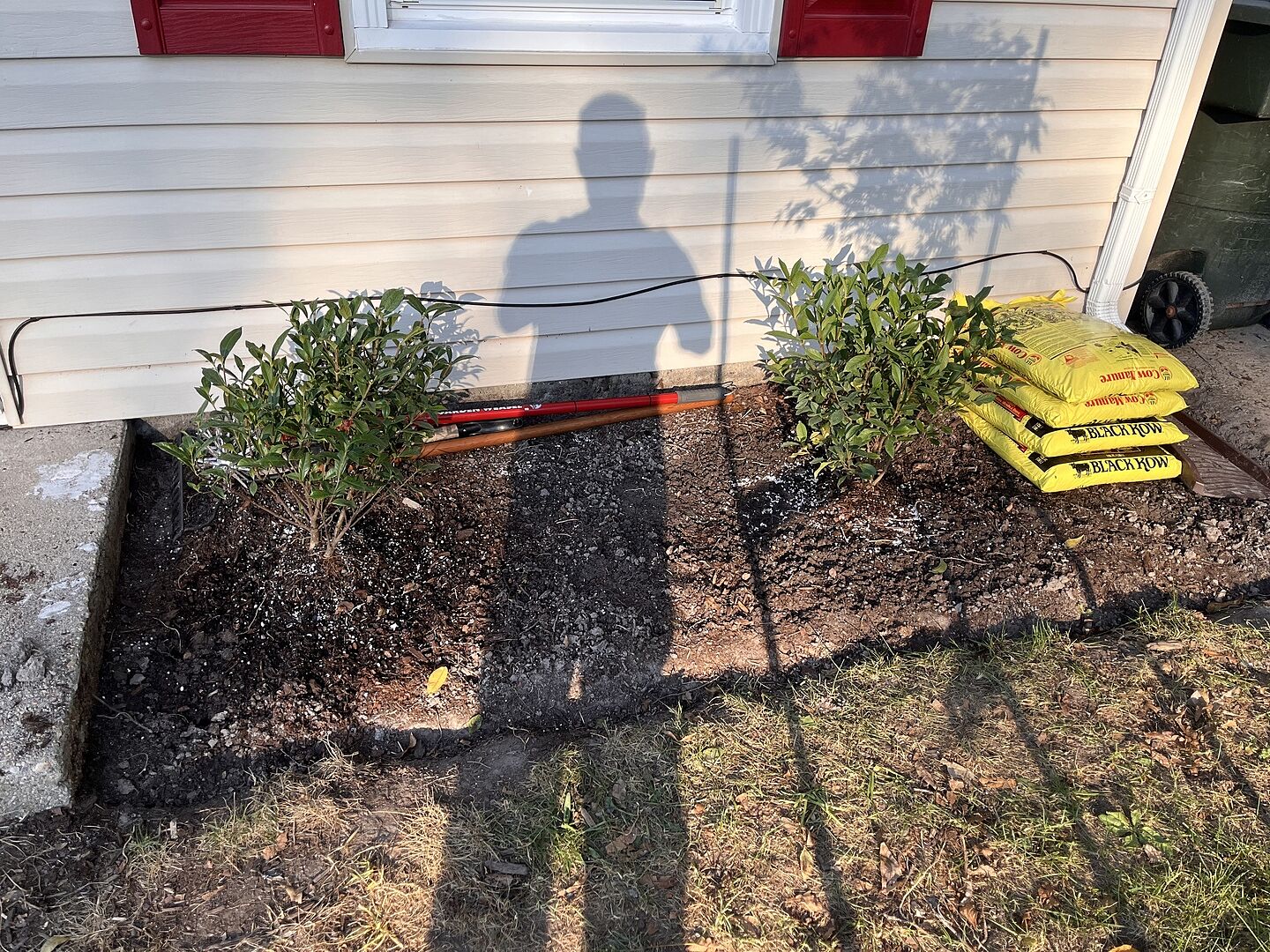
Azaleas stay low and bushy. University of Vermont Extension puts your typical azalea around 5 feet tall, and the evergreen azalea varieties most people bring home run somewhere in the 2 to 6 foot range. That's foundation-bed territory: under a window, along a walkway, tucked in front of something taller.
Rhododendrons turn into structure. NC State lists catawba rhododendron at 6 to 10 feet tall and 8 to 10 feet wide, "sometimes reaching heights of up to 20 feet," and rosebay rhododendron at 5 to 15 feet. A plant that size isn't decorating the corner of your house. It's defining it.
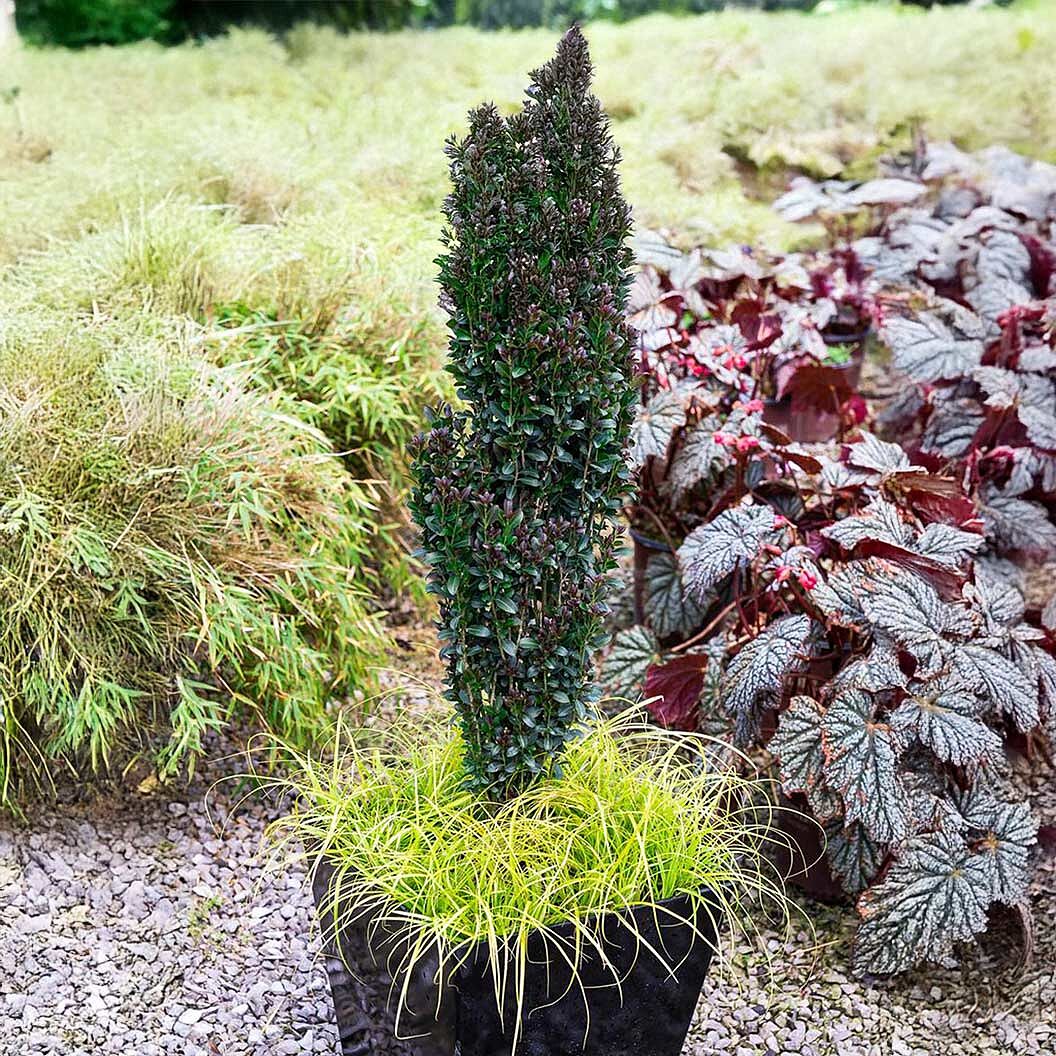
One caveat before you treat size as a hard rule. Deciduous native azaleas get a lot bigger than the evergreen ones, with NC State putting flame azalea at 4 to 8 feet and occasionally 10 to 15. Dwarf rhododendrons run the other direction: Bloombux® Blush Rhododendron tops out at 2 feet, which makes it smaller than almost every azalea we sell. Read the tag on the variety in front of you, not the category name.
Evergreen vs. deciduous
NC State describes rhododendrons as evergreen and most azalea species as deciduous, with a lot of evergreen exceptions. Those exceptions have a geography to them: the deciduous azaleas are mostly North American natives, and the evergreen ones came over from Japan.
That means the word "azalea" tells you very little about whether there'll be leaves on the plant in January. The azaleas we carry are all evergreen selections, including the Encore® series and the Karen Azalea, which holds its foliage through winter and picks up bronze tones in fall. If you want something that still looks like a plant in February, either category can do that for you. Check the variety.

How azaleas and rhododendrons are similar
For all their differences, rhododendrons and azaleas have a lot in common.
Both are plants that naturally grow beneath taller trees in forests. This “woodland understory” setting means they’re used to filtered light rather than intense, all-day sun, along with acidic soil rich in organic matter, consistent moisture, and roots that grow close to the soil surface.
That shared growing environment explains most of their care requirements:
- Acidic soil
- Partial shade to dappled sunlight
- Consistent moisture
- Good drainage
- A layer of mulch
- Shallow roots that shouldn't be disturbed
Neither will tolerate wet feet, and neither appreciates deep cultivation around the root zone.
That means you can grow azaleas and rhododendrons in the same bed without creating two separate care routines. Their soil, light, water, and mulch requirements line up closely.
The choice is mostly about the plant you want to see, not the plant that's easier to care for.
Which should you plant?
Start with your yard instead of the plant. Framed that way, the azalea vs rhododendron question turns into a tape-measure question.
- A small foundation bed, or anything under 5 feet: azalea.
- Color that comes back more than once a season: Encore® Azalea, which reblooms spring, summer, and fall.
- Year-round structure, or a loose screen: a full-size rhododendron.
- The biggest spring show you can get: rhododendron, for those truss-shaped clusters.
- Zone 4 winters: either one works, but check the variety. Lavender Rhododendron is hardy to -20℉, and Karen Azalea matches it.
- Zone 10 heat: azalea, since the reblooming varieties reach furthest south.
- A tight spot you still want evergreen: Bloombux® Blush Rhododendron at 2 feet, or Conversation Piece Azalea at 2 to 3 feet. Both are compact enough for a container, too.
Not sure how much light your bed actually gets? Our roundup of shade-loving plants walks through reading a spot before you plant in it.
How to plant and care for azaleas and rhododendrons
Since they want the same things, one set of instructions covers both. We'll flag the two places they part ways.
Soil, sun, and watering
Both prefer acidic soil in the 4.5 to 6.0 pH range. Keep it well drained while still holding enough moisture to keep the shallow root system from drying out. If a soil test comes back neutral or alkaline, fix it before you plant rather than after. Nudging pH around an established shrub is slow going, and it's the one thing that's genuinely hard to undo later. Our guide to peat moss covers the amendment side if you're starting with stubborn soil.
Partial shade to dappled sun suits both.In hot climates, morning sun with afternoon shade is the sweet spot. Full afternoon exposure is where leaf scorch starts.
Those shallow roots drive the last couple of rules. Mulch 2 to 3 inches deep with pine needles or shredded bark to keep them cool and hold moisture during drought, pulled back from the stems. Skip the deep cultivation anywhere near the base, or you'll slice through roots sitting an inch under the surface.
Pruning and deadheading
Timing matters more than technique, and it's the same for both plants. Azaleas and rhododendrons set next year's flower buds not long after this year's flowers fade. So prune right after bloom. Pruning in late summer or fall can remove the buds that would otherwise be next spring’s flowers.
The follow-up is where they differ:
- Rhododendrons appreciate deadheading. Snap off the spent trusses so the plant can put that energy into growth and next season's buds instead.
- Azaleas just need light shaping. Their smaller flowers drop readily on their own.

Common problems and how to avoid them
Both are low-maintenance plants, but both also run into the same handful of problems. Three of the four trace right back to that forest-floor upbringing.
- Root rot in soggy soil: Clemson Cooperative Extension calls Phytophthora a water mold that thrives in poorly drained or wet conditions. A wilting plant is usually your first clue, with rhododendron leaves curling inward and drooping. Drainage is what prevents this, not fertilizer.
- Chlorosis in alkaline soil: Yellow leaves with green veins often indicates iron chlorosis. University of Maryland Extension notes that iron is most available between pH 4.5 and 6.0, and that above 6.5 it can be sitting right there in the soil in a form the plant can't use. The iron isn't missing. It's locked up. That's why this nutrient deficiency is usually fixed by lowering soil pH, not by adding more iron.
- Leaf scorch: Brown, crispy leaf margins can develop after a stretch of hot afternoon sun or a windy winter. This one is a siting problem, and siting fixes it: afternoon shade where it's hot, wind protection where it's cold.
- Lace bugs: The one that isn't about soil. University of Maryland Extension describes the damage as stippling, very tiny spots across the leaves, with heavy infestations turning leaves yellow and then brown. Flip a few leaves over in early summer and you'll catch them before they get comfortable.
Shop with confidence
Whichever shrub you choose, it's covered by our 1-year Alive & Thrive Guarantee™, so it arrives alive and healthy. If it dies of natural causes in its first year, we'll provide a one-time replacement.
Still torn? Book a consultation with one of our Plant Experts and we'll help you match a variety to your yard.
Frequently Asked Questions
Are all azaleas rhododendrons?
Yes. NC State Extension states that all azaleas are rhododendrons, but not all rhododendrons are azaleas. Both sit in the genus Rhododendron. Gardeners and nurseries still separate them because they differ in leaf texture, flower structure, and mature size.
How can you tell an azalea from a rhododendron just by looking at it?
Count the stamens. Azalea flowers usually have 5, rhododendrons usually have 10 or more. Then feel a leaf: azalea leaves are thinner, softer, and more pointed, while rhododendron leaves are thick, leathery, and glossy.
Do azaleas and rhododendrons need the same soil?
They do. Both want acidic soil in the 4.5 to 6.0 pH range, well drained but consistently moist. Both also have shallow roots, so both appreciate a mulch layer and dislike deep cultivation near the base.
Which is more cold-hardy, azalea or rhododendron?
Rhododendrons, as a rule. University of Vermont Extension puts most azaleas in zones 6 to 9 and most rhododendrons in zones 4 to 8, with zone 3 varieties in both camps. Variety matters more than category: Lavender Rhododendron and Karen Azalea are both hardy to -20℉.
Can you plant azaleas and rhododendrons next to each other?
Yes, and they look great together. Their soil, light, water, and mulch needs line up almost exactly, so one bed can hold both. Just give each its full mature width, since the rhododendron will usually be the bigger of the two.
Why are my azalea or rhododendron leaves turning yellow?
Yellow leaves with green veins usually mean chlorosis from soil that's too alkaline. Uniform yellowing that turns brown often points to lace bug damage, so check the leaf undersides. Wilting alongside the yellowing can signal root rot from poor drainage.
Written by
Abby Healy
Abby is an avid plant lover and the Director of Content at Trees.com. She grew up in Maine, graduated from Davidson College, and now resides in Charlotte, North Carolina with her husband and two dogs. Her previous roles include leading content teams at Red Ventures, a large digital media company, and launching the content and marketing functions at an ecommerce analytics start-up.
While her indoor plant collection is always growing, she also loves landscaping tips and learning more about plant care and maintenance. Her favorite plants are Japanese maples, roses of all kinds, and unique house plants.